Micron as a Supplier: How MU Converts Memory into Strategic Revenue
Micron Technology is a vertically integrated memory and storage manufacturer that monetizes through the sale of DRAM, NAND, SSDs and memory modules into high-growth compute markets—most notably AI infrastructure and data center customers. Revenue is driven by long-term commercial ties with hyperscalers and leading semiconductor firms plus Micron’s own manufacturing footprint, which captures margin through scale, product mix (higher-value server/AI memory) and proprietary process technology.
For a practical read on counterparty exposures and supplier dynamics, visit the Null Exposure homepage: https://nullexposure.com/
What to know up front about Micron’s supplier posture
Micron operates as a manufacturer and partial service provider: it produces key components in wholly-owned fabs while outsourcing select assembly and packaging services. That hybrid model gives Micron control over process technology and cost levers but also creates dependencies on third-party assembly and subcontractor capacity for certain product lines. Micron’s public financials show strong profitability and scale (Revenue TTM ~$42.3B; Operating Margin ~45%), which supports continued capex and contract negotiations with major customers.
Key business drivers: product mix toward AI/server DRAM and NAND, capital intensity of fabs, and commercial relationships with large compute OEMs that buy capacity under contractual frameworks. These relationships are strategic for both revenue growth and pricing leverage.
Supplier and customer relationships that matter
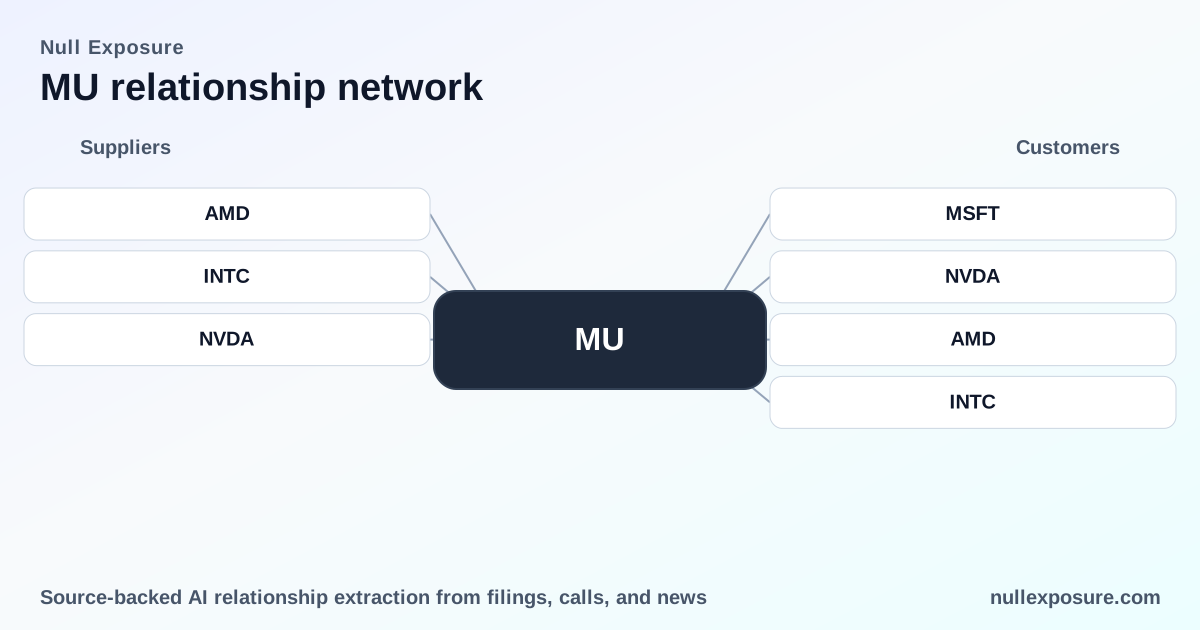
Micron’s public disclosures and recent coverage point to long-term engagements with major semiconductor and AI hardware companies. The following relationships were identified in the supplied materials.
NVIDIA (NVDA)
Micron is engaged in long-term agreements with NVIDIA to supply memory used in AI and data-center GPUs, positioning Micron to capture a larger share of AI infrastructure spend. Source: The Globe and Mail press release referencing FY2026 relationships (March 10, 2026) — https://www.theglobeandmail.com/investing/markets/stocks/INTC/pressreleases/566847/micron-why-the-recent-pullback-is-an-opportunity/
Advanced Micro Devices (AMD)
Micron has active long-term commercial arrangements with AMD to supply DRAM and related memory products for high-performance compute platforms, contributing material demand for Micron’s server and client memory lines. Source: The Globe and Mail press release referencing FY2026 relationships (March 10, 2026) — https://www.theglobeandmail.com/investing/markets/stocks/INTC/pressreleases/566847/micron-why-the-recent-pullback-is-an-opportunity/
Intel (INTC)
Micron holds long-term agreements with Intel that tie Micron’s memory supply to Intel’s data-center and platform roadmaps, reinforcing Micron’s exposure to enterprise compute cycle dynamics. Source: The Globe and Mail press release referencing FY2026 relationships (March 10, 2026) — https://www.theglobeandmail.com/investing/markets/stocks/INTC/pressreleases/566847/micron-why-the-recent-pullback-is-an-opportunity/
How the company-level constraints shape supplier strategy
The supplemental constraint evidence in filings clarifies Micron’s contracting posture and operational model as company-level signals rather than relationship-specific clauses.
- Contracting posture — mixed long-term coverage. Filings acknowledge certain long-term contracts with suppliers but note many contracts do not guarantee long-term capacity or fixed pricing. That indicates a blended commercial strategy where Micron balances firm multi-year commitments with spot or short-term procurement to manage cost and capacity flexibility.
- Role and operational maturity. Micron’s statements confirm it is primarily a manufacturer with wholly-owned fabs, while also acting as a service provider by assembling products in-house and outsourcing assembly for packages, modules, SSDs and MCPs. The company’s internal controls have been audited (PwC opinion as of August 28, 2025), signaling institutional financial control maturity appropriate for a large-cap technology supplier.
- Criticality and concentration. Engagements with a small set of top-tier compute customers create high criticality and concentration in Micron’s revenue mix: large OEMs and AI platform vendors represent outsized demand for server DRAM and specialized memory. That concentration amplifies both upside during AI-driven cycles and downside if one large buyer changes procurement patterns.
These constraints combine into a clear operating profile: capital-intensive manufacturing with strategic long-term commercial ties, supplemented by outsourced assembly to manage cost and capacity variability.
If you want a consolidated view of counterparty exposures for investment decision-making, see more at https://nullexposure.com/
Risk and opportunity implications for investors and operators
- Opportunity: Long-term agreements with NVIDIA, AMD and Intel align Micron directly with AI infrastructure secular demand, supporting higher mix of server DRAM and improving realized pricing over commodity cycles. Micron’s scale and margin profile (Operating Margin ~45%) provide ability to fund R&D and fab expansion that sustain competitive advantage.
- Risk: The mix of long-term and non‑committal supplier contracts introduces counterparty and capacity risk. Reliance on third-party assembly for certain products creates operational chokepoints if outsourced partners face disruption. Revenue concentration among a handful of large buyers increases sensitivity to any change in their roadmap or inventory behavior.
- Operational takeaway: Expect Micron to continue prioritizing fabs and captive process technologies while selectively using outsourcing to optimize cycle time and capital deployment; capital allocation and customer contract structure will be the levers that determine earnings durability.
Bottom line and action items
Micron is a strategically positioned supplier to the AI and data-center ecosystem—its profitability and manufacturing footprint translate to durable commercial leverage with major compute vendors, but the company’s mixed contract landscape and outsourcing choices introduce measurable operational dependencies.
For a deeper examination of counterparty and supplier relationships relevant to investment due diligence, visit the Null Exposure homepage: https://nullexposure.com/
Decisive investors and operators should monitor contract renewals with NVIDIA, AMD and Intel, fab capex guidance, and any disclosed terms on capacity or pricing commitments; these items will determine whether Micron’s current revenue mix converts into sustainable margin expansion.