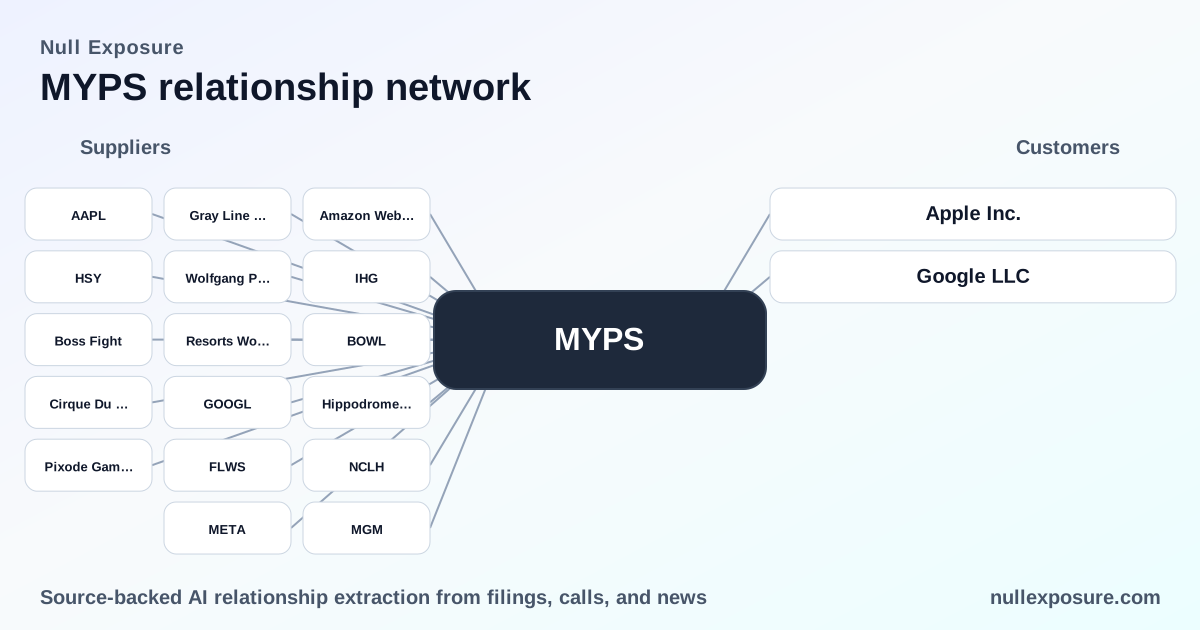
MYPS (Playstudios) — Supplier relationships that shape revenue and risk
Playstudios operates a hybrid free-to-play gaming business that monetizes through in-app purchases on major mobile and social platforms, branded reward partnerships, and licensed IP integrations; the company drives revenue by converting engagement into spend within a playAWARDS ecosystem and shares economics with platform and brand partners. For investors, the supplier map is a mix of platform dependency (distribution and payment fees), hosting and service concentration, and brand licensing that underpins user acquisition and retention. Learn more at https://nullexposure.com/.
One-line operating thesis for investors
Playstudios sells virtual goods and engagement in games that are distributed through third‑party app platforms and monetized via in‑game purchases and brand partnerships; the company’s margins and uptime are therefore sensitive to platform economics, licensing arrangements, and cloud/service-provider reliability.
What the supplier constraints tell you about the business
The filings and press coverage surface a coherent operating model:
- Long-term payment commitments exist — Playstudios agreed to pay sellers of Pixode assets a percentage of adjusted net revenues for three years and maintains a five‑year $75.0 million revolving credit facility, signaling multi‑year cash flow commitments and financing maturity that investors need to model into liquidity planning (evidence from company disclosures, FY2024 and acquisition terms).
- Licensing is strategic and exclusive — the company secured exclusive mobile licenses for targeted properties (noted in corporate disclosures), which supports growth of the playAWARDS proposition but also concentrates execution risk on a limited set of licensed franchises.
- Distribution is outsourced to platform gatekeepers — Playstudios lists the Apple App Store, Google Play Store and Facebook among the platforms it relies on to make games available and to collect payments; that creates a direct exposure to platform fee structures and policy changes.
- Service-provider concentration is material — a significant portion of Playstudios’ traffic and computing environment is hosted on AWS, and the company uses third‑party developers and security vendors, which makes operational continuity dependent on those providers.
Taken together, these signals describe a company with high external dependency on a handful of platform and cloud suppliers, structured licensing arrangements that drive product differentiation, and contractual cash-flow commitments that increase the importance of predictable monetization.
Mapping the partner list and what each relationship means for investors
Below I cover every named supplier and partner mention in the record, with a concise, plain-English takeaway and the source context.
-
Amazon Web Services — Playstudios reports that a significant portion of its game traffic, data storage and processing is hosted by AWS, making uptime, security and cost changes at AWS a direct operational and financial risk (Playstudios FY2024 Form 10‑K).
-
Apple App Store — Playstudios relies on the Apple App Store as a primary distribution and payment channel for in‑app purchases, which subjects revenue to Apple’s fees and policies (10‑Q reporting summarized in trading commentary, FY2024).
-
Google Play Store — The Google Play Store is listed among the third‑party platform providers Playstudios uses to monetize in‑game purchases, exposing the company to Google’s take rates and platform rules (10‑Q / trading write‑up, FY2024).
-
Facebook — Playstudios identifies Facebook as a platform used to deliver games and collect revenue, linking a portion of monetization to social platform mechanics and fee structures (10‑Q reporting, FY2024).
-
MGM Resorts International (MGM) — MGM is both an IP licensor and early strategic backer of Playstudios, and remains a named playAWARDS partner that supplies branded reward content for retention and user acquisition (multiple press releases and filings: FY2021–FY2024).
-
IHG / IHG Hotels & Resorts — IHG is cited among playAWARDS partners that provide real‑world rewards and cross‑promotion, supporting Playstudios’ loyalty-driven monetization model (BizWire investor releases and FY2023–FY2024 press notes).
-
Bowlero — Bowlero is a playAWARDS partner used in reward promotions; its inclusion represents the company’s strategy of partnering with leisure brands to create spend incentives (BizWire and investor communications, FY2022–FY2024).
-
Hippodrome Casino — Named as a partner in the playAWARDS program, Hippodrome Casino is part of Playstudios’ network of experiential reward partners that drive engagement (company press releases, FY2023–FY2024).
-
Norwegian Cruise Line (NCLH) — Norwegian Cruise Line is listed among playAWARDS partners, indicating Playstudios’ use of travel and hospitality partners to diversify reward offers (press coverage, FY2023–FY2024).
-
Resorts World — Resorts World appears in the partner list for playAWARDS rewards, reinforcing reliance on casino and resort brands to underpin the loyalty model (press releases, FY2023–FY2024).
-
Gray Line Tours — Gray Line Tours is included among reward partners, showing Playstudios’ reach into tour and experience partners for real‑world redemptions (press statements, FY2023–FY2024).
-
Wolfgang Puck — Branded culinary partner Wolfgang Puck is cited as a playAWARDS partner, illustrating cross‑industry licensing and reward collaborations that support retention (press releases, FY2023–FY2024).
-
1‑800‑Flowers (FLWS) — Listed among playAWARDS partners in earlier corporate disclosures, 1‑800‑Flowers represents consumer‑goods reward integration into Playstudios’ ecosystem (investor communications, FY2022).
-
Hershey’s (HSY) — Playstudios entered into a partnership with Hershey’s to extend branded rewards in the quarter referenced, showing continued expansion into consumer brands (quarterly release, FY2023).
-
Cirque Du Soleil — Cited as a playAWARDS partner in a quarterly report, Cirque Du Soleil adds experiential rewards to the company’s partner mix (quarterly reporting, FY2023).
-
Pixode Games Limited — Playstudios acquired certain assets from Pixode to expand into the casual genre and the Tetris product portfolio; the acquisition carries a three‑year revenue share to sellers, indicating a multi‑year payment obligation tied to those assets (acquisition announcement and FY2024 reporting, July 1, 2024).
-
Boss Fight — Playstudios referenced Boss Fight in coverage about suspended development; Boss Fight is a third‑party game developer whose actions can affect production timelines and game quality (news coverage referencing development pauses, FY2022).
Note: platform distribution and payment processing calls out Apple, Google and Facebook repeatedly as essential channels for in‑game revenue collection (10‑Q commentary, FY2024).
What investors should watch next
- Platform dependency is the central operational risk. App store fee changes or policy shifts at Apple, Google or Facebook would transmit directly to gross margin and user economics.
- AWS concentration creates a single‑point operational exposure. Significant service interruptions or price shifts at AWS would affect uptime and cost of goods sold.
- Licensing and multi‑year payment obligations affect cash flow durability. The Pixode asset deal and named IP licensors mean investors should model licensing expenses and revenue share tails explicitly.
- Partner diversity is a strength for user engagement but does not eliminate concentration risks as distribution and hosting remain concentrated.
If you want a consolidated supplier risk score or a tailored counterparty exposure report for MYPS, start here: https://nullexposure.com/.
Final takeaways and next steps
Playstudios’ commercial model is clearly platform‑driven and license‑dependent, with operational exposure concentrated in cloud hosting and a handful of app platforms. For valuation and credit work, emphasize sensitivity to app store economics, AWS service continuity and the cash impact of the Pixode revenue share and the company’s credit facility. For more detailed partner tracing and counterparty risk analytics, visit https://nullexposure.com/.