Myseum (MYSE): supplier relationships, monetization, and operational constraints investors should price
Myseum operates a privacy-first social media play built around its flagship consumer product, Picture Party by Myseum, and monetizes through a mix of in-app distribution, influencer-driven marketing, and a commission-based reseller network intended to sell digital services to businesses and organizations. The company leverages platform distribution (iOS/Android), paid celebrity-driven promotion, and third-party creative and sales partners to scale user acquisition and commercial outreach — while funding growth with at‑the‑market equity programs. For an operational risk view and supplier map, see more at https://nullexposure.com/.
Why the supplier picture matters for valuation and execution
Myseum’s business model is distribution- and marketing-intensive. Revenue realization depends less on complex enterprise contracts and more on scaled consumer adoption, successful influencer campaigns, and a commissioned sales channel for B2B monetization. That combination drives a few clear characteristics investors must price:
- High supplier concentration for core infrastructure increases operational risk and the possibility of service disruption impacting uptime and user trust.
- Marketing and content partnerships are central to growth, so cost-per-acquisition is sensitive to the effectiveness and price of these vendors.
- Go-to-market executed through affiliates and app stores creates a variable cost structure and recurring platform fees/terms exposure.
Explore a supplier risk scorecard and detailed partner records at https://nullexposure.com/.
The relationships you need to know (one-sentence takeaways with sources)
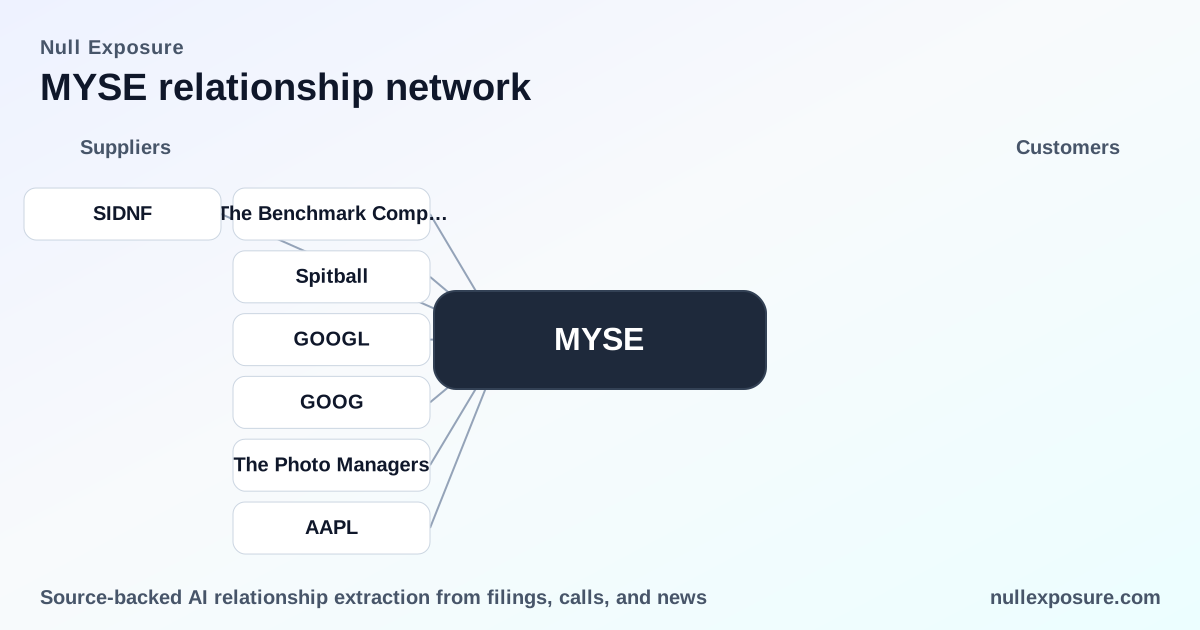
Below are every partner and supplier named in public coverage to date, summarized for an investor audience.
-
The Benchmark Company — Myseum amended its Sales Agreement to continue an at‑the‑market equity offering program of up to $3.5 million, signaling active capital markets engagement to fund operations and marketing. (TradingView news, March 10, 2026.)
-
Spitball — Myseum signed Spitball to lead branding, advertising, and digital marketing for Picture Party, establishing an outsourced creative and acquisition engine for consumer growth. (OpenPR news release on Myseum, FY2025.)
-
Google Play store — Picture Party is distributed on Google Play, giving Myseum access to Android users but also subjecting the company to Google’s store policies, fee schedules, and visibility mechanics. (GlobeNewswire announcement, January 13, 2026; company communications, FY2026.)
-
iOS app store — Picture Party is available in Apple’s iOS app store, enabling iPhone distribution while exposing Myseum to Apple’s review, commission structure, and platform rules. (Sahm Capital press release, January 2026.)
-
YouTube — Myseum hosts product and use‑case videos on YouTube to support acquisition and investor communications, leveraging a major content discovery channel for marketing. (GlobeNewswire and Sahm Capital press materials, January–February 2026.)
-
The Photo Managers — Myseum is building a global network of commission-based salespeople through partnerships such as The Photo Managers to reach millions of businesses and organizations for B2B sales. (Letter to shareholders, February 10, 2026.)
-
Cameo — A paid Cameo video from Kevin O’Leary was arranged and deployed across Myseum’s social and investor-facing materials to scale brand visibility with celebrity endorsement. (GlobeNewswire and TradingView coverage of the promotional collaboration, February–March 2026; Yahoo Singapore recap, FY2026.)
What the formal constraints tell us about operational posture
Public disclosures provide clear signals about Myseum’s supplier strategy and concentration:
-
Critical concentration on cloud infrastructure: Myseum states it relies on a single third‑party provider, Amazon Web Services (AWS), for compute, secure connectivity, and core delivery functions. This is a single‑point-of-failure profile for operations and is a critical input for any operational risk premium applied to valuation. (Company disclosure language cited in company filings, FY2026.)
-
Service-provider orientation: The company uses third parties for software development, automated testing, and managed upgrades, and has disclosed a historical payment to Metabizz of $185,600 for development services during early 2023 consolidation — confirming an ongoing reliance on external engineering vendors rather than exclusively on in‑house build. This creates vendor dependency and vendor management execution risk. (Historical payment disclosure covering January 1, 2023 through consolidation on February 14, 2023.)
-
Go-to-market via affiliates and influencers: References to The Photo Managers’ commission-based sales network and paid celebrity promotion via Cameo indicate a variable, commission-driven go-to-market cost structure rather than fixed selling expenses. Investors should treat future revenue ramps as contingent on sustained marketing ROI.
-
Early stage, nascent revenue mix with IP support: The company has emphasized a US patent for its streaming and content-sharing technology and uses third‑party channels (app stores, YouTube) for distribution, giving some protective moats on technology, but execution remains execution-dependent and platform-terms dependent. (Patent and product launch disclosures, FY2026.)
Collectively, these constraints point to a company that is operationally young, marketing-driven, and materially dependent on a small set of third parties for both technology delivery and customer acquisition. For a deeper third‑party breakdown and monitoring playbook, visit https://nullexposure.com/.
Investment implications and scenario framing
-
Operational risk premium is required. AWS dependence and outsourced development create a credible single‑vendor failure pathway; model uptime-related revenue sensitivity and contingency migration costs into downside scenarios.
-
Capital markets activity matters to runway. The amended at‑the‑market sales agreement with The Benchmark Company for up to $3.5 million is a tactical cash strategy to finance growth and marketing; dilution and continuous financing assumptions must be explicit in projections. (TradingView notice, March 10, 2026.)
-
Marketing efficiency will determine TAM capture. Celebrity endorsements (Kevin O’Leary via Cameo), agency partnerships (Spitball), and app-store presence are positive levers — but they require measurable CAC and retention improvements to convert downloads into sustainable monetization (affiliate B2B upsell via The Photo Managers).
Bottom line and next steps for investor diligence
Myseum’s supplier map shows a lean operating model optimized for rapid consumer and small‑business reach, but it carries concentration and execution risk that investors must price directly. Validate contingency plans for cloud migration or multicloud, obtain CAC/LTV by cohort from management, and review historical usage and terms with agency and celebrity vendors.
For a vendor risk checklist and the most current supplier records, continue your due diligence at https://nullexposure.com/.
Take action: review Myseum’s partner filings and supplier exposures now at https://nullexposure.com/ to align valuation with operational realities.