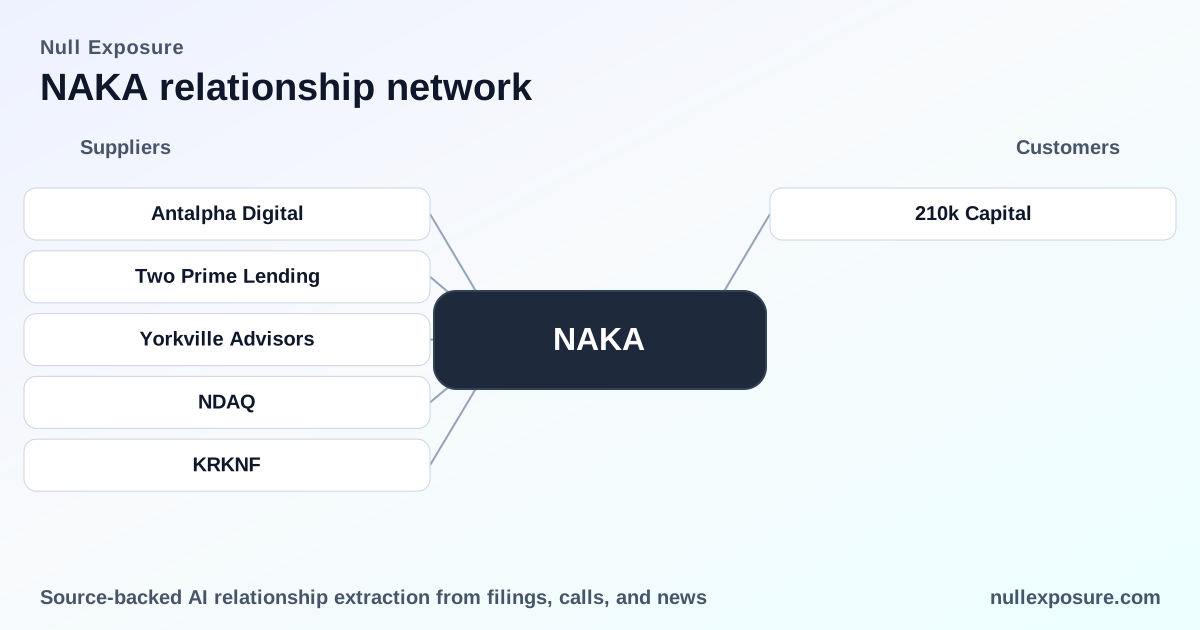
Kindly MD (NAKA): supplier relationships, financing counterparties, and what investors should price in
Kindly MD operates as a direct healthcare and healthcare-data provider that integrates prescription medicine and behavioral health services; it monetizes primarily through patient-facing services and associated revenue-per-visit streams while using treasury management and credit arrangements to bridge liquidity shortfalls. Over 2025 the company supplemented operating liquidity by pledging bitcoin-held treasury assets to secure large crypto-backed loans, creating a hybrid operating/financing model that is central to investor risk assessment. For a focused supplier-risk view of Kindly MD, visit https://nullexposure.com/.
Why the financing narrative changes the supplier risk equation
Kindly MD’s public profile shifted from pure healthcare operator to a firm actively managing balance-sheet risk with non-traditional lenders. The company borrowed against bitcoin holdings and rolled multiple credit lines within a short window, which alters the supplier/creditor map investors must monitor. That financing behavior interacts directly with supplier relationships because cash flow volatility influences payment terms, vendor selection, and contracting posture.
Visit https://nullexposure.com/ for more context on how these counterparty moves affect supplier concentration and criticality.
How recent loans reshaped counterparties and priorities
- The December 2025 financing transactions converted prior lenders into repayment recipients and introduced Kraken as a material new creditor.
- That sequence signals operational cash constraints and a willingness to accept crypto-backed financing at commercial rates to meet immediate obligations.
Counterparty roll call — who is on the other side of the table
Below I cover every relationship surfaced in public reporting and summarize the economic role each counterparty plays.
- Antalpha Digital — Antalpha acted as a prior lender to Kindly MD; company statements indicate proceeds from a subsequent Kraken facility were used to satisfy obligations to Antalpha in full. According to Coindesk coverage on December 10, 2025, Antalpha was repaid as part of the refinancing sequence.
- Two Prime Lending — Two Prime provided an earlier credit line that was repaid via funds linked to Antalpha’s facility; this creates a short history of revolving creditor relationships rather than long-term bank lines. Coindesk’s December 10, 2025 report traces Two Prime’s credit line into the chain of repayments.
- Yorkville Advisors — Yorkville is identified as one of the earlier financing sources for Kindly MD during 2025, placing it among the set of alternative-credit counterparties relied upon that year. Coindesk noted Yorkville as an earlier provider in the company’s 2025 financing mix (reported December 10, 2025).
- Kraken — Kraken extended a $210 million bitcoin-backed loan to Kindly MD at an 8% rate and became the company’s fourth financing source in 2025, effectively replacing prior lenders for the referenced obligations; Coindesk documented this arrangement on December 10, 2025, and follow-up reporting reiterated Kraken’s role in mid-December 2025.
- Nasdaq (NDAQ) — Not a commercial supplier in the operating sense, Nasdaq issued Kindly MD a listing non-compliance notice after the company’s share price traded below $1.00 for 30 consecutive days, introducing regulatory and market-listing risk into supplier and capital access dynamics; The Globe and Mail reported the notice on December 10, 2025.
Each of the above relationships is a material signal for capital allocation and counterparty risk: lenders are concentrated in alternative and crypto-finance channels rather than traditional banking, and marketplace regulation (Nasdaq) creates additional operational constraints.
What the constraints tell investors about operating posture
Company-level disclosures include a supplier-related constraint that is operationally significant: Kindly MD purchases finished hemp products from third parties "with whom we have no material written agreements related to their licensing to process hemp." This is a company-wide signal that:
- Contracting posture is transactional and under‑documented, increasing legal and compliance exposure when products intersect regulated inputs.
- Supplier maturity and governance are likely low, because absence of material written agreements implies informal sourcing relationships rather than long-term vetted vendors.
- Criticality is elevated for those product lines: when procurement is informal, replacement friction and compliance risk increase, which can have outsized effects on operations if regulators or counterparties escalate.
These constraints are stated at the company level and do not name any specific supplier.
Risk, concentration, and maturity — how to frame valuation impact
- Counterparty concentration risk is high in the credit stack: a handful of alternative lenders financed most 2025 liquidity needs, which concentrates refinancing risk in non-bank channels. Public reports in December 2025 list Kraken, Antalpha, Two Prime, and Yorkville as the primary creditors.
- Operational maturity is uneven: Kindly MD runs a patient-facing health business while simultaneously managing crypto treasury and short-term alternative credit; that duality amplifies execution risk and governance demands.
- Listing and market-access risk is real: Nasdaq non-compliance for minimum bid price introduces the specter of delisting, which would materially reduce access to equity capital and increase the cost of doing business with suppliers and creditors. The Globe and Mail reported the Nasdaq notice on December 10, 2025.
What investors and operators should watch next
- Monitor refinancing cadence and lender diversity: shrinking options or tighter terms from Kraken and other crypto lenders will stress operations. Coindesk’s December 2025 coverage provides the baseline of current creditor identities.
- Validate vendor contracting for regulated inputs: the disclosed lack of material written agreements for hemp product suppliers is an immediate remediation target for management and a red flag for buyers and partners.
- Track Nasdaq compliance milestones: failure to cure the minimum-share-price deficiency would compound capital access risk and is a near-term binary for valuation.
If you want a tailored counterparty risk brief for Kindly MD’s supplier and lender map, start here: https://nullexposure.com/.
Final read: buy-side checklist
- Confirm whether Kraken’s facility imposes covenants that restrict vendor payment priorities.
- Demand confirmation from management on written agreements for regulated products and a remediation timeline.
- Stress-test cash flow under scenarios where crypto asset prices decline or Kraken tightens collateral calls.
For an actionable supplier-risk dossier and ongoing monitoring of Kindly MD counterparties, visit https://nullexposure.com/ and request a supplier intelligence briefing.