NewAmsterdam Pharma (NAMSW): supplier relationships and what they mean for commercialization
NewAmsterdam Pharma monetizes by advancing obicetrapib and fixed-dose combination (FDC) products through clinical development toward regulatory approval, then transitioning to commercial sales via third-party partners and supply agreements. The company operates as a virtual drug developer: it carries research, development, and regulatory responsibilities while outsourcing manufacturing and clinical execution, and it plans to monetize through partner purchases and downstream royalties or supply revenues once commercial agreements are activated. For investors and operators evaluating supplier risk, the key structural fact is that NewAmsterdam is a development-stage firm with outsourced production and a commercial go-to-market dependency on external partners.
Explore supplier intelligence and partner tracking for NAMSW at https://nullexposure.com/ for deeper counterparty context.
What the filings actually say about counterparties and supply
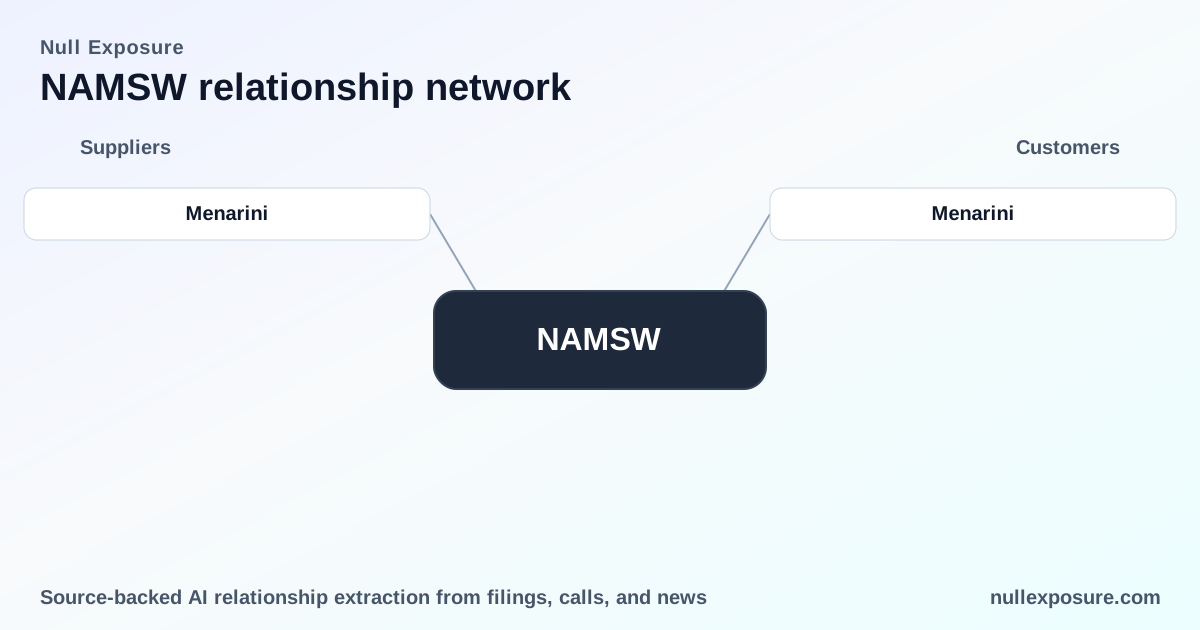
NewAmsterdam’s SEC filing narrative and related disclosures deliver two clear operational pillars: no owned manufacturing capacity and a commercial supply relationship that transitions product risk to a third party. The 2024 Form 10‑K documents the company’s outsourcing posture, its manufacturing footprint across jurisdictions, and an explicit supply arrangement with Menarini intended to support commercialization and distribution of obicetrapib and the obicetrapib/ezetimibe FDC. According to the FY2024 Form 10‑K (filed in 2026), Menarini is expected to purchase obicetrapib and obicetrapib/ezetimibe FDC tablets under a supply agreement to be entered into by the parties. This is a commercial sales commitment designed to bridge development to market. (Source: FY2024 Form 10‑K, NewAmsterdam Pharma, filed Feb 2026.)
Commercial supply: Menarini — the single relationship disclosed
Menarini will be a commercial purchaser under a formal supply agreement
Menarini is expected to purchase obicetrapib and the obicetrapib/ezetimibe FDC tablets from NewAmsterdam under a supply agreement the companies will execute, establishing a buyer-supplier commercial channel for product distribution. According to the FY2024 Form 10‑K, this supply agreement is the explicit commercial pathway described by NewAmsterdam. (Source: FY2024 Form 10‑K, NewAmsterdam Pharma, filed Feb 2026.)
What the constraint signals indicate about NAMSW’s operating model
The company-level constraints extracted from filings paint a coherent operational profile that affects contracting posture, concentration risk, criticality of suppliers, and maturity of the supply chain.
-
Outsourced manufacturing and service reliance. NewAmsterdam explicitly states it has no manufacturing facilities and uses contract manufacturing organizations (CMOs) and contract research organizations (CROs) for API, drug product, clinical operations and testing. This establishes a virtual drug developer model: technical control and regulatory responsibility rest with NewAmsterdam, while execution and capacity are controlled by third parties. (Source: FY2024 Form 10‑K.)
-
Geographic manufacturing footprint in NA and EMEA. The filings note manufacturing and testing occur in the United States, Canada and Austria and comply with cGMPs. That footprint gives geographic diversification benefits—regulatory resilience and supply continuity across North America and EMEA jurisdictions—but it also creates cross-border logistics and regulatory coordination needs that must be managed ahead of commercialization. (Source: FY2024 Form 10‑K.)
-
Service-provider posture for clinical development. The company recognizes CROs, investigative sites, and contract labs as primary vendors for trials and development, confirming a projectized vendor cost structure in R&D where payments align to trial milestones and vendor progress reports. This operational pattern enhances scalability but concentrates program risk with a small set of specialized service providers. (Source: FY2024 Form 10‑K.)
-
Conservative treasury and low counterparty credit exposure. NewAmsterdam holds cash in money market funds and short‑term U.S. government and agency securities, signaling conservative liquidity management and limited credit exposure from operating activities. This improves resilience during the commercialization transition but does not mitigate supplier execution risk. (Source: FY2024 Form 10‑K.)
Collectively, these constraints imply a high-criticality, outsourced supply chain with moderate geographic diversification and centralized commercial dependency on partner agreements. The company’s ability to deliver commercial product depends on effective CMO performance, regulatory compliance across jurisdictions, and the successful execution of partner supply agreements such as the one with Menarini.
Investor implications: opportunity and concentrated execution risk
NewAmsterdam’s partner model accelerates the path to market without capital-intensive manufacturing build‑out, which is a positive capital allocation strategy for a clinical-stage company. Menarini’s anticipated role as a purchaser converts development progress into addressable revenue potential once regulatory approvals and supply logistics are completed. Financially, the company shows R&D-driven losses and negative operating margins consistent with a clinical-stage biopharma profile; the operating model shifts commercial and distribution risk onto partners while the company retains regulatory and clinical execution risk. (Source: FY2024 Form 10‑K; NewAmsterdam financial summaries.)
Key operational risks for investors and operators to monitor:
- Supplier execution and capacity constraints at CMOs that produce obicetrapib and FDC tablets.
- Cross-border regulatory and testing coordination across the United States, Canada and Austria.
- Contractual completeness and performance terms in the Menarini supply agreement (pricing, volumes, delivery obligations, and termination clauses).
If you want a rapid supplier‑risk dashboard and documented vendor exposures for NAMSW, start with the home page at https://nullexposure.com/.
Tactical takeaways for counterparty diligence teams
- Prioritize operational audits of CMOs in the United States, Canada and Austria to validate cGMP compliance, capacity, and secondary sourcing options; the company’s filing confirms these locations are in the manufacturing chain. (Source: FY2024 Form 10‑K.)
- Obtain the executed supply agreement and associated service-level attachments from Menarini to confirm commercial volumes, IP provisions, indemnities, and liability allocation that will govern revenue realization.
- Review historical vendor concentration and the company’s contingency plans for CMO failure or capacity loss; the filing states NewAmsterdam relies on third parties for all raw materials, active ingredients, and finished products. (Source: FY2024 Form 10‑K.)
Dig deeper into supplier relationships and commercial counterparty profiles at https://nullexposure.com/ to convert this analysis into operational diligence items.
Conclusion: commercial promise with outsourced execution risk
NewAmsterdam’s model is capital-efficient and partner‑oriented: it preserves R&D focus while using third-party manufacturing and a named commercial purchaser, Menarini, to close the path to revenue. This construct produces asymmetric outcomes—large upside if regulatory milestones and partner contracts move to execution, and concentrated downside if CMOs or the supply agreement underperform. For investors and procurement teams, the priority is contract access and operational verification of the outsourced chain. (Source: FY2024 Form 10‑K.)