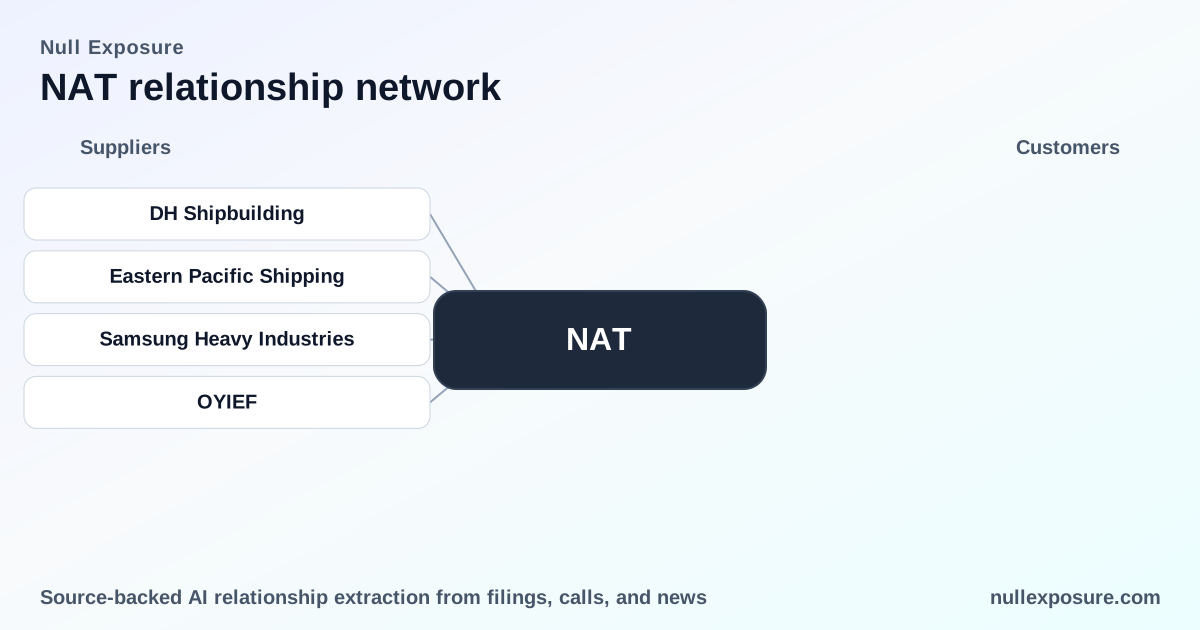
Nordic American Tankers (NAT): Shipyard and lessor relationships that shape growth and capital intensity
Nordic American Tankers (NAT) operates as an owner and leaser of double-hull crude oil tankers, monetizing through time charters, voyage revenues and lease arrangements while actively managing fleet composition by selling older tonnage and commissioning newbuilds. The company’s economics are driven by asset cycles, newbuild order timing, and counterparty financing/lease structures, with variable cash flow alongside a steady dividend policy that attracts income-oriented investors. For supplier and partner diligence, NAT’s recent activity exposes strategic dependencies on Korean yards and established leasing counterparties. Learn more about supplier intelligence and counterparty mapping at https://nullexposure.com/.
What investors need to know up front
NAT is a capital-intensive tanker owner with a market cap of roughly $1.12bn and a yield-oriented profile (Dividend yield ~8.9% per latest figures). Revenue and operating margin indicate profitable vessel operations, while the balance between newbuild commitments and sale-and-leaseback deals defines funding and earnings volatility. Key valuation signals include a high trailing P/E (88.3) versus a lower forward P/E (13.97), reflecting ebbs in earnings and market expectations. For a tactical view of counterparties and supplier risk, see https://nullexposure.com/.
Fleet strategy: trimming old tonnage and pushing newbuilding commitments
NAT is actively reshaping its fleet: the company is disposing of older vessels and converting preliminary newbuild agreements into firm orders for Suezmax tankers. This approach supports renewal of the asset base but requires large upfront capital commitments, multi-year delivery timelines and concentrated dependency on a small number of shipyards and leasing partners. Those characteristics make supplier selection and contract terms critical to cash conversion and timing of earnings.
- Contracting posture: NAT negotiates firm shipyard contracts for multi-year builds and uses sale-and-leaseback transactions to free up capital.
- Concentration: A small set of large Korean yards and financial lessors dominate its supplier mix.
- Criticality: Shipyards and leasing counterparties are mission-critical; delays or contract disputes would directly affect delivery schedules and cash flow.
- Maturity: The company operates a mature model—owning, selling, and chartering tonnage—but is actively refreshing the fleet with newbuild orders that convert prior preliminary agreements into firm commitments.
Supplier and partner roster — what the public record shows
Below I cover every named supplier/partner relationship surfaced in recent reporting with a concise, plain-English summary and a source callout.
DH Shipbuilding
Nordic American converted preliminary Suezmax agreements into firm contracts with DH Shipbuilding for two Suezmax newbuildings priced at $86 million each, with delivery scheduled for 2028. According to multiple March 2026 industry reports, DH is the named builder on the firm orders. (Splash247 and Tradewinds, March 2026)
Source: A March 2026 Splash247 report and a Tradewinds article noted the firm contracts naming DH Shipbuilding as the builder for NAT’s Suezmax orders.
Eastern Pacific Shipping
NAT acquired two 2016-built Suezmax vessels from Eastern Pacific Shipping at roughly $65.6 million apiece as part of a broader fleet refresh to balance newbuild commitments and immediate earning capacity. (Splash247, March 2026)
Source: A March 2026 Splash247 piece reported the purchase of two 2016-built units from Eastern Pacific Shipping at around $65.6m each.
Samsung Heavy Industries
NAT’s last prior newbuild orders occurred in 2020 when it booked two Suezmaxes with Samsung Heavy Industries, indicating an ongoing relationship with major Korean yards and continuity in sourcing large-scale builds. (Splash247, March 2026)
Source: A March 2026 Splash247 report referenced NAT’s 2020 order activity at Samsung Heavy Industries.
Ocean Yield
Some NAT vessels delivered in 2022 entered service under a sale-and-leaseback arrangement with Ocean Yield, demonstrating the company’s use of leasing partners to manage capital and preserve dividend distributions while rotating the fleet. (Splash247, March 2026)
Source: A March 2026 Splash247 article described the 2022 deliveries under a sale-and-leaseback with Ocean Yield.
How these relationships translate into investment risk and opportunity
The disclosed supplier and lessor relationships create a clear set of investment implications:
- Execution risk on newbuilds is concentrated. With firm contracts placed at specific Korean yards, delivery timing and price exposure hinge on those shipyards' stability and build schedules. That concentration elevates operational risk during build cycles.
- Balance-sheet flexibility comes from leasing partners. Sale-and-leaseback arrangements with firms like Ocean Yield provide liquidity and preserve yield distribution capacity, but they also embed long-term lease obligations that affect leverage and EBITDA conversion.
- Asset rotation improves near-term earnings optionality. Buying relatively younger Suezmax units from peers (e.g., Eastern Pacific) gives immediate revenue-earning capacity versus waiting for newbuild deliveries.
- Contracting posture is capital intensive and forward-looking. NAT structures deals that lock in shipyard capacity years ahead, so forecasting cash requirements and staggered deliveries becomes a core analytical task.
Midway through diligence, you should map delivery schedules, lease maturities and counterparty credit profiles to quantify timing mismatches—if you want that mapping and supplier scoring, start with a targeted supplier report at https://nullexposure.com/.
Practical due diligence checklist for operators and investors
When evaluating NAT supplier exposure, prioritize:
- Verification of shipyard build schedules and liquidated damages clauses.
- Lease counterparties’ creditworthiness and lease term profiles.
- Historical delivery performance from the named yards (DH, Samsung).
- The structure and magnitude of sale-and-leaseback proceeds vs. incremental lease obligations.
Closing perspective and next steps
Nordic American’s strategy is a classic asset-rotation playbook—refresh the fleet with firm newbuilds while using leasing channels to smooth capital needs and sustain dividends. The company’s reliance on a handful of large shipyards and lessors concentrates execution risk but also allows for scale efficiencies if the yards deliver on time and within budget.
For a deeper supplier risk scorecard and to translate these relationships into portfolio-level exposure metrics, visit https://nullexposure.com/. For subscription-grade supplier intelligence and counterparty monitoring, see https://nullexposure.com/ to get started.