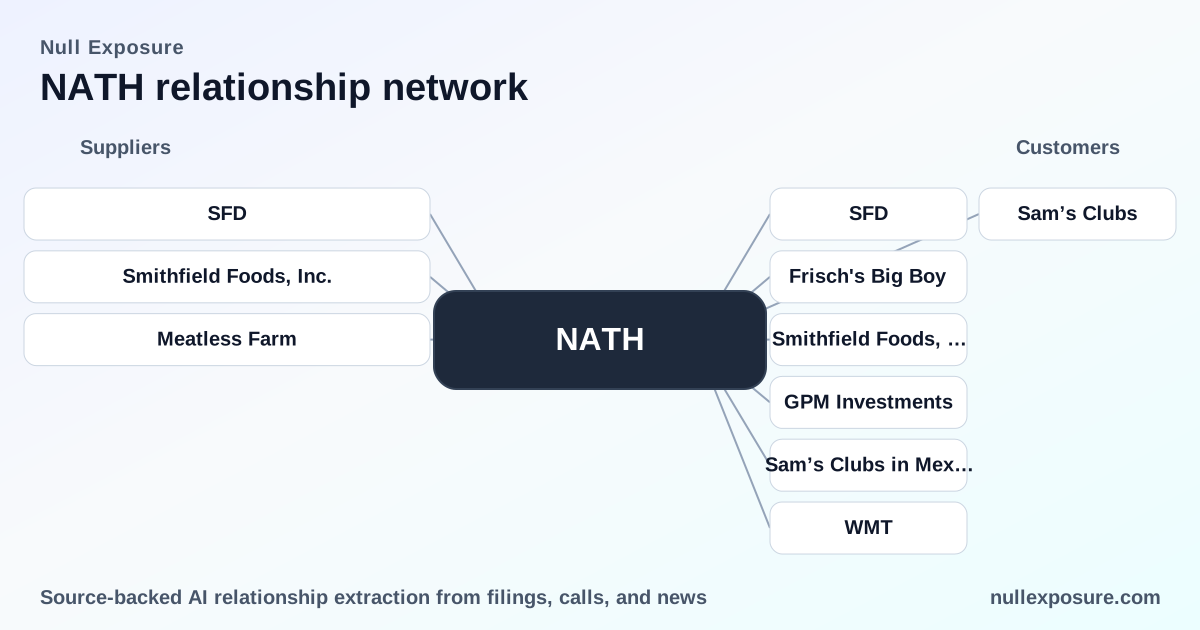
Nathan’s Famous (NATH): Supplier relationships drive profitability and concentration risk
Nathan’s Famous operates a hybrid foodservice and brand-licensing business: it operates company-owned restaurants and a national franchise system while monetizing the iconic brand through licensing and royalties on retail and foodservice packaged products, plus direct product sales to its restaurants. A significant portion of revenue is royalty-driven, and the company’s supplier and licensing posture—especially its long-standing relationship with a single large manufacturer—defines both upside (stable royalties, low manufacturing overhead) and downside (supplier concentration, contract dependency). For deeper supplier intelligence and monitoring, visit https://nullexposure.com/.
Why suppliers matter for valuation and operational resilience
Nathan’s is not a typical single-unit restaurant operator. The brand licensing model creates a dual dependency: Nathan’s collects royalties and licensing fees while outsourcing manufacturing and distribution of its retail products. This structure produces attractive margin leverage on brand revenue but also concentrates counterparty risk around manufacturing and distribution partners.
Key company-level signals from recent filings and disclosures:
- Long-term contracting posture: Company filings reference a credit agreement maturing July 10, 2029 and average remaining lease life of 3.5 years, indicating multi-year financial and real-estate commitments that structure cash flows and capital availability.
- Licensing central to monetization: SEC disclosures document a licensing framework that generates meaningful royalty income—royalties of roughly $31.9 million in fiscal 2025 accounted for approximately 22% of total revenues.
- Spot procurement behavior for commodities: The company reported no purchase commitments for beef during fiscal 2024–25, signaling opportunistic spot buying for primary commodity inputs.
- Large-enterprise distribution network: Nathan’s leverages major foodservice distributors (US Foods, SYSCO, Performance Food Group, McLane, DOT Foods), reflecting an enterprise-grade distribution footprint rather than boutique channels.
- Concentration and criticality: Filings show extremely high concentration for primary hot-dog supply; the company’s primary supplier accounted for 95–96% of product purchases in fiscal 2024–25, flagging critical single-supplier exposure.
These signals combine into a clear operating profile: brand-driven revenue with outsized supplier concentration and long-dated licensing arrangements.
For operator-focused supplier dashboards and continuous monitoring, see https://nullexposure.com/.
How the relationships break down — the operative partners to know
Smithfield Foods, Inc.
Smithfield has been the exclusive licensee and primary manufacturer/distributor of Nathan’s retail and many foodservice products since 2014, and in January 2026 Smithfield announced an all-cash acquisition of Nathan’s at $102 per share (roughly $450 million), effectively consolidating the licensed manufacturing relationship into full ownership. According to AP News (January 2026), Smithfield has produced and distributed Nathan’s branded hot dogs, sausages and related products in the U.S., Canada and certain Mexican retail channels under a long-standing license. https://apnews.com/article/nathans-famous-hot-dogs-smithfield-merger-9927a1f0fde1ff32c2f95dc4949d3dfd
Meatless Farm
Nathan’s added plant-based menu options in partnership with Meatless Farm as part of a product diversification initiative; a 2021 New York Post report chronicles the company’s rollout of veggie dogs through a collaboration with Meatless Farm to expand menu choices. https://nypost.com/2021/06/03/nathans-famous-is-adding-vegan-hot-dogs-to-its-menu/
What these relationships mean in plain terms
- Smithfield is both partner and economic lever. The longstanding licensing arrangement delivered meaningful royalty income to Nathan’s and supplied nearly all packaged product for retail and much of the foodservice channel; the 2026 acquisition converts a critical supplier-licensee into an owner of the brand and removes an external counterparty—but it also concentrates execution and integration risk at the consolidated entity level. (See AP News coverage, January 2026.)
- Meatless Farm was a product-extension partner. The plant-based partnership signals Nathan’s willingness to pursue incremental retail and in-restaurant innovation, but it represents a modest, tactical relationship versus the structural dependency represented by Smithfield (New York Post, 2021).
Risk implications and portfolio considerations
Nathan’s commercial architecture delivers both attractive margin attributes and concentrated supplier risk:
- Concentration risk is acute: The company-level disclosure that the primary hot-dog supplier represented 95–96% of product purchases in the last two fiscal years is a red flag for operational continuity and pricing leverage. This is a critical supplier dependency that underpins restaurant supply chains and branded product economics.
- Revenue concentration in royalties: Royalties contributed roughly 22% of revenues in fiscal 2025, making licensing performance a material driver of top-line stability and valuation multiples.
- Contract maturity and renegotiation tail risks: The public record includes long-term license provisions (with contractual references into the early 2030s), creating predictable royalty streams but also multi-year negotiation tail risks when renewal windows approach.
- Commodity procurement flexibility: The absence of forward purchase commitments for beef suggests exposure to spot-market volatility but preserves price flexibility.
Top action items for investors and operators:
- Monitor post-acquisition integration metrics from Smithfield for margin capture and royalty replacement dynamics.
- Track any changes to licensing terms or royalty schedules that could alter Nathan’s revenue mix.
- Stress-test supply disruption scenarios given single-supplier concentration, and validate contingency sourcing for in-restaurant product flows.
What to watch next and how to act
Investors should focus on three near-term signals: integration milestones and synergies reported post-acquisition, any announced changes to royalty accounting or channel distribution, and procurement behavior for commodities that will affect restaurant margins. Operators should prioritize supply continuity plans and contract clauses related to exclusivity and supply guarantees.
For subscription-grade supplier monitoring and alerts tailored to public-company supplier risk, visit https://nullexposure.com/ for ongoing coverage and vendor scoring.
Bold, concentrated supplier relationships have shaped Nathan’s financial profile and strategic options for years; with the Smithfield transaction completing the vertical consolidation, investors and operators should recalibrate both upside expectations and concentration controls accordingly. For more supplier-native research and actionable alerts, go to https://nullexposure.com/.