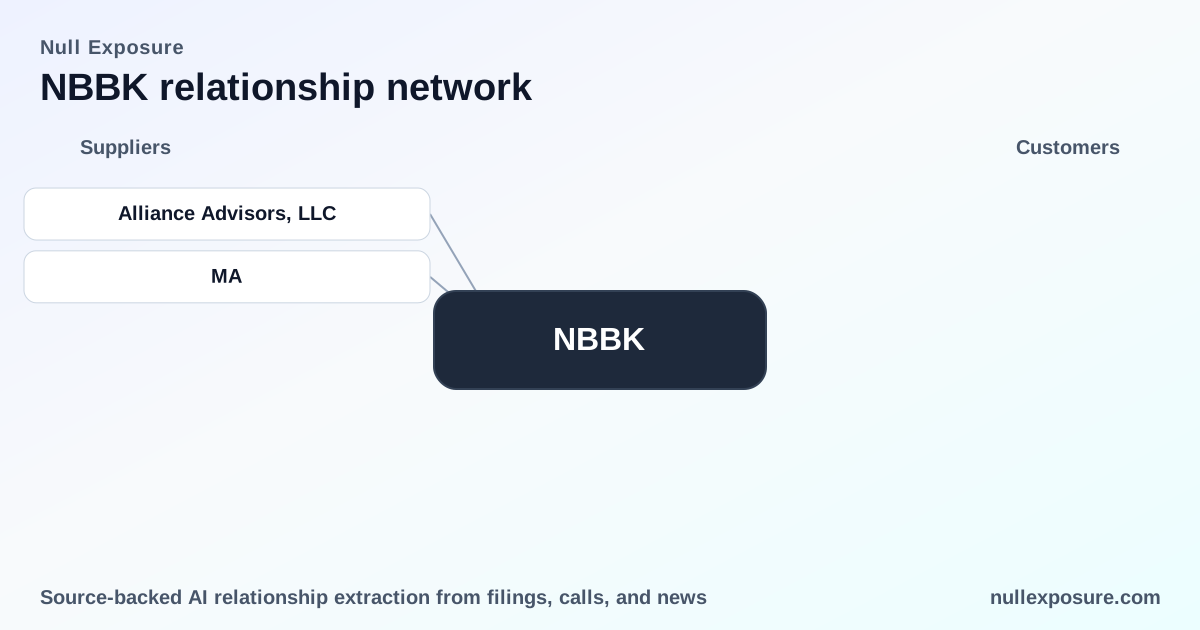
NBBK supplier relationships: what investors need to know
NB Bancorp (NBBK) operates as a regional financial holding company that monetizes through traditional commercial banking activities—interest income from loans, fee income from deposit and treasury services, and service revenues tied to card and payment partnerships—delivered primarily through its subsidiary Northbridge Bank. The company’s economics depend on credit spread management, deposit stability in local markets, and efficient third‑party relationships that support payments, data processing, and occasional transaction support. For a focused read on supplier exposure across NBBK, visit https://nullexposure.com/.
Executive takeaways for investors
- Core business model: regional commercial banking targeting small- and medium-sized businesses and individuals; revenue is concentrated in net interest income and fee-for-service products.
- Supplier posture: NBBK uses third-party service providers for specialized functions (payments, information agents, outsourced data processing), which are operationally critical but not headline dominant.
- Key vendor relationships disclosed: Alliance Advisors (information agent for a stockholder process) and MasterCard (branding/payment program revenue). These are high‑signal, low‑count supplier links that suggest selective outsourcing rather than broad dependence on a single vendor.
How each disclosed supplier relationship shows up in public records
Alliance Advisors, LLC — support for a stockholder election process
Alliance Advisors is listed as Needham’s information agent for the stockholder election process tied to a transaction involving Provident, providing outreach and materials distribution for stockholder elections. This is a specialized, event‑driven service and reflects contracting for legal/transactional support rather than ongoing core operations. According to a CityBiz article on March 10, 2026 (FY2025 disclosure), Alliance Advisors handled election materials and contact services for Provident stockholders.
MasterCard — payment network and incidental branding revenue
MasterCard shows up in NBBK’s financial commentary where a MasterCard branding bonus contributed to a $172k increase in other income during Q2 2025, indicating an active card/brand relationship that produces small but visible non‑interest income. The company’s Q2 2025 press release on PR Newswire details this one‑time annual branding bonus effect on other income.
What the supplier mix signals about NBBK’s operating model
NBBK’s disclosed supplier relationships are limited in number but strategically chosen. A company-level constraint signal indicates a service_provider role across disclosed third parties; evidence includes descriptions of central credit facilities (FHLBs) and explicit company statements that it outsources a majority of its data processing requirements to third-party providers. That evidence points to several operating model characteristics investors should weigh:
- Contracting posture: NBBK contracts selectively for specialized, event-based, or infrastructure services (information agents, payments, and data processing), which is consistent with a lean in‑house operating model that relies on external partners for non-core capabilities.
- Concentration: The current public record shows low reported supplier count; while that reduces vendor management complexity, it increases single‑vendor risk where critical services are outsourced.
- Criticality: Services like data processing and card network relationships are mission‑critical—they directly affect customer experience, regulatory reporting, and payment revenue streams.
- Maturity: Supplier engagements cited are operationally mature (established payment networks and professional information agents) rather than experimental tech partners, which lowers integration risk but maintains exposure to third‑party continuity and contract terms.
If you want a vendor-level breakdown beyond public filings, continue your diligence at https://nullexposure.com/.
Investment implications and where to focus diligence
NBBK’s supplier footprint creates a mix of opportunities and operational risks for investors and operators:
- Revenue diversification: The MasterCard relationship produces fee/branding income that supplements interest revenue; this is positive for non‑interest income stability but modest in scale as reported.
- Operational dependence: Outsourcing data processing for a majority of requirements creates operational concentration risk—investors should confirm backup arrangements, SLAs, and vendor financial health during due diligence.
- Event-driven vendors: Engagements like Alliance Advisors are transactional and time-limited; they do not imply ongoing dependency but do reflect NBBK’s willingness to contract for specialist services when executing corporate actions.
- Regulatory and contractual sensitivity: Banking suppliers are subject to regulatory expectations around vendor management and continuity planning; review regulatory filings and vendor audit results where available.
Practical next steps: verify vendor SLAs, incident history, and termination clauses for data processing and card services; evaluate how much of customer onboarding and treasury functionality is outsourced versus managed internally.
Risk checklist for operators and buyers
- Confirm whether outsourced data processing includes core ledger functions or ancillary services; core ledger outsourcing elevates systemic risk.
- Validate contingency plans with the FHLB relationships and other central facilities referenced in company filings.
- Quantify the revenue and operational impact of any one-off payments (like the MasterCard branding bonus) versus recurring payment income.
- Check for vendor concentration and whether third‑party providers are themselves single points of failure.
For deeper supplier mapping and comparative exposure analysis, explore additional resources at https://nullexposure.com/.
Final assessment and recommended actions
NB Bancorp runs a focused regional banking model that leverages selective third‑party relationships to extend capabilities without building unnecessary fixed costs. The public record shows targeted, mature vendor engagements—transactional counsel and a payment network partner—supported by a broader company practice of outsourcing major data processing functions. These choices align with a lean operational strategy but require active vendor governance to mitigate concentration and continuity risks.
Investors should prioritize vendor governance disclosures in upcoming filings, confirm the scope of outsourced data processing, and treat payment‑network revenue as complementary rather than core to earnings. For a concise supplier exposure briefing and ongoing monitoring of NBBK’s vendor landscape, head to https://nullexposure.com/.