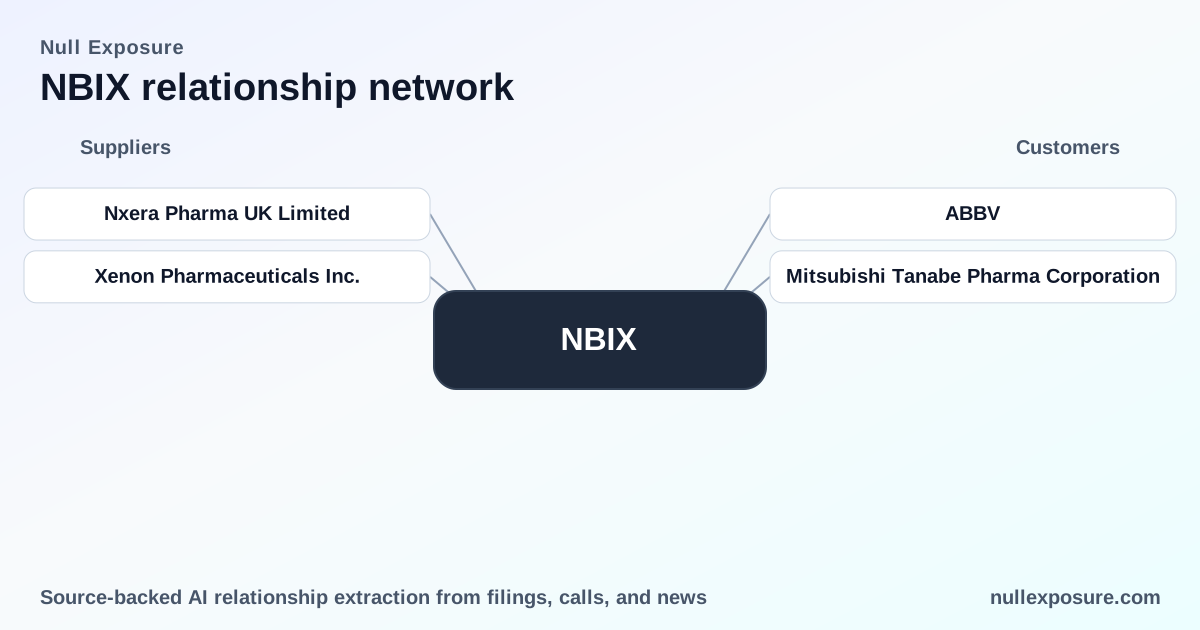
Neurocrine Biosciences (NBIX): supplier relationships that shape product continuity and execution risk
Neurocrine Biosciences discovers, develops, and commercializes treatments for neurological, endocrine, and psychiatric disorders and monetizes through product sales, strategic in-licenses, and targeted development partnerships. The company's commercial franchise (including INGREZZA and newer launches) depends on a mix of internally developed assets and in‑licensed programs, while manufacturing, logistics, and IT services are outsourced to third parties—creating a supplier profile that directly maps to operational continuity and margin stability. For a focused look at supplier exposure and contract posture, visit https://nullexposure.com/.
How Neurocrine runs its supplier engine: practical characteristics investors should use to underwrite risk
Neurocrine runs a deliberately outsourced operating model. The company relies on long‑term commercial supply and manufacturing agreements to assure raw material, API and finished product availability, signaling an affirmative contracting posture rather than ad‑hoc purchasing. That posture reduces near‑term supply volatility but creates contractual and counterparty concentration exposures that require active oversight.
Geography is material: the company sources APIs, precursor chemicals, and specialized equipment from international suppliers, with substantial reliance on European contract manufacturers. That creates regional concentration risks — regulatory, logistics, and geopolitical — which will influence resilience and cost. Neurocrine treats third‑party manufacturers as operationally critical; the company states it depends on outsourced manufacturing for marketed products and pipeline candidates, so any manufacturing interruption would directly affect revenue.
Services beyond manufacturing are also outsourced and treated as critical: Neurocrine uses third‑party logistics providers for packaging, warehousing and shipment and relies on external service providers and cloud technologies to run core business systems and process sensitive information. That indicates a mature, enterprise outsourcing model where operational continuity depends on vendor performance and cybersecurity posture.
Named supplier relationships you must account for
Nxera Pharma UK Limited — Direclidine in‑license (2021)
Neurocrine in‑licensed Direclidine from Nxera Pharma UK Limited in 2021 and retains global rights to the program, which places Nxera in the company’s upstream discovery/licensing ecosystem rather than as a contract manufacturer or logistics vendor. According to Neurocrine’s FY2025 Form 10‑K, Direclidine was in‑licensed from Nxera in 2021 and Neurocrine retains global rights.
Xenon Pharmaceuticals Inc. — NBI‑921355 in‑license (2019)
NBI‑921355 was in‑licensed from Xenon Pharmaceuticals Inc. in 2019, and Neurocrine holds global rights, positioning Xenon as an originator/licensor in Neurocrine’s pipeline strategy rather than as a production supplier. The FY2025 Form 10‑K states that NBI‑921355 was acquired from Xenon in 2019 and that Neurocrine retains global rights.
What those named relationships signal for supply‑chain risk and product strategy
Both named relationships are licensing-origin arrangements, not third‑party manufacturers, which means their primary operational impact is on Neurocrine’s R&D pipeline and intellectual property breadth rather than on day‑to‑day manufacturing continuity. These in‑licenses expand Neurocrine’s product candidate roster and reduce time‑to‑market through acquisition of development programs, while leaving manufacturing and commercial supply to third‑party contractors identified elsewhere in filings.
Investors should therefore bifurcate supplier risk: licensing partners contribute to long‑term revenue optionality and pipeline diversification, whereas contracted manufacturers and logistics partners drive short‑term revenue continuity and margin stability. Neurocrine’s public disclosures emphasize both elements.
For an operational supplier risk scorecard tailored to your investment model, see https://nullexposure.com/.
Contracting posture, concentration, criticality and maturity — a concise investor rubric
- Contracting posture (long‑term): Neurocrine states reliance on long‑term supply and manufacturing agreements to secure raw materials, API and finished goods, reflecting an intentional strategy to lock in capacity and stability. This reduces spot risk but increases the importance of counterparty credit and performance.
- Concentration (regional and supplier clusters): The company discloses substantial reliance on foreign contract manufacturers in Europe for APIs and specialized components — a concentration that elevates regional disruption risk and import/logistics exposure.
- Criticality (high): Third‑party manufacturers are essential for marketed products and pipeline candidates; third‑party logistics and cloud services are critical for distribution and enterprise operations. Any sustained failure in these categories would have immediate commercial consequences.
- Maturity (outsourced enterprise model): Use of established logistics providers and cloud‑based infrastructure indicates a mature outsourcing approach that enables scalability but requires robust vendor governance and cyber resiliency processes.
These characteristics should inform due diligence on counterparty credit, geographic diversification plans, and contingency inventory strategy.
Investor checklist — where to focus your diligence
- Confirm contract tenure and termination terms for major manufacturing agreements to understand switching costs and supply protection.
- Map European manufacturer exposure against alternative supply options and potential regulatory bottlenecks.
- Validate logistics partner redundancy and cold‑chain capabilities for specialty products.
- Assess IT and data service provider security posture given reliance on cloud and third‑party platforms for critical systems.
- Understand pipeline commercialization timelines for in‑licensed assets (Direclidine, NBI‑921355) and how those timelines interact with manufacturing scale‑up needs.
These bullets translate filing language into pragmatic negotiation and monitoring priorities for operations and procurement teams.
For a deeper supplier intelligence briefing that integrates contract signals with counterparty profiles, use https://nullexposure.com/.
How to act on this analysis
Neurocrine’s supplier profile is balanced between strategic in‑licenses that grow pipeline optionality and outsourced manufacturing/logistics that create execution risk. Investors and operators should prioritize verification of long‑term manufacturing agreements, geographic contingency planning, and vendor governance. The named relationships with Nxera and Xenon are important for R&D pipeline breadth, but the immediate operational exposure lies with European contract manufacturers and third‑party logistics providers described elsewhere in the company’s FY2025 filing.
For direct access to the supplier signals and to integrate them into investment or operational workflows, visit https://nullexposure.com/.
Sources: Neurocrine Biosciences FY2025 Form 10‑K (filed covering period ending 2025‑12‑31) for named in‑licenses and supplier/contract disclosures referenced above.