Netcapital (NCPLW): Supplier Relationships and Operational Constraints Investors Should Know
Netcapital is a Boston‑based fintech that operates a funding portal platform and generates revenue from platform transactions and related services; its FY2025 financials show modest revenue (approximately $0.8M TTM) against negative operating margins as the company scales. Netcapital’s operating model is dependent on licensed platform technology and third‑party financial services (escrow/banking), which are central to deal flow and trust. For investors and operators evaluating supplier risk and vendor concentration, the filing disclosures and supplier excerpts in the FY2025 10‑K reveal both critical dependencies and compensating contract terms. Visit https://nullexposure.com/ for deeper supplier intelligence and watchlists.
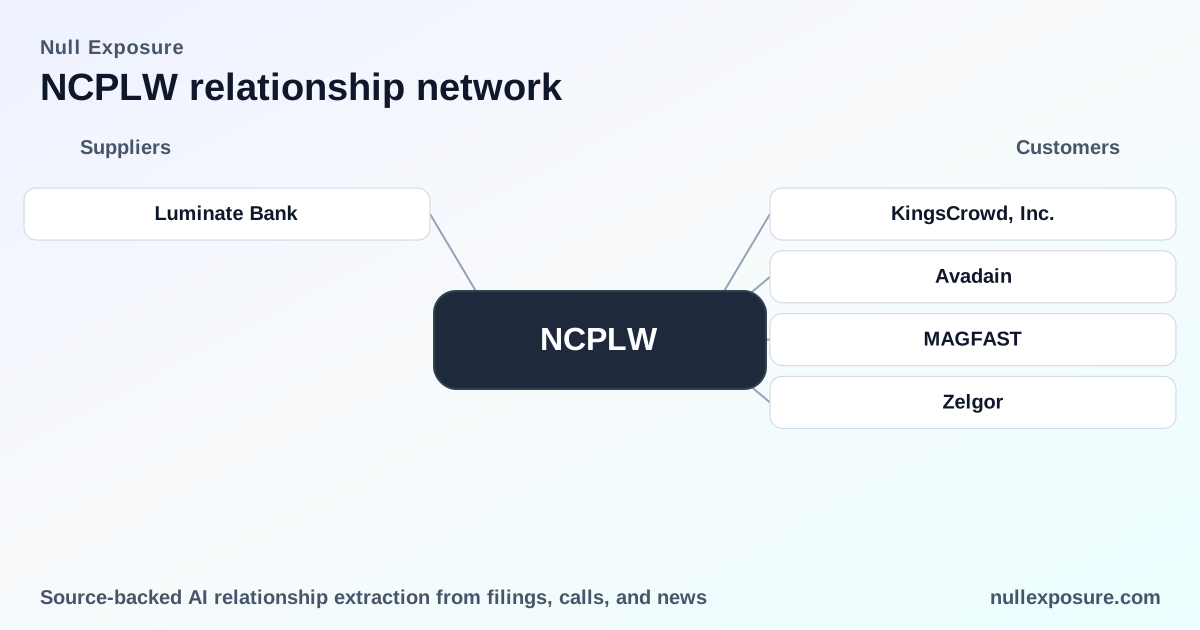
Luminate Bank is the single disclosed escrow provider — operationally critical
According to Netcapital’s FY2025 Form 10‑K, Netcapital currently relies on Luminate Bank to provide all escrow services related to offerings on its platform, making a single banking relationship functionally indispensable to the core funding workflow. This relationship is the principal supplier linkage disclosed under the supplier scope and is therefore a focal point for operational continuity and regulatory compliance assessments. (Source: FY2025 Form 10‑K filing.)
Implications: concentration of escrow services with one bank creates a single point of failure for settlements, custody and investor fund flows; operational outages, regulatory issues, or a contract dispute with Luminate Bank would materially disrupt the platform’s core monetization channel.
Other supplier and contracting signals disclosed in filings
The 10‑K contains additional supplier‑related disclosures that are not captured as a named “relationship” in the supplier results but are material company‑level signals:
- Netcapital licenses the technology necessary to operate its funding portal from Netcapital Systems LLC, a Delaware limited liability company in which founder Jason Frishman holds a 29% interest; payments under that licensing agreement totaled $95,000 (FY2025) and $195,000 (FY2024). This is disclosed in the company filing as a related‑party licensing arrangement and a routine operating expense. (Source: FY2025 Form 10‑K.)
- On June 26, 2025, Netcapital entered a Horizon Software Agreement with Horizon Globex GmbH (incorporated in Switzerland) that granted Netcapital a royalty‑free, paid‑up, non‑exclusive, perpetual, irrevocable license to use specified software in consideration for the issuance of 500,0000 shares of common stock to Horizon or its affiliate; the agreement establishes an international licensing track and cedes equity as consideration. (Source: FY2025 Form 10‑K.)
- The company discloses engaging third‑party service providers for security testing, penetration testing, independent audits, and consulting; as of April 30, 2025 Netcapital owed $200,000 to a consulting firm, payable in shares of common stock, reflecting in‑kind vendor compensation. (Source: FY2025 Form 10‑K.)
These disclosures are firm‑level and indicate the firm’s contracting posture: a mix of cash payments and equity consideration, reliance on licensed technology (including related‑party licensing), and active engagement of external security and consulting providers.
What the constraints say about maturity, concentration and contracting posture
- Contracting posture: The presence of licensing arrangements (both related‑party and third‑party) and an equity‑for‑software trade shows a willingness to use non‑cash consideration to preserve liquidity while securing perpetual software rights. The Horizon license is particularly defensive because the license is perpetual and irrevocable, reducing software re‑procurement risk.
- Concentration and criticality: The escrow relationship with Luminate Bank is highly critical to Netcapital’s platform operations; this single‑bank dependency creates meaningful concentration risk. Similarly, the portal technology is licensed rather than insourced, which concentrates operational dependency on licensors.
- Maturity: The mix of modest licensing fees and stock‑based vendor payments suggests a company in a growth or conservation phase, prioritizing platform continuity over cash outlays; ongoing security testing indicates maturing operational controls but continued reliance on external specialists.
Mid‑article resource: for ongoing monitoring of supplier ties and to build a risk scorecard tied to these disclosures, visit https://nullexposure.com/ to map contracts and counterparties.
Relationship coverage — every supplier result from the filings
- Luminate Bank: Netcapital’s FY2025 10‑K states that the company relies on Luminate Bank to provide all escrow services related to offerings on its platform, establishing Luminate as the primary escrow partner. (Source: FY2025 Form 10‑K, supplier disclosure.)
This article has explicitly covered the single supplier relationship returned in the results set; the other contract and constraint items above are company‑level supplier signals disclosed in the same filing.
Risk and opportunity checklist for investors and operators
- Concentration risk — high: A single escrow provider creates outsized operational dependency on Luminate Bank; investors should prioritize contingency planning and contract terms.
- Related‑party licensing — governance signal: Licensing portal technology from an entity where the founder holds 29% warrants governance scrutiny and clarity on transfer pricing and conflict‑of‑interest controls.
- Equity‑based vendor compensation — liquidity management: Payables being settled in shares and a software license paid in equity indicate deliberate cash conservation but increase dilution risk.
- Perpetual license with Horizon — mitigant: The Horizon agreement’s perpetual, irrevocable license reduces the risk of losing critical software functionality, but issuing shares for that license impacts capitalization.
- Operational maturity — improving: Recurrent third‑party security testing demonstrates investment in operational controls even as core bank and licensing dependencies remain external.
Actionable next steps for due diligence
- Request the escrow agreement and service level agreement (SLA) with Luminate Bank to verify termination rights, redundancy provisions, and contingency arrangements.
- Review the Netcapital Systems LLC licensing agreement for change‑of‑control provisions, pricing mechanics, and related‑party approval documentation.
- Evaluate the Horizon license and the equity issuance terms to quantify dilution and any restrictive covenants.
- Monitor vendor payables that are payable in shares to understand future dilution schedules and off‑balance‑sheet risks.
For a structured supplier risk report and ongoing monitoring of Netcapital’s counterparty exposure, go to https://nullexposure.com/ and request a tailored supplier intelligence briefing.
Conclusion — practical investor takeaway
Netcapital’s disclosed supplier posture shows a platform built on licensed technology and a single, critical escrow banking relationship. The mix of cash and equity compensation to vendors, a perpetual third‑party software license obtained in exchange for stock, and ongoing third‑party security engagements all reflect a company balancing cash conservation with the need to secure operational continuity. Investors should treat Luminate Bank and the company’s licensing arrangements as primary vectors of supplier risk and focus diligence on contract terms, redundancy plans, and governance around related‑party licenses. For ongoing supplier tracking and deeper counterparty analysis, visit https://nullexposure.com/.