NCV-P-A: Preferred Income Built on Outsourced Investment Expertise
AllianzGI Convertible & Income Fund 5.625% Series A Cumulative Preferred Shares (NCV-P-A) is a listed preferred security that monetizes by delivering a fixed income stream to holders while the underlying closed-end fund generates cashflow through an active allocation to convertible securities and other yield instruments. The fund’s economics depend on third‑party investment management and subadvisory arrangements that determine portfolio construction, risk-taking and distribution discipline — the primary levers that support the preferred coupon and liquidation preference.
If you evaluate counterparty exposure or the stability of distributions for NCV-P-A, start with the fund’s adviser relationships. For an actionable supplier risk briefing and ongoing coverage, visit the Null Exposure homepage: https://nullexposure.com/
Why supplier relationships matter for a preferred share
Preferred shareholders rank ahead of common equity for claims on income and liquidation, but they do not run portfolio decisions. That separation makes the adviser contract the operational fulcrum for preferred stability. When a closed-end vehicle outsources portfolio management, investment performance, fee structure and continuity of the advisory team become direct drivers of distribution reliability and residual value supporting the $25 liquidation preference.
- Outsourced management concentrates operational risk in a small number of advisers.
- Advisory agreements determine incentives and termination protections — both of which affect the cost of replacing a manager if performance falters.
- Subadvisers change portfolio tilt and can increase or reduce volatility that will test the preferred coupon through periods of stress.
Learn how we track adviser exposures across listed funds at Null Exposure: https://nullexposure.com/
The supplier map and what investors need to know
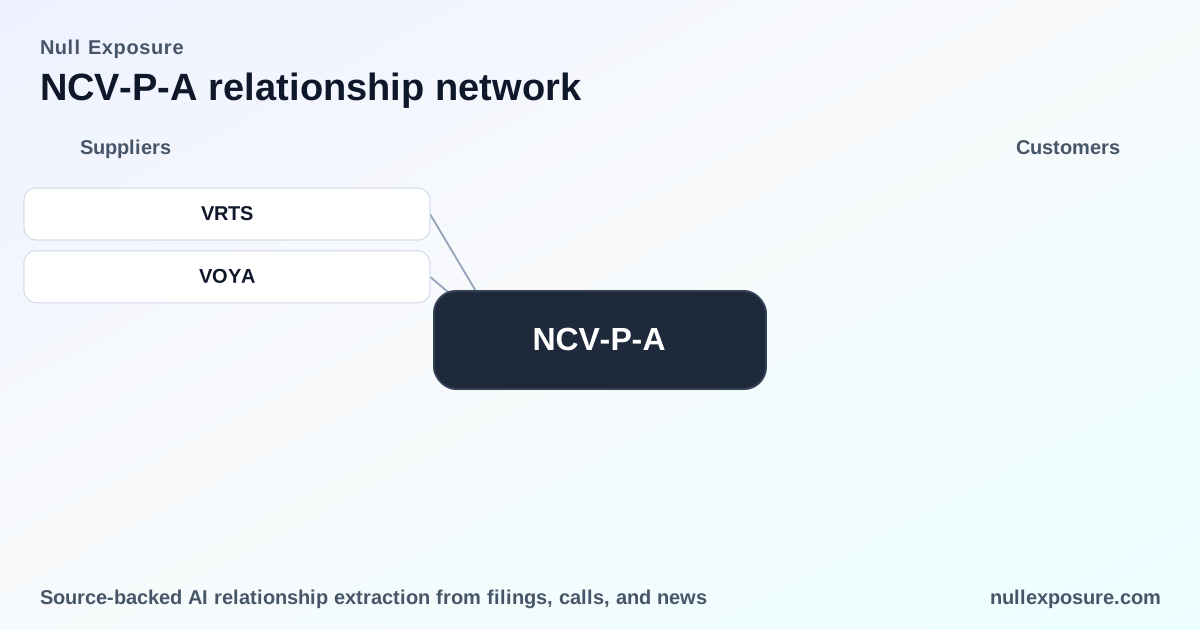
The documents extracted for NCV-P-A show two external managers listed in market disclosures. Both relationships matter because they influence portfolio strategy and the continuity of distributions:
Virtus Investment Advisers, LLC
Virtus Investment Advisers, LLC is identified as an investment adviser to the fund in regulatory and market communications; that role places Virtus at the center of portfolio construction and day‑to‑day risk decisions. A BizWire release published via Markets.FinancialContent (Dec 1, 2025) and republished on WRAL confirms Virtus’s advisory role (links: https://markets.financialcontent.com/stocks/article/bizwire-2025-12-1-virtus-convertible-and-income-fund-announces-quarterly-distribution-5625-series-a-cumulative-preferred-shares?Language=english and https://markets.financialcontent.com/wral/article/bizwire-2025-12-1-virtus-convertible-and-income-fund-announces-quarterly-distribution-5625-series-a-cumulative-preferred-shares).
Voya Investment Management
Voya Investment Management is cited as the fund’s subadviser, responsible for delegated segments of portfolio management that can materially alter risk exposures and income generation. The same BizWire distribution release (Dec 1, 2025), carried on Markets.FinancialContent and WRAL, explicitly names Voya as subadviser (links: https://markets.financialcontent.com/stocks/article/bizwire-2025-12-1-virtus-convertible-and-income-fund-announces-quarterly-distribution-5625-series-a-cumulative-preferred-shares?Language=english and https://markets.financialcontent.com/wral/article/bizwire-2025-12-1-virtus-convertible-and-income-fund-announces-quarterly-distribution-5625-series-a-cumulative-preferred-shares).
How these relationships translate into economic and operational constraints
No explicit supplier constraints were extracted in the available relationship feed. Presently, there is no listed contractual excerpt or regulatory flag that restricts transitions or quantifies termination costs in those sources. That absence is itself a signal: investors must treat counterparty terms as a black box until reviewed in the fund’s official prospectus or advisory agreement.
Company-level operating signals derive logically from the fund structure and the adviser pattern:
- Contracting posture: The fund operates through formal advisory and subadvisory agreements that concentrate decision-making authority with external managers; this creates a defined contracting posture that is typical of closed-end funds and enforceable through board oversight.
- Concentration: Management is concentrated in a small number of external firms, raising supplier concentration risk; a manager departure or strategy drift has an outsized effect on income stability.
- Criticality: Adviser continuity is critical to maintaining distribution policy and preferred coupon coverage because the fund does not execute independent asset management in-house.
- Maturity: As a listed preferred tied to an established AllianzGI fund franchise, the structure shows the maturity of the product offering; longevity depends on adviser performance and market demand for convertibles and income assets.
These are company-level signals informed by the fund’s outsourced model and the absence of extracted constraints.
Risk implications for investors and operators
- Operational risk: Outsourced management concentrates execution risk — due diligence on adviser stability, performance track record and incentive alignment is essential. The naming of Virtus and Voya as advisers/subadvisers focuses the due diligence perimeter.
- Distribution risk: The preferred coupon is supported by the fund’s ability to generate sufficient distributable cash; adviser decisions around leverage, duration and credit selection directly affect payout coverage.
- Counterparty replacement: Without visibility into termination provisions, investors should price in the potential for disruption and transition costs if an adviser is replaced.
For a deeper supplier risk score and tailored exposure report, visit Null Exposure: https://nullexposure.com/
Actionable takeaways
- Confirm advisory terms: Review the fund prospectus and advisory agreements to quantify termination rights, fee cliff risk, and continuity provisions tied to Virtus and Voya.
- Monitor subadviser activity: Track published commentary and interim reports from both Virtus and Voya for shifts in convertible strategy, leverage use, or distribution policy.
- Stress-test distribution: Model downside scenarios that assume adviser-driven portfolio drawdowns to understand how fragile the preferred coupon coverage could be.
Final read: what matters for NCV-P-A holders
NCV-P-A is a yield instrument whose stability is a function of third-party asset management. The extraction of Virtus Investment Advisers, LLC and Voya Investment Management as the adviser and subadviser respectively places manager continuity and strategy execution at the center of the investment case. No supplier constraints were identified in the feed, but that lack of detail heightens the need to inspect governing contracts and recent adviser communications.
For professional-grade supplier intelligence and ongoing monitoring of adviser exposures, return to Null Exposure: https://nullexposure.com/