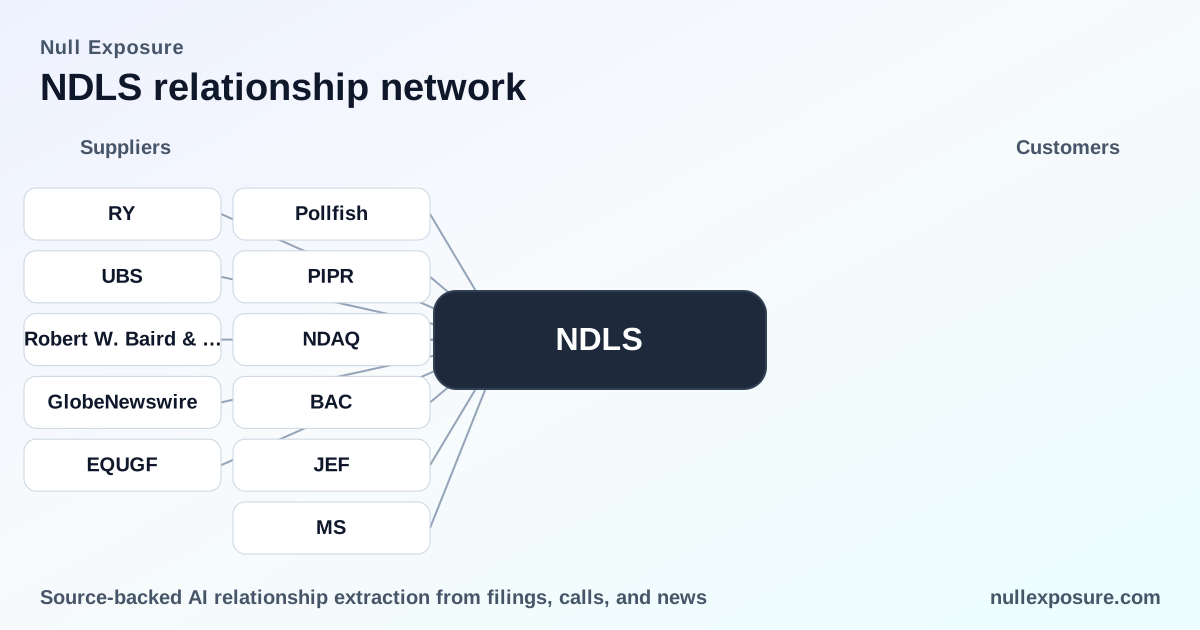
NDLS Supplier Landscape: Strategic Relationships and Operational Constraints
Noodles & Company runs a fast‑casual restaurant business that monetizes through in‑restaurant sales, delivery and franchising channels, while strategically using capital markets and advisory relationships to manage balance‑sheet and shareholder value initiatives. This piece dissects the supplier and advisor network disclosed in recent reporting, highlighting which relationships are operationally critical, which are advisory or capital‑markets oriented, and what that mix means for investors and operators. For deeper supplier intelligence and context, visit https://nullexposure.com/.
The operating model beneath the vendor list — what investors need to know
Noodles relies on a mix of distribution partners, long‑term supplier relationships and single providers for payment processing, which together imply a supply chain with high operational dependency and moderate supplier maturity. The company’s public comments state they select suppliers for quality and brand alignment and seek long‑term, mutually beneficial relationships, signaling a contracting posture that favors stability over frequent switching. At the same time, the company explicitly links restaurant quality to the ability to source fresh ingredients that meet specifications, marking those suppliers as critical to operations rather than optional vendors.
- Contracting posture: biased toward long‑term engagements to secure quality and brand consistency.
- Concentration and criticality: fresh‑ingredient suppliers and distribution partners are operationally critical; payment processing is handled by a single service provider, creating a single‑point dependency.
- Maturity: supplier relationships are described as mature and institutionalized, implying predictable operational performance but also potential switching costs.
Vendor‑by‑vendor: what every named supplier or advisor relationship shows
Below I cover every named relationship surfaced in the reporting, one by one, with source context.
Pollfish
Pollfish conducted consumer research on behalf of Noodles that highlights menu preferences and price sensitivity among diners, useful for menu and pricing strategy. According to a Yahoo Finance write‑up of the Pollfish survey (FY2025), nearly half of respondents preferred a small entrée paired with a side and over 75% prioritized price and value (https://finance.yahoo.com/news/noodles-company-unveils-delicious-duos-120000307.html).
Piper Sandler
Piper Sandler was retained to advise on strategic options to maximize shareholder value, including a potential sale, signaling an active strategic review. Multiple reports in FY2026 note the engagement, including Yahoo Finance and Nation’s Restaurant News coverage of the firm’s role in the review process (https://finance.yahoo.com/news/noodles-company-close-additional-30-183152497.html; https://www.nrn.com/fast-casual/noodles-company-to-close-an-additional-30-35-restaurants-this-year).
The Nasdaq Global Select Market / Nasdaq
Nasdaq remains the trading venue for NDLS and was the vehicle referenced in the company’s announcement of a 1‑for‑8 reverse stock split, which took effect February 18, 2026 and adjusted the share base on a split‑adjusted basis. The company issued the split notice via GlobeNewswire and it was summarized on QuiverQuant (GlobeNewswire press release, Feb 4, 2026; published via QuiverQuant).
BofA Merrill Lynch
BofA Merrill Lynch is identified as one of the book‑running managers on an historical offering that priced at $39.50 per share; that underwriting syndicate relationship shows the company’s prior engagement with major capital‑markets banks (RestaurantNews, offering priced, FY2013 — https://www.restaurantnews.com/noodles-company-prices-offering-at-39-50-per-share/).
Jefferies LLC
Jefferies acted as a book‑running manager in the same offering syndicate, reflecting established investment‑bank relationships used for equity capital raises in previous periods (RestaurantNews, FY2013).
Morgan Stanley & Co. LLC
Morgan Stanley served as a joint book‑running manager and underwriter representative in the historic offering, demonstrating the use of top‑tier investment banks to execute capital markets transactions (RestaurantNews, FY2013).
RBC Capital Markets, LLC
RBC Capital Markets is listed among the book‑running managers on the offering, indicating participation by multiple underwriting firms to distribute equity risk in FY2013 (RestaurantNews, FY2013).
UBS Securities LLC
UBS Securities served as a joint book‑running manager and representative of the underwriters in the same offering, reinforcing the breadth of the underwriting syndicate (RestaurantNews, FY2013).
Piper Jaffray & Co.
Piper Jaffray is named in the underwriting syndicate for the prior offering, further evidencing a history of multi‑bank capital markets relationships (RestaurantNews, FY2013).
Robert W. Baird & Co. Incorporated
Robert W. Baird is included among the managing underwriters on the offering, consistent with the company’s engagement of regional and national banks in capital raises (RestaurantNews, FY2013).
GlobeNewswire
GlobeNewswire distributed the company’s February 4, 2026 press release announcing the reverse stock split and other transfer agent details; the release is the formal channel for corporate announcements to the market (GlobeNewswire press release, Feb 4, 2026 — https://www.globenewswire.com/news-release/2026/02/04/3232528/0/en/Noodles-Company-Announces-Plans-For-1-for-8-Reverse-Stock-Split-Effective-February-18-2026.html).
Equiniti
Equiniti is appointed as the transfer agent and exchange agent for the reverse stock split, a functional back‑office relationship that is transactional but critical for capitalization mechanics and shareholder recordkeeping (GlobeNewswire press release, FY2026).
What this vendor mix signals for strategy and risk
The roster splits cleanly into two buckets: operational suppliers and distribution partners that are critical to daily restaurant execution, and capital‑markets and advisory providers used for strategic actions and financings. The constraints the company disclosed support this reading: it prioritizes long‑term, mature supplier relationships and relies on a distribution network and a single payment processor, which creates concentrated operational dependencies.
- Operational risk: the reliance on fresh‑ingredient suppliers and a distribution network is a structural vulnerability; any disruption in those channels affects restaurant quality and throughput. Payment processing concentration is a single‑point risk for transactions.
- Financial strategy: the hiring of Piper Sandler for a strategic review and the recent reverse split are deliberate capital‑markets actions to reshape the shareholder base and create optionality on strategic alternatives.
- Control points for investors: understand supplier contract terms, distribution redundancy, and the identity of the payment processor; these are the levers that most directly affect operational resilience.
For a tactical update on supplier concentration and to map these vendor relationships against operational hotspots, explore more at https://nullexposure.com/.
What to watch next and investor actions
- Monitor filings and press releases for any disclosures about named food‑service distributors or payment processors; replacing a single service provider or adding distribution redundancy will materially reduce single‑point failure risk.
- Track outcomes from the Piper Sandler strategic review — asset sales, M&A or other shareholder‑value moves will change counterparty exposure and capital structure.
- Validate that Equiniti completes the reverse split mechanics cleanly; shareholder record and float changes will affect trading dynamics.
For ongoing coverage that ties supplier exposures to financial outcomes and to subscribe for alerts on NDLS supplier and advisory developments, go to https://nullexposure.com/.
Summary: the vendor set for NDLS is a classic mix of operationally critical distribution and ingredient suppliers plus institutional capital‑markets advisors, and the company’s public constraints confirm long‑term, mature supplier relationships with concentrated operational criticality. Investors should prioritize supplier continuity and the strategic review’s outputs as the immediate drivers of enterprise value.