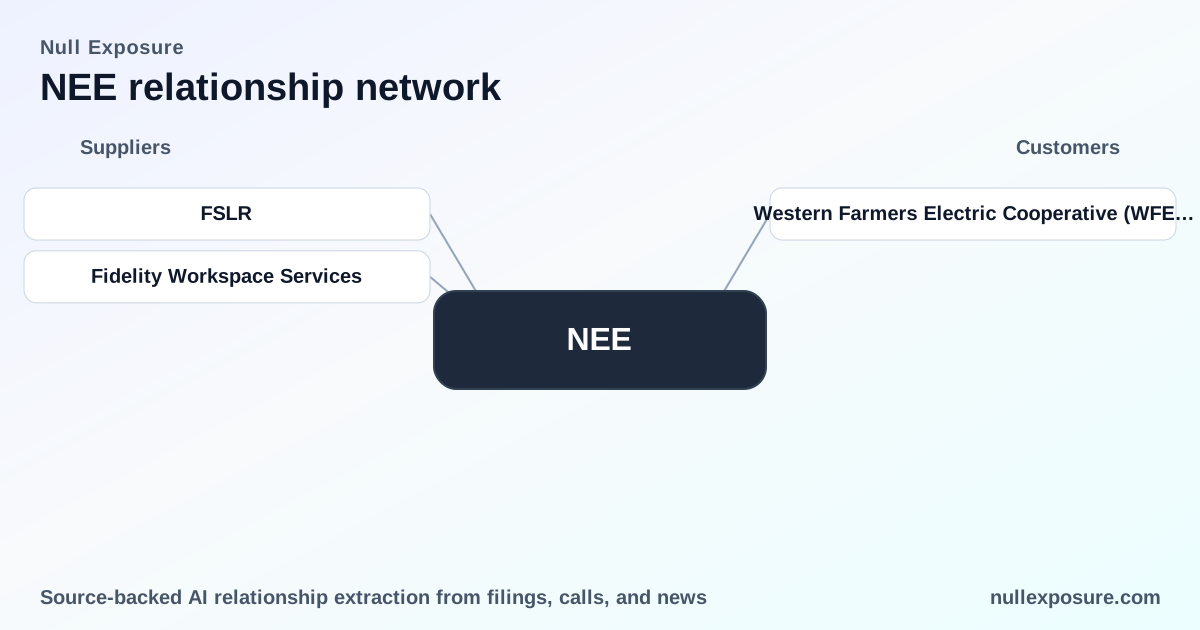
NextEra Energy (NEE): supplier footprint, contract posture, and investor implications
NextEra Energy monetizes through regulated electric utilities and large-scale renewable generation: Florida Power & Light (FPL) provides stable retail utility cash flows, while NextEra Energy Resources and affiliated entities monetize by developing, owning and operating wind, solar and battery assets and selling power under contracts or in wholesale markets. The company’s business model blends regulated utility stability with merchant/contracted renewables upside, and supplier relationships are a material channel through which capital intensity, project execution risk and regulatory exposure flow to investors. Explore more supplier intelligence at https://nullexposure.com/.
What investors need to know about NextEra’s supplier stance
NextEra runs a mixed contracting posture that balances multi-decade pipeline capacity commitments with spot-market fuel procurement. That structure reflects the dual nature of the business: long-horizon physical delivery guarantees for fuel and transport, and shorter-term commodity procurement where market access and price management matter.
- Scale and capital intensity are central: NextEra’s generating base (~46 GW) and multi-billion dollar capital programs drive large-ticket supplier engagements. Institutional ownership is high, concentration of supplier spend is likely concentrated in energy, equipment and construction categories.
- Contract maturity is heterogeneous: filings show multi-decade firm pipeline capacity commitments through 2042 alongside short- and medium-term natural gas supply contracts that expire as early as 2028; this mix reduces volumetric risk for critical transport while leaving price exposure in the commodity layer.
- Data and services access is material: retail operations require vendors that handle customer data and call-center services, creating operational and compliance dependencies with service providers.
These structural features make supplier counterparty performance and regulatory exposure direct drivers of NextEra’s execution risk and margin profile. For further practical supplier due diligence and monitoring, visit https://nullexposure.com/.
Supplier relationships uncovered in public reporting
First Solar (FSLR)
NextEra pays a premium to source panels from First Solar to avoid trade-related seizure and retroactive tariff risk, reflecting a procurement decision that prioritizes supply security over lowest-unit cost. A FinancialContent report in March 2026 noted that U.S. developers, including NextEra, pay a premium for FSLR panels for precisely this reason (FinancialContent, March 2026).
Fidelity Workspace Services
Employees alleged that the holding company allowed excessive fees to Fidelity Workspace Services, claiming those arrangements depressed shareholder value by roughly $500 million; the dispute was reported in March 2026 and is part of litigation and governance scrutiny that investors should monitor for corporate governance and related-party risk (Insurance Journal, March 3, 2026).
How the documented constraints shape the operating model
Company-level disclosures describe supplier and contract dynamics that are direct inputs into risk modeling and valuation.
- Long-term transport contracts reduce delivery uncertainty but create fixed-cost obligations. Filings disclose firm transportation contracts across ten transportation suppliers for natural gas pipeline capacity with aggregate maximum delivery through 2042. This is a structural mitigation of volumetric delivery risk yet represents long-lived contractual commitments that must be serviced regardless of market conditions.
- Short- and medium-term gas supply contracts preserve price flexibility but increase commodity exposure. NextEra uses short- and medium-term natural gas supply contracts extending to 2028 for a portion of FPL’s needs while sourcing remaining volumes on the spot market, preserving optionality but leaving earnings sensitive to spot price moves.
- Service-provider relationships are operationally critical and involve sensitive customer data. Filings identify that retail businesses must provide customer data to vendors—call centers and other service providers—creating compliance and continuity dependencies.
- Supplier spend is large and central to strategy. Capital expenditures and investments lines indicate multi-billion-dollar commitments, signaling that single-supplier failures or concentration in critical categories would have meaningful operational and financial impact.
These constraints collectively indicate a mature supplier program that uses long-term delivery contracts for critical infrastructure while leaning on short-term market purchases for commodity exposure, and they highlight governance and third-party operational risk as active investor considerations. (Source: company regulatory filings and recent public disclosures.)
Investment implications — what investors should watch
NextEra’s supplier posture produces a distinct trade-off set for investors.
- Upside from execution and scale: Secure, premium supply relationships for critical equipment (illustrated by First Solar) protect project delivery timelines and avoid regulatory tail risks that can destroy asset economics.
- Downside from contractual fixed costs and vendor disputes: Long-term transportation commitments create fixed obligations; governance or related-party disputes—like the matter involving Fidelity Workspace Services—introduce reputational and potential financial downside that can compress valuation multiples.
- Earnings sensitivity to commodity prices remains meaningful because a portion of fuel needs is procured short-term or in the spot market; this preserves operating leverage to favorable market moves but increases volatility through commodity cycles.
- Operational risk is concentrated in a few supplier categories—generation equipment, major construction contractors, fuel transport and service providers handling customer data—so counterparty health and compliance postures are material to downside scenarios.
Actionable checklist for investors:
- Monitor long-dated transport contract roll rates and counterparty credit for embedded fixed obligations.
- Track vendor concentration in major capex categories and any litigation or governance developments tied to service providers.
- Model earnings sensitivity to natural gas spot price paths given the partial reliance on short-term procurement.
For ongoing monitoring of supplier exposure and related signals, see the tools at https://nullexposure.com/.
Bottom line: supplier risks are structured, material and monitorable
NextEra’s supplier ecosystem is deliberately structured: long-term capacity contracts protect delivery; short-term purchases preserve price flexibility; premium procurement for select components buys regulatory risk reduction; and service relationships introduce governance and data-handling exposure. Investors should incorporate these supplier dynamics into scenario analysis—particularly capex execution, contract renewals through 2028–2042, and outcomes from governance disputes—when assessing NextEra’s risk-adjusted growth potential.
For a deeper look at supplier relationships and tailored monitoring for your portfolio, visit https://nullexposure.com/ for practical coverage and alerts.