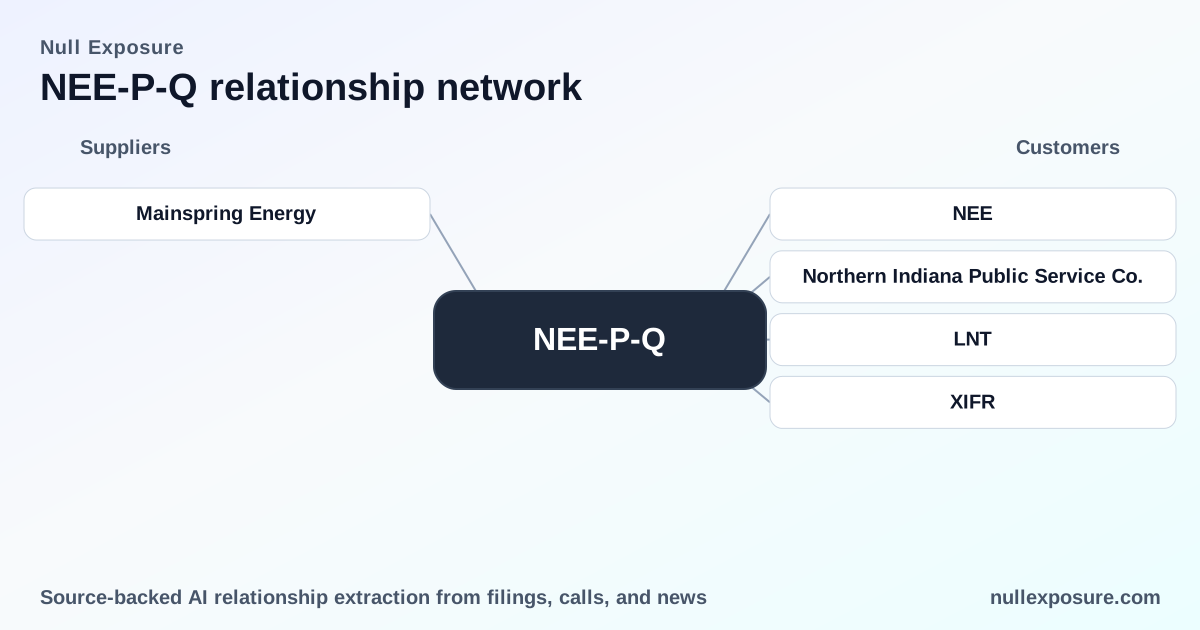
NextEra (NEE-P-Q) supplier landscape: what the Mainspring pact reveals to investors
NextEra Energy’s supplier relationships directly feed its generation pipeline and merchant contracts; the company secures technology and equipment partners through large, project-level agreements and monetizes via long-term electricity sales, capacity contracts, and asset-backed returns. For investors evaluating NEE-P-Q exposure, supplier deals that deliver novel generation technologies or fuel flexibility can shift project economics and operational optionality across multi-year horizons. Learn more about supplier tracking and implications at https://nullexposure.com/.
The headline: Mainspring’s $150 million contract — why it matters
In March 2021 Mainspring Energy announced its Linear Generator and disclosed a $150 million contract with NextEra Energy Resources, signaling NextEra’s willingness to underwrite scale investments in emerging distributed-generation technology that accepts biogas and hydrogen. According to TechCrunch (March 9, 2021), the contract pairs NextEra’s project development scale with Mainspring’s fuel-flexible generator design, creating a pathway to commercial deployment at utility scale.
This relationship is a clear example of NextEra using supplier contracts to buy strategic optionality—not simply commodity equipment—by contracting for technology that can broaden fuel inputs and support decarbonization objectives.
All supplier relationships surfaced (complete list)
Below is every supplier relationship surfaced in the provided results. Each entry is concise and sourced.
- Mainspring Energy — In March 2021 Mainspring unveiled its fuel-flexible Linear Generator and disclosed a $150 million contract with NextEra Energy Resources to support deployment; the original report ran in TechCrunch on March 9, 2021. (TechCrunch, March 2021)
What that single relationship signals about NextEra’s supplier strategy
The Mainspring contract is small in count but large in signal. From this interaction, investors can infer several company-level operating characteristics about NextEra’s approach to suppliers:
- Contracting posture — strategic and project-driven. NextEra structures large, explicit contracts to secure new technology for defined projects rather than ad-hoc purchases, reflecting a procurement posture that prioritizes scale and outcome over spot-price sourcing.
- Concentration — selective but high-impact. The company engages selectively with a limited number of specialized suppliers when technology moves the needle on project economics, concentrating spend where supplier capabilities materially alter asset returns.
- Criticality — supplier technology can be mission-critical. For projects using non-traditional fuels or novel generators, supplier performance directly affects plant availability and dispatch economics, making some suppliers operationally critical.
- Maturity — mix of incumbent and emerging suppliers. NextEra balances purchases from established OEMs with contracts for early-stage tech providers to capture cost and emissions advantages as technologies mature.
These are company-level signals about NextEra’s supplier posture; they are not assigned to any single relationship unless explicitly documented.
Investment implications and risk factors investors should price in
The Mainspring example crystallizes a set of practical investment considerations for holders of NEE-P-Q:
- Upside from technology optionality. Supplier contracts that deliver fuel flexibility (biogas, hydrogen) increase the addressable market for NextEra projects and can protect margins as fuel markets evolve. That optionality is a value-enhancer rather than a routine procurement line item.
- Execution and performance risk. Emerging equipment introduces commissioning and reliability risk; counterparty underperformance would directly impact asset-level cash flows. Investors should underwrite potential performance-based penalties or remediation costs into valuations.
- Capex and funding cadence. Large supplier contracts often map to staged capital commitments tied to project milestones; funding flows and balance-sheet timing matter for preferred-holders depending on how NextEra allocates capital across projects.
- Regulatory and offtake sensitivity. Technology that enables lower emissions intersects with regulatory incentives and renewable procurement mandates; that linkage can be a tailwind but also creates dependency on policy continuity.
Tactical notes for operators and investors
- Prioritize diligence on supplier SLAs and warranty constructs. When evaluating NEE-P-Q exposure, confirm whether major contracts include performance guarantees, liquidated damages, and insurance-backed remedies.
- Watch deployment cadence and commissioning milestones. Technology-readiness timelines materially affect revenue recognition and cash generation at the project level.
- Monitor supplier concentration across project types. A handful of single-source relationships for critical components increases downside risk if one supplier fails to deliver.
Middle reading: for a structured view of how supplier relationships feed capital planning and risk assessments, visit https://nullexposure.com/ to see consolidated supplier signals and relationship timelines.
Final takeaway and action items
The Mainspring deal is a targeted example of NextEra’s approach: selective, high-value supplier contracting aimed at securing technological optionality and project-level advantage. For investors in NEE-P-Q, this means playing both sides of opportunity and execution risk—contracts can boost long-term asset returns but can also concentrate operational exposure if emerging technologies underperform.
To translate this into investment action:
- Reconcile contract schedules against projected cash flows and preferred dividend coverage.
- Demand clarity on supplier performance clauses in investor disclosures and project filings.
- Track deployment milestones and independent performance metrics to validate anticipated upside.
For deeper supplier intelligence, structured tracking, and relationship-level timelines, return to the hub at https://nullexposure.com/ and subscribe to ongoing supplier-monitoring updates.