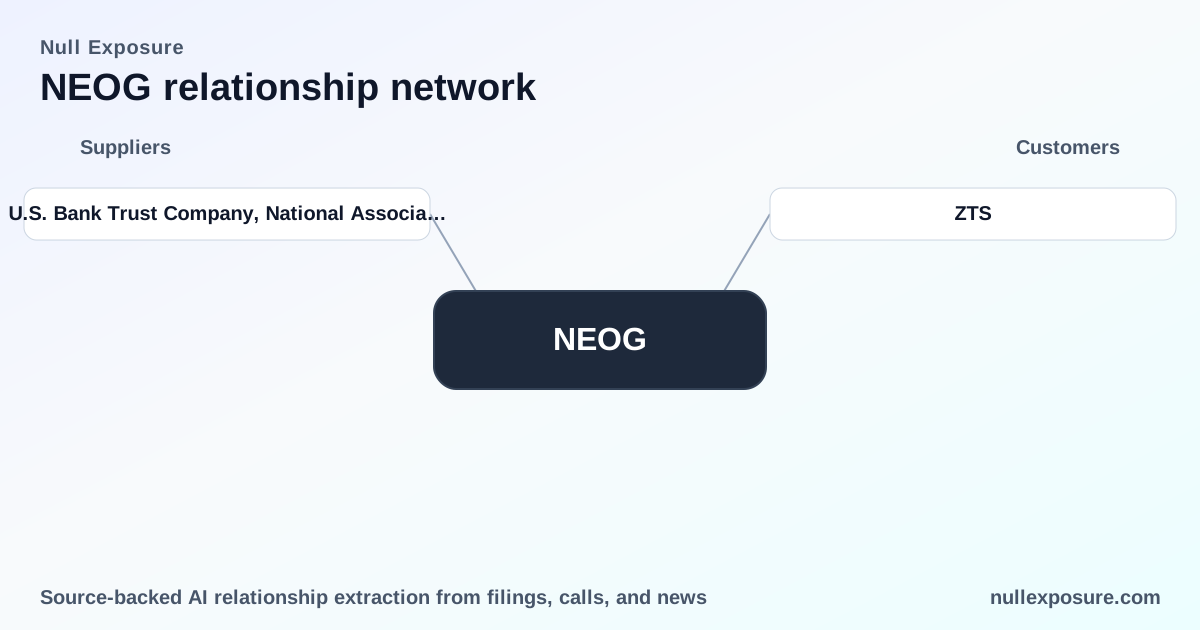
Neogen (NEOG) — Supplier relationships and what they mean for investors
Neogen develops, manufactures and sells products for food and animal safety, monetizing through product sales, licensing royalties on core assay technologies, and capital markets financing. The business combines in‑house R&D and sales with third‑party manufacturing and recurring royalty obligations, while maintaining public debt that influences capital structure. For an ongoing feed of supplier and counterparty signals, visit https://nullexposure.com/.
One‑line investment thesis
Neogen is a product‑led safety company: revenue driven by diagnostics and consumables, augmented by licensed technology royalties and supported by external financing; supplier dynamics (third‑party manufacturers and licensors) influence gross margins, time to market, and operational leverage.
Supplier relationships on record: trustee for senior notes
U.S. Bank Trust Company, National Association
Neogen has a formal indenture for 8.625% Senior Notes due 2030, with U.S. Bank Trust Company, National Association named as trustee under the indenture for Neogen Food Safety Corporation’s issuance. According to the company's FY2025 Form 10‑K, the indenture dated July 20, 2022, establishes U.S. Bank Trust as the trustee for these senior notes. (Source: Neogen FY2025 10‑K)
What the disclosed supplier and contract signals tell investors
Licensing is a recurring, measurable expense
Neogen discloses royalty expense tied to licensed technology used in its Food Safety segment, specifically impacting allergen and pathogen product lines. The company reported royalties of $1,605 (FY2025), $3,250 (FY2024), and $3,392 (FY2023), expensed to sales and marketing, demonstrating a recurring outflow that reduces gross profit on specific product families. (Source: Neogen FY2025 10‑K)
Neogen operates as licensee and outsources manufacturing
The SEC filing notes the company incurs royalties (licensee posture) and that many diagnostic instruments and readers are produced by third‑party vendors to Neogen’s specifications. These two facts together characterize a hybrid operating model: internal product design and IP monetization combined with outsourced manufacturing for scale. (Source: Neogen FY2025 10‑K)
Spend magnitude and what it implies about leverage and concentration
The royalty numbers place licensing spend in the low‑single‑digit millions annually, consistent with the spend band disclosed. This level of licensing spend is material enough to affect margins on affected product lines, but not large relative to total revenue (~$880M TTM)—it is a concentrated cost that is important to monitor as new products roll out or licensing terms reset. (Source: Neogen FY2025 10‑K)
Operational constraints and business model characteristics
Contracting posture
Neogen’s disclosures indicate a mix of licensing obligations and contractor manufacturing. This creates contractual complexity: Neogen is contractually a licensee for patented assay elements while delegating physical production to vendors that build to specification. These contracts require active management of IP royalties and vendor quality control.
Concentration and criticality
Third‑party manufacturing for instruments is operationally critical—outsourced vendors produce finished readers shipped directly to customers—so vendor continuity and quality assurance are business‑critical risks. Licensing relates to product lines central to the Food Safety business (allergen/pathogen assays), so the associated royalty arrangements are disproportionately important for those revenue streams.
Maturity and predictability
Royalty payments are disclosed across several fiscal years, indicating established, recurring royalty contracts rather than one‑off fees. The senior notes indenture and trustee relationship reflect a mature financing posture with medium‑term debt outstanding through 2030, which influences capital allocation and refinancing risk. (Source: Neogen FY2025 10‑K)
Risk and opportunity implications for investors
- Margin pressure: Outsourced manufacturing and royalty costs compress margins on specific product categories; monitoring product mix changes is essential.
- Operational dependency: Reliance on third‑party vendors for instrument production increases supply‑chain and quality risk, but also enables scale without heavy capital expenditure.
- Capital structure: The existence of an 8.625% senior note due 2030 is a fixed cost of capital that investors must weigh against free cash flow generation and refinancing options. (Source: Neogen FY2025 10‑K)
For deeper supplier relationship monitoring and to map counterparty exposures across portfolios, explore Null Exposure’s intelligence hub at https://nullexposure.com/.
Practical takeaways for research and procurement teams
- Prioritize vendor diligence for third‑party manufacturers producing instruments to Neogen’s specifications; vendor failures would directly affect shipped product.
- Track royalty schedules tied to allergen and pathogen assays to forecast margin dynamics as new SKUs scale.
- Incorporate debt servicing into operating forecasts—the senior notes are a deterministic cash outflow through 2030 and affect leverage ratios. (Source: Neogen FY2025 10‑K)
Closing view and next steps
Neogen runs a product business that leverages external manufacturing and licensed technologies while carrying public debt; this structure delivers scale and IP leverage but requires active supplier governance and capital‑structure monitoring. For continuing supplier signal coverage and to integrate these relationship signals into investment workflows, visit https://nullexposure.com/.