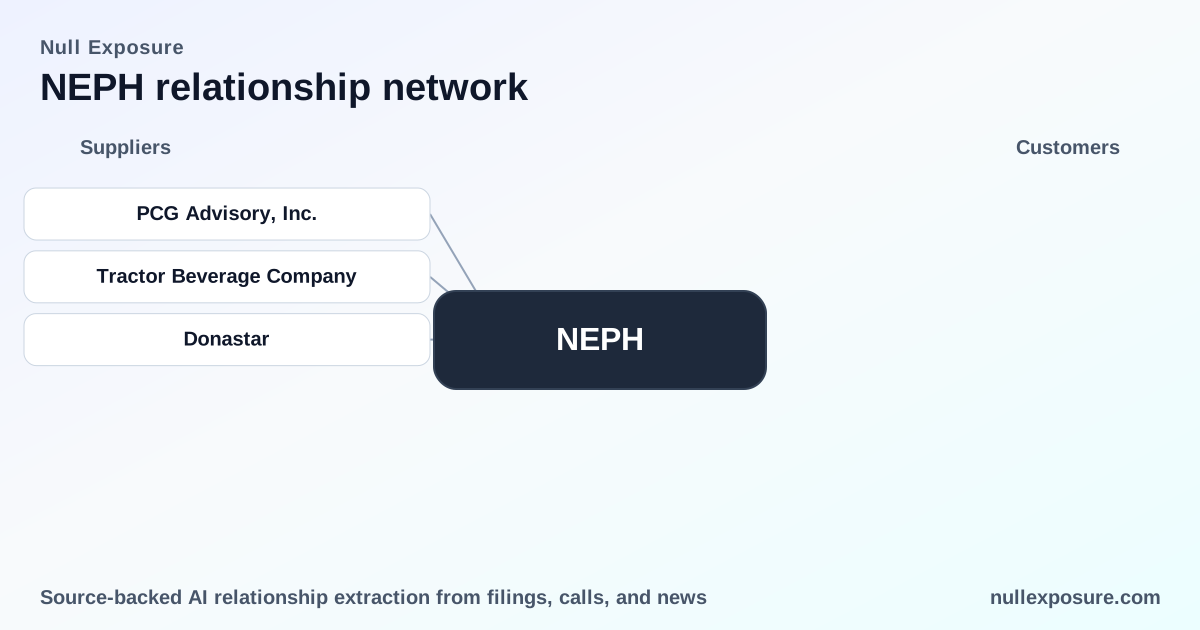
Nephros (NEPH) supplier map: concentrated manufacturing risk with a steady IR cadence
Nephros develops and sells hospital- and commercial-grade water filtration products and monetizes through direct product sales and service agreements to medical and commercial customers. The company’s economics are driven by recurring consumable demand for filter materials, periodic device sales, and programmatic contracts that scale with institutional deployments. For investors and operators, the critical lens is supplier concentration—one manufacturing partner supplies core filter media under a long-term license and minimum-purchase commitments that materially shape procurement, working capital and margin exposure.
If you want a consolidated supplier risk profile and ongoing monitoring signals, visit https://nullexposure.com/ for coverage and alerts.
How the supplier list actually reads for NEPH
Nephros runs a small, concentrated supplier ecosystem. Public communications show a formal investor relations relationship with an IR firm while corporate filings reveal an exclusive manufacturing and supply partnership with an Italy-based manufacturer that is the sole source for key filter material. Historical commercial partnerships with food-and-beverage channel partners are present but not core to the company’s manufacturing exposure. Below I summarize each external relationship captured in public feeds and reconcile those against contract-level excerpts disclosed by the company.
PCG Advisory, Inc.
PCG Advisory is listed as Nephros’ investor relations contact in multiple FY2025 press releases, providing PR and IR support for earnings and programmatic announcements. (See Nephros press releases on Yahoo Finance and The Globe and Mail listing Kirin Smith of PCG Advisory as Investor Relations contact, FY2025.)
Tractor Beverage Company
In FY2019 Nephros announced a commercial partnership to supply and service a nationwide fast-casual restaurant operation, identifying Tractor Beverage Company as a channel partner for beverage-related water filtration deployments. (Reference: finviz summary quoting a GlobeNewswire release, FY2019.)
Donastar
Donastar is a co-participant in that same FY2019 announcement, named alongside Tractor Beverage Company in the GlobeNewswire release as a partner to supply and service fast-casual restaurant locations. (Reference: finviz summary quoting GlobeNewswire, FY2019.)
Medica S.p.A.: the manufacturing anchor that defines risk and leverage
Nephros’ operating posture is materially shaped by the License and Supply Agreement with Medica S.p.A., an Italy-based manufacturer. According to the company’s disclosures, Medica is the sole supplier of the filter material used in certain products, and the agreement grants Medica an exclusive license to make the filtration products during the term of the contract. The contract term was extended to December 31, 2028, and contains minimum annual purchase commitments in the low millions of euros for each year from 2024 through 2028. (Source: Nephros’ License and Supply Agreement disclosed in company filings; contract language and minimums are in the company’s public disclosures.)
- The disclosed minimum purchase schedule runs roughly from €4.208M in 2024 to €5.75M in 2028, establishing a predictable procurement floor.
- The agreement grants worldwide marketing and distribution rights with territory limitations, tying manufacturing exclusivity to global distribution scope.
These terms make Medica a single point of failure for filter media availability: if the agreement terminates or minimums are not met, Nephros could face supply interruption, elevated sourcing cost, or the need to requalify alternate media—actions that would compress margins and disrupt delivery to customers.
What the constraints tell investors about NEPH’s operating model
- Contracting posture: long-term and binding. The license and supply arrangement runs to at least 2028 and includes formal termination mechanics tied to purchase compliance, signaling a long-run supplier commitment baked into procurement planning.
- Concentration: single-source criticality. The company-level signal is explicit—Nephros relies on a limited number of independent manufacturers and, for certain products, a sole supplier for essential materials. That raises operational and strategic dependence.
- Spend profile: mid-single-digit millions (EUR) annually. Minimum purchase commitments place annual spend per the contract in the €4M–€6M band, which is a non-trivial portion of reported revenue.
- Geography and rights: EMEA manufacturer with global license elements. The manufacturing partner is Italy-based, and the licensing language grants global distribution rights under the agreement, linking European supply to worldwide sales.
- Relationship stage and maturity: active and enforceable. The company satisfied the minimum for 2024, and future years’ commitments create measurable delivery and cashflow benchmarks that management must meet.
Operational and financial implications for investors and operators
- Supply risk equals strategic risk. With Medica as the single supplier for key media, any production, quality, or contractual breakdown will immediately stress fulfillment and margins.
- Minimum purchase obligations create both revenue support and downside exposure. The annual minima provide a demand floor for the supplier but also require Nephros to hit procurement thresholds that affect working capital and inventory planning.
- Investor relations cadence matters. PCG Advisory’s role in FY2025 communications supports transparency and message discipline—monitor their press releases for disclosure around supplier performance and programmatic sales. (See Nephros press releases on Yahoo Finance and The Globe and Mail, FY2025.)
If you want automated tracking of supplier disclosures and contract milestones for NEPH, check https://nullexposure.com/ for tailored supplier intelligence.
What to watch next — practical monitoring checklist
- Track any amendment, extension or termination notices related to the Medica License and Supply Agreement; those will change the concentration profile immediately.
- Watch quarterly commentary for evidence that Nephros is meeting annual minimum purchase levels and for signs of negotiations to relax or expand minimums. (FY2024/FY2025 filings referenced minimum purchase schedules.)
- Monitor programmatic sales growth and channel partnerships (e.g., past restaurant deployments with Tractor and Donastar) as evidence that commercial expansion is converting into recurring consumable demand. (See FY2019 commercial partnership release cited on finviz/GlobeNewswire; and FY2025 programmatic sales press coverage.)
For ongoing monitoring and alerts on these variables, visit https://nullexposure.com/ and subscribe to coverage.
Bottom line
Nephros’ supplier profile is straightforward and stark: a legally binding, multi-year exclusivity with Medica for critical filter media, underpinned by multi-million-euro minimum purchase obligations, and supplemented by external IR support via PCG Advisory and legacy commercial channel deals. That combination offers revenue predictability on the upside but concentrates operational risk on a single manufacturing relationship. Active investors and operators must prioritize covenant monitoring, alternative-sourcing planning, and cadence in public disclosures as the primary levers to manage that risk. For structured alerts and supplier-focused intelligence on NEPH, go to https://nullexposure.com/.