NESR: What investors and operators should know about supplier relationships and strategic constraints
National Energy Services Reunited Corp. (NESR) is an acquisitive oilfield services platform that monetizes through service contracts and regional operating revenues while scaling via strategic acquisitions. The company reports TTM revenue of $1.324B and EBITDA of $240M, and its operating model centers on rolling up localized service providers into a global energy-services supplier across North America, EMEA and APAC. For investors and commercial counterparties, the most relevant signals are the company’s acquisition-driven growth posture, standardized vendor contracting expectations, and an early pattern of modest administrative subscription expenses tied to its sponsor relationships. Learn more at https://nullexposure.com/.
How NESR actually contracts and grows — the operating model in plain language
NESR’s commercial DNA is clear: growth by acquisition plus operating services revenue. Public filings show the company executed stock purchase agreements to acquire whole or majority stakes in operating businesses rather than building organic supply chains from scratch. That contracting posture creates three persistent characteristics for counterparties and investors:
- Concentration by acquisition: NESR integrates acquired entities into a single commercial footprint, increasing revenue scale quickly but also centralizing counterparty risk in integration processes and legacy liabilities.
- Contracting discipline and standard clauses: filings indicate NESR seeks waiver language from vendors and service providers around trust-account monies and similar protections — a sign vendors should expect firm standard terms during onboarding.
- Early-stage administrative commitments: the company paid a recurring sponsor fee ($10,000 per month) for office and administrative services in its start-up period and recorded modest operating costs ($80,000 in 2017 for those services), which is evidence of measured early overhead, not a material procurement spend band.
These operating traits make NESR attractive for investors looking for scale-driven margin expansion, but they also mean counterparties should plan for standardized, acquisition-oriented contracting and a disciplined vendor onboarding process.
What the filings list — the supplier/target relationships you need on your radar
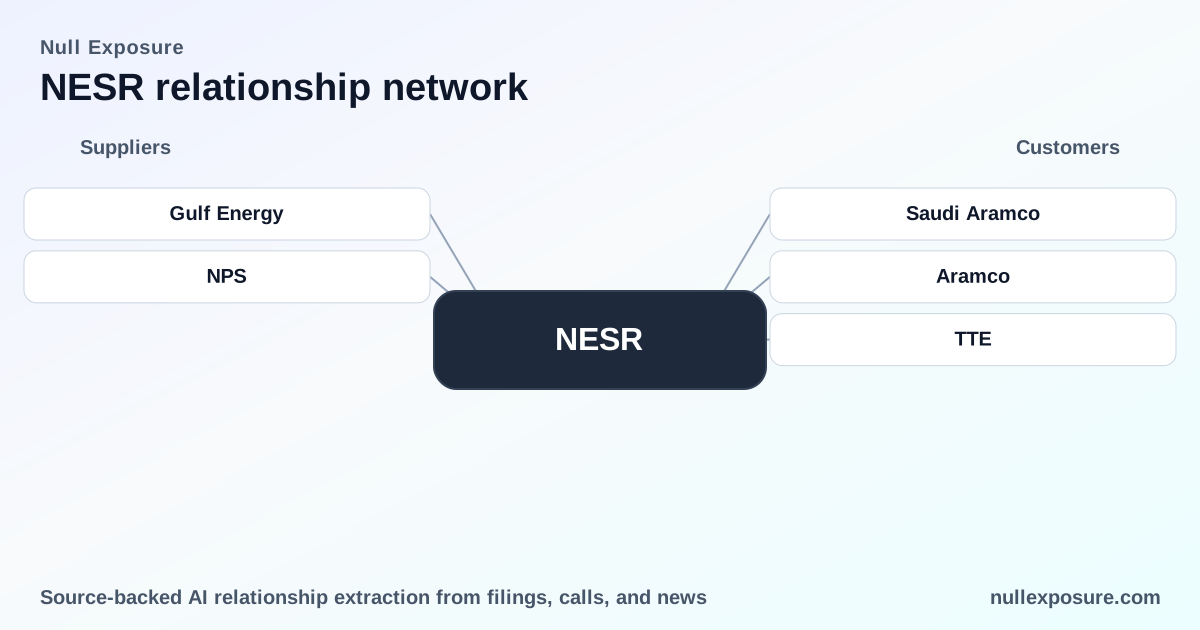
Gulf Energy (GES) — majority acquisition in 2017
NESR contracted to acquire 61% of Gulf Energy through a stock exchange valuing the stake at $184.8 million, using NESR ordinary shares valued at $10.00 per share, according to NESR’s FY2017 10‑K. This is a strategic majority purchase intended to expand NESR’s regional service footprint. (Source: company 10‑K, FY2017.)
NPS Holdings Limited (NPS) — full-equity acquisition in 2017
Under a separate Stock Purchase Agreement disclosed in NESR’s FY2017 10‑K, NESR and a co‑buyer (Hana Investments Co. WLL) agreed to acquire 100% of the equity interests of NPS, with the acquisition structured in two closings; the transaction forms part of NESR’s roll‑up strategy to consolidate oilfield services providers. (Source: company 10‑K, FY2017.)
What the constraints and clauses tell buyers and risk managers
NESR’s extracted constraints from the filings form practical, company-level signals for counterparties and analysts:
- Contract type — subscription/admin fee: NESR paid a recurring sponsor fee ($10,000 per month starting May 17, 2017) for office and administrative support; the company recorded $80,000 in fees for these services in 2017. This shows early-stage administrative outsourcing rather than heavy internal overhead, and suggests NESR will use a mix of internal and contracted administrative arrangements. (Company filing language.)
- Geographic scope — global, with focus on NA/EMEA/APAC: NESR explicitly focused its target search globally with initial emphasis on North America, Europe, Asia and Africa, indicating geographic diversification in revenue and operational exposure. (Company filing language.)
- Relationship roles — buyer and seller in acquisition transactions: NESR acted as buyer in the Stock Purchase Agreements that formalized acquisitions of NPS and Gulf Energy; in the NPS transaction NESR was acquiring 100% of the equity from selling stockholders including Hana Investments. These are acquisition-stage commercial relationships, not simple supplier deals. (Company filing language citing the NPS and GES SPAs.)
- Vendor expectations — service provider waivers: NESR seeks vendor waivers regarding trust-account monies and related protections, indicating standardized onboarding clauses that protect public‑shareholder funds and reduce vendor recourse. (Company filing language.)
- Relationship stage and maturity — active acquisition stage: the company’s November 12, 2017 agreements to acquire NPS and GES are recorded as active transactions, implying ongoing integration work and transitional contract management for several years following closing. (Company filing language.)
- Segment focus — services: NESR’s search and acquisitions center on oil and gas services, placing the company in the services segment where recurring project revenues and contract renewals drive near-term cash flow. (Company filing language.)
- Spend band — low recorded early fees: the $80,000 total fees in 2017 for sponsor services places recorded early spend in a sub‑$100k band; this is a company-level signal about early administrative spend rather than total procurement exposure to operational vendors. (Company filing language.)
Implication: procurement teams and operators should expect standardized contract language focused on protecting the consolidated company and public shareholders, and should prepare for accelerated integration timelines after acquisition.
Commercial and credit risks that matter to investors and operators
- Integration risk is primary. Acquiring full or majority stakes in operating companies transfers legacy liabilities and contractual complexity to NESR; successful margin improvement depends on execution.
- Contractual stickiness is high. Vendor waiver requirements and centralization of contracting reduce counterparty bargaining leverage and can accelerate contract standardization across acquired units.
- Geographic diversification reduces single‑market exposure but increases operational complexity. NESR’s global footprint spreads commodity and regulatory risk across regions, but operators should price locality and compliance costs into bids.
- Early administrative spend is immaterial to core operations. The sponsor subscription fee and $80k of 2017 fees are company‑level start‑up items, not reflective of later operating or CAPEX scale.
What practitioners should do next
- For investors: track integration milestones and incremental EBITDA conversion from these acquisitions; NESR’s current EV/EBITDA (~9.73 per reported metrics) implies expectations for margin uplift from consolidation.
- For procurement teams bidding with NESR: expect standardized waiver clauses and a buying posture tied to centralized procurement, so build contract templates that accommodate trust-account and assignment provisions.
- For commercial partners: price in regional compliance and mobilization costs given NESR’s multi‑region strategy.
If you want the structured exposure map and parsed relationship details, visit https://nullexposure.com/ for deeper relationship intelligence and cross‑company comparatives.
Final takeaway
NESR is an acquisitive, services‑oriented energy supplier that monetizes through operational revenues and scale effects from targeted acquisitions. The FY2017 stock purchase agreements for Gulf Energy and NPS show a deliberate roll‑up strategy and a contracting posture that emphasizes centralized protections for the consolidated company and its public shareholders. For investors and operators, the key risks to monitor are integration execution, standardized contracting, and regional operational complexity. For continuing coverage and relationship monitoring, see https://nullexposure.com/.