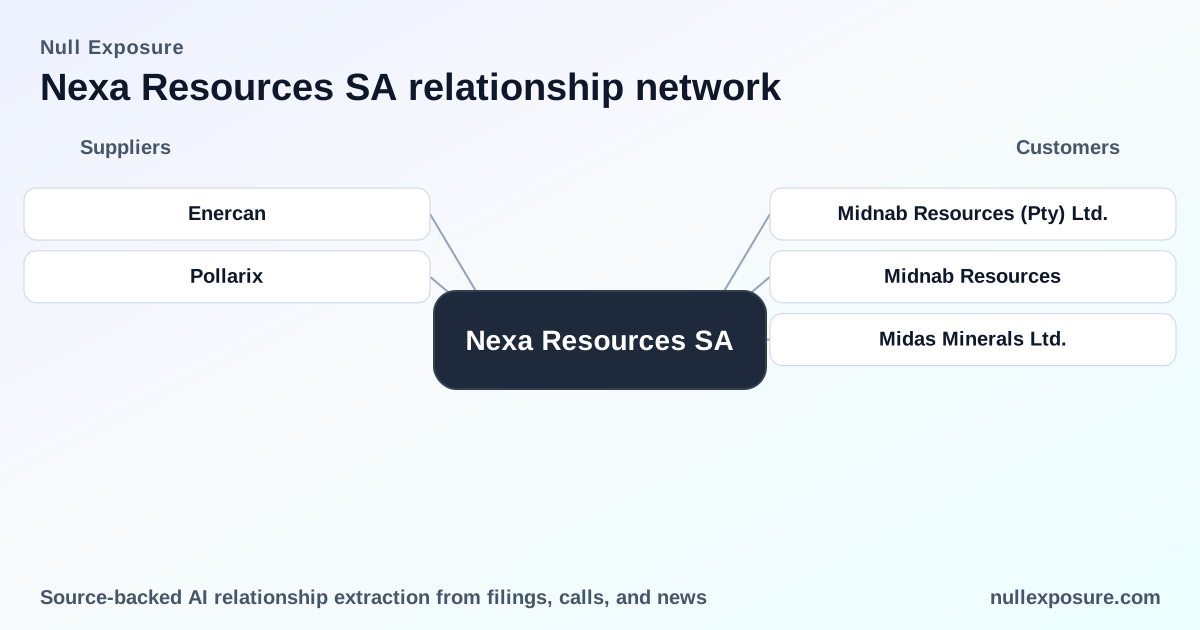
Nexa Resources (NEXA) — supplier relationships and what they signal for investors
Nexa Resources operates and monetizes a vertically integrated zinc mining and smelting business: the company extracts and processes zinc concentrates through owned mines and smelters, sells refined metal and by‑products into global commodity markets, and preserves margin through captive processing and energy arrangements. Revenue generation is commodity-driven and capital-intensive, with operating leverage concentrated in production throughput, smelting efficiency, and energy cost control. For investors and procurement officers evaluating supplier relationships, supplier and investee linkages that secure energy and generation assets are material to cost structure and operational continuity. Learn more at https://nullexposure.com/.
Quick financial profile that frames supplier risk
Nexa is a mid‑cap, exchange‑listed producer with a balance of scale and concentrated ownership. Key headline metrics: Revenue (TTM) ≈ US$3.00B, EBITDA ≈ US$660M, market capitalization ≈ US$1.47B, operating margin ~24% and return on equity ~19%. These figures define a business with meaningful free cash flow potential but also sensitivity to zinc prices, power costs, and capital expenditures needed to sustain smelting capacity.
- Capital intensity: Smelting and mining require ongoing maintenance and periodic modernization capital. That shapes procurement cycles and vendor contracting posture.
- Concentration and control: Insider ownership is high, indicating concentrated control over strategy and supplier relationships.
- Cost criticality: Energy and generation contracts are directly tied to competitive margins; disruptions or price shifts transmit to profitability.
How supplier relationships are structured in practice
Nexa’s supplier posture for critical inputs combines long‑term agreements, equity positions in energy providers, and targeted maintenance spending. That structure aligns with the need to stabilize operating cost inputs (especially electricity) and protect throughput. Long-term energy arrangements and minority equity stakes in generation partners are strategic levers Nexa uses to reduce volatility in smelting cash costs and ensure continuity.
Explore supplier relationship mapping and analytics at https://nullexposure.com/.
What the public signals show — Enercan and Pollarix
Nexa disclosed two supplier/investee relationships in its FY2026 communications that are relevant to investors and operators. Each relationship is summarized below with the source.
Enercan
Nexa identifies Enercan as an equity‑method investee and confirms a long‑term energy supply agreement between the parties, indicating Nexa secures part of its energy needs via strategic ownership and contracted supply from Enercan. This structure reduces energy exposure through a combination of capex stake and contractual supply certainty (Newsfile release, 10 March 2026).
Source: Nexa production and guidance release on Newsfile, March 10, 2026 — “Enercan is an equity method investee with which we have a long-term energy supply agreement.”
Pollarix
Nexa allocates non‑expansion capital to maintain electric generation rights and modernize control equipment at Pollarix, budgeting roughly US$7 million for these activities in FY2026, which signals ongoing investment to preserve power availability and operational reliability at generation assets tied to its smelting operations (Newsfile release, 10 March 2026).
Source: Nexa production and guidance release on Newsfile, March 10, 2026 — “US$7 million for Pollarix (maintenance of electric generation rights and control equipment modernization).”
What these relationships imply for investors and operators
- Energy is a strategic supplier category. The Enercan equity stake plus long‑term supply contract indicate Nexa treats power as a critical input and uses minority ownership to improve resilience and potentially preferential pricing.
- Maintenance capex is targeted and recurring. The Pollarix funding line shows Nexa budgets discrete maintenance and control‑system modernization rather than only relying on spot market purchases for power—this limits operating interruptions.
- Contracting posture is defensive and stabilizing. The combination of long‑term contracts and equity positions points to a procurement strategy focused on continuity over short‑term cost arbitrage.
- Supplier criticality is high. Given smelter sensitivity to energy availability, suppliers/partners in generation are operationally critical rather than peripheral.
Operational constraints and company-level signals
While no formal constraint items were supplied for this supplier review, the corporate profile and disclosed relationships support several company‑level operating signals that investors should treat as given facts:
- Contracting posture: Nexa favors long‑dated or equity‑linked arrangements for critical services (notably energy) to insulate margins.
- Concentration: Ownership and operational footprints are materially concentrated; strategic supplier decisions are centralized and can move capital toward selective partners.
- Criticality of suppliers: Energy and generation partners are mission‑critical inputs to smelting operations; counterparty failures would produce immediate production and margin impact.
- Maturity: The smelting and mining assets operate on a mature cycle; investments are more often maintenance and modernization rather than early‑stage greenfield capex.
These signals are company‑level characteristics and should be used to assess counterparties, contract tenor, and contingency planning for suppliers and buyers engaging with Nexa.
Risk considerations for buyers, financiers, and counterparties
- Counterparty risk to energy suppliers: Given the criticality of power, counterparties supplying generation or control systems will face strong negotiating leverage on service levels and contract enforcement.
- Single‑point dependencies: Targeted investments (like Pollarix’s control upgrades) highlight potential single‑point operational dependencies that require contingency plans.
- Commodity price exposure: Nexa’s profitability remains exposed to zinc price cycles; energy contracts that are rigidly indexed could compress margins in downturns.
- Governance and concentration: High insider ownership concentrates strategic decision authority and can accelerate supplier commitments without broad investor consensus.
Actionable takeaways
- If you are a supplier or lender, structure offers around service continuity and contractual clarity for energy supply — Nexa buys reliability.
- If you are an investor, view equity‑linked energy relationships as margin protection tools that reduce downside volatility in smelting cash costs.
- For procurement teams, prioritize vendors capable of long‑term support and control‑system modernization services; these are the levers Nexa funds and values.
For a deeper review of supplier exposures and to map counterparties across Nexa’s procurement footprint, visit https://nullexposure.com/.
Bottom line
Nexa’s disclosed supplier relationships — an equity stake and long‑term contract with Enercan and targeted maintenance investment at Pollarix — collectively reveal a procurement strategy that prioritizes energy security and modernization. For investors and operators, those links translate into measurable operational resilience and concentrated counterparty importance that should shape contract terms, risk premiums, and contingency planning. To evaluate supplier credit and operational risk across Nexa’s footprint, start your analysis at https://nullexposure.com/.