National Fuel Gas Company (NFG): Supplier Relationships and What They Mean for Investors
National Fuel Gas Company operates as a vertically integrated energy company, combining regulated utility distribution with upstream and midstream asset ownership. The company monetizes through regulated gas distribution margins, commodity purchases and resales, transportation and storage services, and upstream production cash flows, generating stable cash flow and a dividend supported by regulated returns and asset-backed earnings. For investors evaluating supplier relationships, the key dynamic is how procurement concentration and contract mix translate into commodity exposure, counterparty risk, and capital commitments. Learn more at https://nullexposure.com/.
How National Fuel buys gas and how that shapes risk
National Fuel’s Utility segment sources gas through a mixture of short-duration spot purchases and longer-term transportation/storage arrangements. According to the company’s Form 10‑K for the fiscal year ended September 30, 2025, spot market purchases accounted for 54% of 2025 Utility segment gas purchases, while the company also maintains long‑term arrangements to reserve firm transportation capacity and provide firm transportation and storage services. The practical result is a procurement posture that balances short-term price flexibility with long-term supply security.
Several constraints in the company filings are important for underwriting counterparty exposure and operational planning:
- Contracting posture: High spot exposure (54% of Utility purchases in 2025) signals significant near‑term price exposure, counterposed with long‑term pipeline and storage reservations that underpin delivery reliability.
- Role and criticality: National Fuel functions principally as a buyer for its Utility segment, purchasing 77.4 Bcf of gas in 2025 under firm delivery requirements, which makes supplier performance directly critical to customer service.
- Spending and commitments: The company discloses material near‑term contractual commitments — hundreds of millions across gas purchase, transportation and storage contracts and capital modernization projects — creating measurable counterparty and liquidity implications for operators and financiers.
If you want a consolidated vendor-risk view for underwriting or sourcing decisions, start with a tailored supplier map at https://nullexposure.com/.
Counterparty map: the suppliers behind NFG's gas purchases
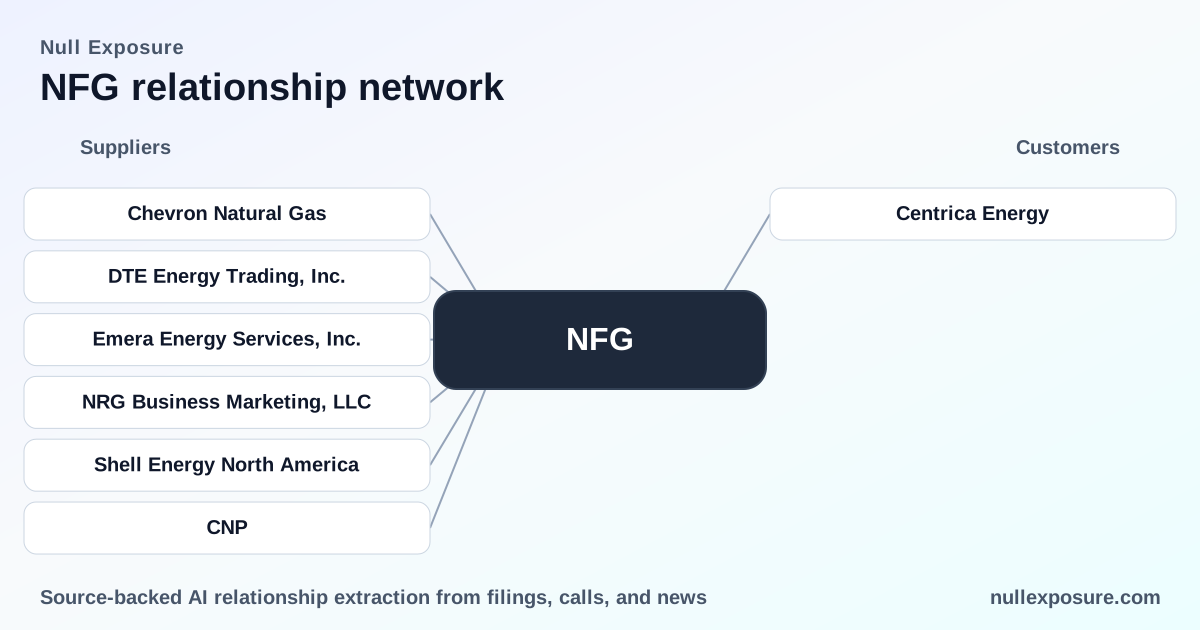
Below are the counterparties named in National Fuel’s FY2025 disclosures along with concise, source‑linked summaries.
-
DTE Energy Trading, Inc. — DTE accounted for 33% of the Utility segment’s 2025 gas purchases, making it the single largest named supplier in the period. According to National Fuel’s 2025 Form 10‑K, purchases from DTE represented a material share of total volumes. (Source: National Fuel Form 10‑K, fiscal year ended Sept. 30, 2025)
-
Emera Energy Services, Inc. — Emera supplied 11% of 2025 Utility segment gas purchases, positioning it as a significant secondary counterparty in the company’s procurement mix. (Source: National Fuel Form 10‑K, fiscal year ended Sept. 30, 2025)
-
Chevron Natural Gas — Chevron provided 10% of the Utility segment’s gas purchases for 2025, establishing Chevron as a top-tier supplier in National Fuel’s procurement concentration. (Source: National Fuel Form 10‑K, fiscal year ended Sept. 30, 2025)
-
Shell Energy North America — Shell accounted for 7% of gas purchases in the Utility segment during 2025, making it a meaningful liquidity and sourcing partner. (Source: National Fuel Form 10‑K, fiscal year ended Sept. 30, 2025)
-
NRG Business Marketing, LLC — NRG represented 6% of the Utility segment’s 2025 gas purchases, completing the top five suppliers that together accounted for nearly 67% of Utility purchases. (Source: National Fuel Form 10‑K, fiscal year ended Sept. 30, 2025)
-
CenterPoint (CNP) — National Fuel announced a definitive agreement to acquire CenterPoint’s Ohio local distribution company (LDC); management stated the acquisition is on track to close in calendar Q4 2026 and described progress publicly in the Q4 2025 earnings call. The transaction shifts CenterPoint from vendor or counterparty status toward a regulated asset on National Fuel’s balance sheet once closed. (Sources: NFG Q4 2025 earnings call; public commentary reported in March 2026)
Each of the above supplier mentions is drawn directly from National Fuel’s FY2025 filings or related quarterly commentary, and together they illustrate a procurement profile concentrated among a handful of large energy marketers and producers.
What this supplier mix signals for valuation and operations
The supplier disclosures and contractual constraints produce several actionable implications for investors and operators:
-
Concentration risk is material. Top five suppliers accounted for nearly 67% of Utility segment purchases in 2025, which magnifies counterparty credit and operational delivery risk relative to a more diversified sourcing strategy. This concentration should be priced into credit assessments and hedging strategies.
-
Price exposure is meaningful but managed. With 54% spot purchases the company accepts short‑term price volatility to optimize fuel costs, while long‑term transport and storage contracts provide delivery certainty and reduce reliability risk. Asset-backed regulated returns cushion margin volatility but do not eliminate commodity price sensitivity for the unhedged portion.
-
Cash flow and capital planning must accommodate large contracted commitments. National Fuel discloses multi‑year contract and capital commitments in the hundreds of millions, including gas purchase and transportation commitments and system modernization obligations, which increases the importance of liquidity and access to capital markets in stressed cycles.
-
Transaction activity affects counterparty relationships. The planned CenterPoint Ohio LDC acquisition converts a counterparty relationship into an asset ownership dynamic, increasing regulated earnings base and altering future procurement volumes and counterparties.
If you are modeling downside scenarios or counterparty concentration, get a supplier risk dossier at https://nullexposure.com/.
Operational and investor takeaways
For equity and credit analysts, National Fuel’s profile is one of stable regulated cash flow with embedded commodity exposure through the Utility procurement book. Key monitoring items for the coming 12–24 months are counterparty credit trends among top suppliers, the pace and cost of modernization projects, and the successful close and integration of the CenterPoint Ohio LDC. For operators and procurement teams, diversifying counterparties or increasing hedging on the spot portion would materially reduce earnings volatility.
Bottom line: National Fuel’s supplier relationships are concentrated and operationally critical, but they are offset by regulated earnings, long‑term pipeline/storage arrangements, and sizeable contractual visibility — factors that support predictable cash flow even as commodity risk remains a second‑order driver of near‑term margin moves.
For a deeper vendor-level risk assessment or to map supplier exposures against cash‑flow stress tests, visit https://nullexposure.com/.