NGL-P-B: Why a nuclear-water partnership reshapes the supplier map for a midstream preferred
NGL Energy Partners LP issues the NGL-P-B 9.00% Class B fixed-to-floating perpetual preferred units to deliver a high-yield income profile to investors while the underlying partnership runs diversified midstream operations — crude logistics, produced water handling, and related infrastructure. The company increasingly monetizes through fee-based logistics and long-term infrastructure contracts, and is explicitly re-positioning its produced-water business toward utility-style, capital-intensive services that generate recurring cash flows. For investors evaluating supplier and partner risk, the recent commercial engagement with Natura Resources shifts a strategic supplier relationship from ancillary to core infrastructure supplier status. Read more on this supplier analysis and market implications at https://nullexposure.com/.
What the Natura collaboration tells investors about strategy
NGL’s public disclosures and recent press coverage confirm a clear strategic pivot: produced water is being managed as an infrastructure asset rather than a transient commodity service. That requires reliable technology partners, long-duration contracts, and capital coordination. NGL’s move to pair advanced reactor technology with desalination and produced-water treatment signals a willingness to enter long-term, high-capex partnerships where supplier performance and regulatory permissioning will directly affect cash flow conversion from a capital project into an operating asset.
A proactive investor watching counterparty risk should treat such supplier relationships as operationally critical: supplier selection, intellectual property allocation, financing structure, and regulatory timelines will determine project viability and the timeline for preferred-unit coverage improvement. For further supplier risk intelligence, visit https://nullexposure.com/.
Relationship: Natura Resources LLC — Sahm Capital coverage (Feb 2026)
NGL announced a collaboration that pairs molten-salt nuclear reactor technology with produced-water treatment and desalination, positioning produced water as a long-term infrastructure business rather than a short-term service. This public report frames Natura Resources LLC as a technology and project partner in NGL’s water-infrastructure strategy. (According to a Sahm Capital article, February 2026 — https://www.sahmcapital.com/news/content/is-nuclear-powered-water-treatment-transforming-the-investment-case-for-ngl-energy-partners-ngl-2026-02-08)
Relationship: Natura Resources — Q3 2026 earnings call transcript (InsiderMonkey)
During NGL’s Q3 2026 commentary, management disclosed an MOU with Natura Resources describing the company as a developer of advanced modular nuclear reactors and emphasizing the tie to a large-scale produced-water strategy in the Delaware Basin. The earnings transcript treats Natura as a strategic collaborator in modular nuclear-powered water treatment pilots. (InsiderMonkey Q3 2026 earnings call transcript — https://www.insidermonkey.com/blog/ngl-energy-partners-lp-nysengl-q3-2026-earnings-call-transcript-1688595/)
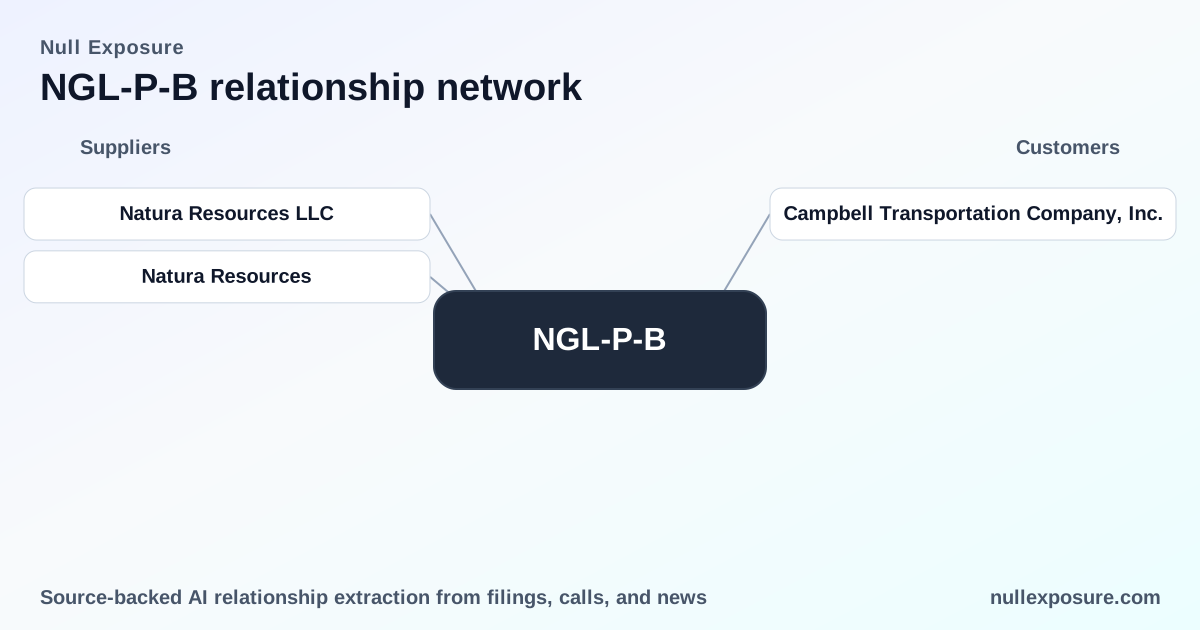
All supplier relationships captured in the public results (complete coverage)
- Natura Resources LLC — Collaboration announced pairing molten-salt reactor tech with produced water treatment and desalination (Sahm Capital, Feb 2026).
- Natura Resources — MOU disclosed on the Q3 2026 earnings call confirming a large-scale produced water treatment strategy in the Delaware Basin (InsiderMonkey, Q3 2026 transcript).
Both entries reference the same commercial counterparty in different disclosure formats: a news report and an earnings call transcript. The combined record shows a formalized commercial relationship with Natura Resources and management’s intent to integrate advanced nuclear modular reactors into water-treatment projects.
Company-level operational constraints and what they imply for supplier risk
The structured results include no explicit external constraints (no captured contractual limitations, exclusivity terms, or legally binding supplier constraints). That absence is itself informative and should be viewed as a company-level signal:
- Contracting posture: NGL is executing MOUs and collaborative announcements rather than finalized turnkey supplier contracts in public filings, indicating the relationship is currently in the development and piloting phase rather than full commercial deployment.
- Concentration: Publicly disclosed supplier exposure is concentrated — Natura Resources is the principal advanced-technology partner shown — which increases counterparty concentration risk until the supplier base diversifies.
- Criticality: Produced-water treatment is strategically critical to NGL’s stated transition to infrastructure-style cash flows; therefore supplier performance has direct revenue and operational implications.
- Maturity: The technology partner is tied to molten-salt and advanced modular nuclear concepts, placing supplier maturity at an early-stage or pilot level and raising timeline and regulatory execution risk.
Because no explicit contractual constraints were captured in the source set, investors should prioritize due diligence on contract terms, project financing structures, and regulatory milestones before treating supplier risk as mitigated.
What this means for investors and operators
- Upside: If the partnership successfully converts produced water into repeatable, fee-generating infrastructure, NGL’s midstream margins and preferred-unit coverage could strengthen materially. The potential for desalination and reuse creates ancillary revenue and cost offsets across operations.
- Timing and regulatory risk: Advanced nuclear technologies face permitting and construction timelines that are long and uncertain; regulatory approvals and social license are the dominant near-term execution risks for supplier-delivered systems.
- Counterparty and concentration risk: Relying on a single advanced-technology partner accelerates project timelines if the supplier executes, but it creates asymmetric downside if the supplier under-delivers or faces licensing delays.
- Financing and capital allocation: Projects of this type are capital-intensive; investor outcomes depend on whether NGL funds build vs. structured off-balance project finance or vendor financing. Preferred investors should monitor project-specific financing disclosures.
Key actions for investors and operators:
- Request or review definitive commercial agreements, escalation clauses, and performance guarantees tied to supplier delivery.
- Monitor regulatory filings and permitting milestones closely; these are the pacing items for commercial ramp.
- Evaluate project financing structure to understand recourse, dilution risk to unit holders, and timing of cash yields.
Final assessment and next steps
NGL’s supplier relationship with Natura Resources converts produced water from an operational expense into a potential infrastructure asset class — a strategic shift with high upside and commensurate execution risk. Investors should treat this supplier tie as critical but nascent: the commercial terms and regulatory path will determine whether it strengthens NGL’s preferred-unit economics or adds multi-year execution risk.
For ongoing supplier risk monitoring and to access tracking and analysis for NGL and comparable midstream counterparties, visit https://nullexposure.com/.
Ready to dig deeper into counterparties, contract structures, and project timelines? Explore detailed supplier intelligence and alerts at https://nullexposure.com/.