Neurogene (NGNE): Supplier relationships, operational posture, and investor takeaways
Neurogene is a clinical-stage gene therapy company that develops AAV-based treatments for rare neurological disorders; it monetizes by advancing proprietary programs through clinical development, securing non‑exclusive licenses to materials and processes, and positioning for downstream commercial partnerships or product sales once candidates are approved. The company is pre-revenue and capital‑intensive, funding R&D while relying on external licensors, contract manufacturers and CROs for much of its execution. For a rapid read on how supplier exposure shapes NGNE’s risk/return profile, visit https://nullexposure.com/.
How Neurogene runs the program engine — a concise operating thesis
Neurogene’s operating model is asset-light on manufacturing IP and materially outsourced on execution. The firm holds proprietary programs (for example NGN‑401) but obtains critical biological materials, cell lines and process know‑how under non‑exclusive license arrangements and uses third‑party CDMOs and CROs to produce clinical material and run trials. This structure keeps fixed costs lower and accelerates capacity to scale, while shifting operational and concentration risk onto suppliers and contract partners. Company filings from 2023–2024 disclose these licensing and outsourcing arrangements and the regional scope of early clinical work.
Explore supplier and counterparty risk at Null Exposure: https://nullexposure.com/
Global footprint and what it implies for contracting and regulatory risk
Neurogene has initiated its NGN‑401 trial across North America (U.S.), EMEA (UK) and APAC (Australia) following a sequence of regulatory clearances—FDA (IND clearance, Jan 2023), MHRA (clinical trial application clearance, Jan 2024) and Australian TGA/HREC acknowledgement/approval (May 2024). That three‑region footprint is a deliberate operating choice: it diversifies patient enrollment pathways and reduces single‑market regulatory dependency, but it also raises cross‑jurisdictional supplier complexity, requiring multiple CROs, local vendors and regulatory coordination across standards and timelines (company disclosures, 2023–2024).
Licensing posture and what it tells investors about leverage and maturity
Neurogene’s licensing practice is non‑exclusive and lightweight on upfront economics. The company holds non‑exclusive licenses with parties including Sigma‑Aldrich Co. LLC (cell lines for baculo process), Virovek, Inc. (baculovirus process patents and know‑how) and Stanford (biological materials used in manufacturing) under arrangements that feature small annual fees, low single‑digit royalties on commercial sales and modest development milestone caps. These contracts give Neurogene practical access to essential inputs without heavy capital investment, but they concede limited proprietary control and potential competition for the same inputs—a tradeoff consistent with an early‑stage biotech conserving cash and accelerating time to clinic (company filings, 2020–2024).
Contract manufacturing and CRO reliance — concentration and criticality
Neurogene explicitly relies on contract development and manufacturing organizations for research‑grade and clinical supply and on CROs for preclinical and IND‑enabling studies as well as the Phase 1/2 program. That manifests as:
- High operational dependence on external manufacturers for GMP and non‑GMP material;
- Service provider dependence for trial execution and data generation;
- Execution concentration risk if a key CDMO or CRO experiences capacity or quality issues.
This outsourcing posture reduces capital intensity and accelerates timelines but elevates supply chain and scheduling risk. Investors should treat supplier continuity, quality systems and contractual exclusivity (or lack thereof) as primary drivers of program timelines and value realization.
Every supplier relationship surfaced in public signals
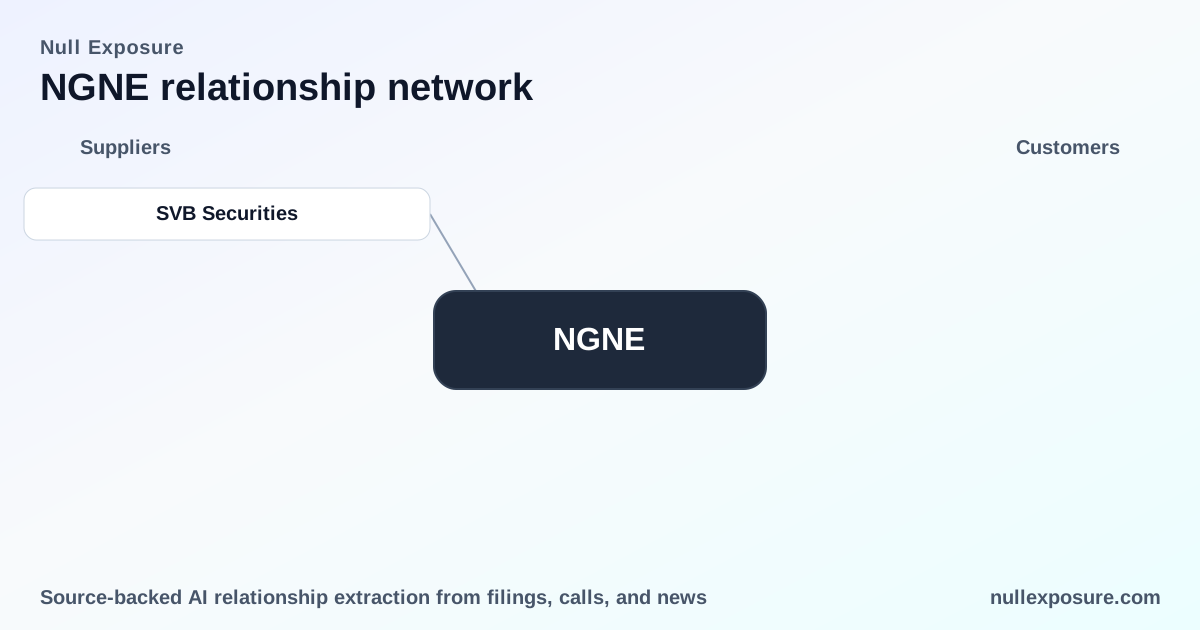
SVB Securities — strategic adviser cited in industry press
A FierceBiotech article (Mar 10, 2026) reported that SVB Securities was engaged by Neoleukin to explore strategic alternatives, including M&A or sale; the same item referenced SVB’s role as a financial adviser in that context. This mention connects SVB Securities to advisory activity in the biotech sector and is drawn from industry press coverage. (FierceBiotech, March 2026: https://www.fiercebiotech.com/biotech/neoleukin-old-ending-de-novo-protein-player-lays-70-staff-searches-strategic-alternative)
Note: The public relationship signals returned for NGNE in the supplier scope are limited; the company’s own filings and disclosures contain the more material supplier contracts and licensing arrangements referenced above (company SEC filings, 2020–2024).
Financial posture and what suppliers imply for valuation risk
Neurogene is pre‑revenue (RevenueTTM = 0) with an EBITDA loss of roughly $94M and a market capitalization near $334M (latest available). The balance of no commercial sales and negative margins means the company’s valuation is driven almost entirely by clinical development optionality and the probability of successful commercialization. Given the outsourced manufacturing and non‑exclusive licensing approach, investors underwrite program value while accepting vendor execution risk and limited proprietary supply exclusivity. Analyst coverage skews positive (consensus target $81) but the shares trade with high volatility (beta ~1.69) and valuation multiples that reflect speculative, binary clinical outcomes.
Investment implications — action signals for operators and allocators
- Operational risk is concentrated in external partners. Due diligence should focus on CDMO/CRO counterparty strength, quality metrics, capacity commitments and contingency clauses.
- Licensing terms lower capital needs but cap exclusivity. Non‑exclusive licenses accelerate access to input technologies but increase the risk of competitors using similar inputs.
- Regulatory diversification helps enrollment but complicates execution. Multi‑region trials reduce single‑market dependency but require experienced global trial management.
For portfolio managers and operators evaluating supplier risk, prioritize contractual details (exclusivity, termination, warranties, capacity guarantees) and review audit and inspection histories of key manufacturers.
Discover an operator‑focused view of supplier counterparty risk at Null Exposure: https://nullexposure.com/
Final read and recommended next steps
Neurogene is a classic early‑stage gene therapy profile: high scientific upside, zero near‑term revenue and outsized reliance on licensors and third‑party manufacturers/CROs. The firm’s non‑exclusive licensing and outsourced manufacturing keep cash burn focused on trials, but they also transfer critical execution levers to partners—making supplier diligence central to investment conviction. For investors who value a rigorous supplier and counterparty lens as part of biotech due diligence, integrating contract‑level review with clinical milestones is essential.
If you evaluate biotech supplier exposure as part of investment or operational due diligence, review Neurogene’s filings and supplier agreements and consider a third‑party supplier audit before committing incremental capital. Learn more about supplier risk scoring and counterparty analysis at Null Exposure: https://nullexposure.com/
Key takeaway: Neurogene’s upside is clinical success‑driven; its downside is supplier or execution failure—treat counterparties as core to valuation, not peripheral.