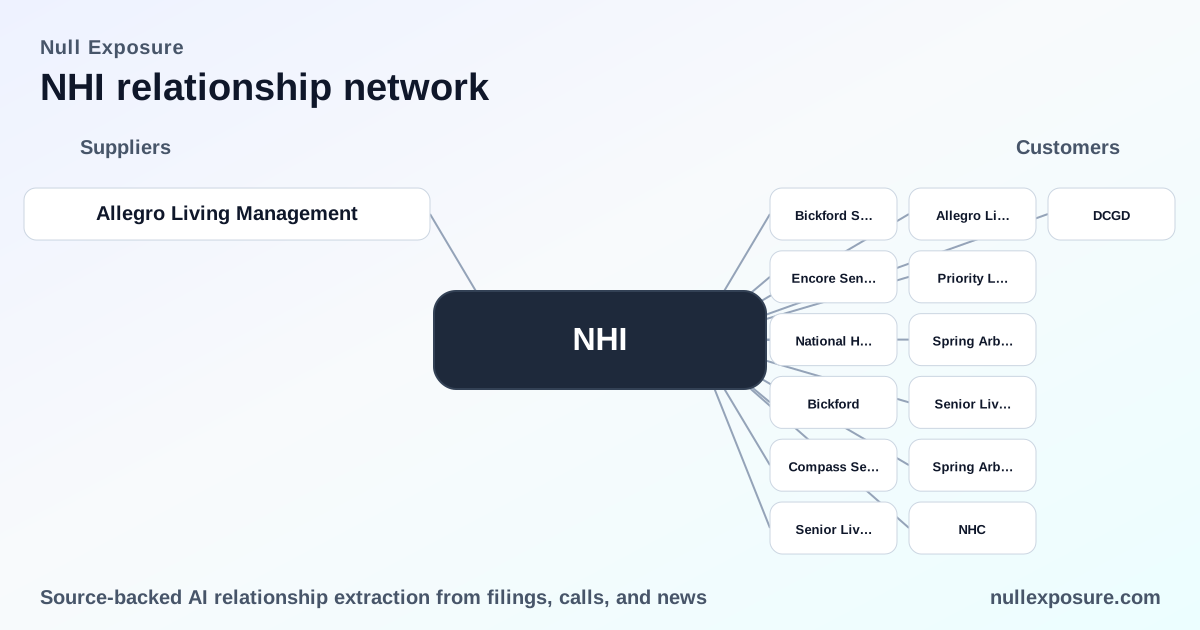
National Health Investors (NHI): Supplier relationships, operating posture, and what investors should price
National Health Investors is a healthcare-focused REIT that monetizes real estate through sale-leasebacks, joint ventures, mortgages and interim financing of senior housing and medical-related properties while outsourcing day-to-day operations to third-party managers. For investors and operators evaluating supplier risk, the core thesis is simple: NHI is a capital allocator and landlord whose performance depends on contract durability with third-party operators and the stability of those operators’ operating metrics. Learn more about portfolio and supplier exposures at https://nullexposure.com/.
How NHI runs the business and where suppliers fit in
NHI’s balance sheet-driven model is clear: deploy capital into senior housing and healthcare properties, secure long-term cash flow through leases and financing structures, and rely on third-party operators to execute operations. The company discloses that many assets are operated under management agreements with independent managers rather than by a captive operating subsidiary, which makes counterparty relationships structurally important to cash flows and value realization.
- Contracting posture: NHI’s revenue streams are primarily contractual (leases, mortgages, and management-fee structures) rather than operator-driven equity upside. That creates a landlord-like cash flow profile whose stability depends on contract terms and counterparty credit.
- Concentration and criticality: The firm notes use of “two third-party property managers” for portions of its portfolio and independent managers for its ILF segment, indicating a concentrated set of operator relationships that are critical to asset-level performance.
- Maturity and governance: NHI routinely engages third-party service providers for cybersecurity testing and IT reviews under recognized frameworks, reflecting a mature vendor governance posture for non-operational services.
These operating characteristics make counterparty diligence and contract monitoring an investment priority. For deeper supplier analysis and up-to-date relationship tracking, visit https://nullexposure.com/.
The supplier landscape in plain English
NHI’s public disclosures and recent press coverage indicate a lean supplier ecosystem focused on property managers and professional services:
- Properties are managed by third-party property managers under management agreements that pay fees to those managers, rather than being operated by a corporate operating arm.
- The company engages specialized third parties for cybersecurity reviews, penetration testing, and IT governance aligned with NIST frameworks.
- Investment in Independent Living Facilities (ILFs) is explicitly operated by independent managers under separate management agreements; as of December 31, 2024, NHI disclosed about $358.4 million invested in 15 ILFs across eight states.
These statements are company-level signals describing how suppliers are used across the portfolio rather than linking to a single vendor.
Allegro Living Management — the specific relationship
Allegro Living Management is named in recent coverage as a manager in NHI’s Senior Housing Operating Portfolio. According to a Simply Wall St news item dated March 10, 2026, “the communities will be managed within NHI’s Senior Housing Operating Portfolio by Allegro Living Management.” (Simply Wall St, March 10, 2026) This is an operational management contract for community-level execution rather than an equity partner or lender relationship.
Why each supplier relationship matters to investors
Supplier relationships with managers like Allegro are not ancillary — they are central to short-term occupancy and long-term asset value. Management agreements determine operating budgets, resident mix, and service quality, which in turn affect rent collections, lease enforcement, and capex needs that drive REIT returns. The company’s disclosure that several communities and ILFs are run by independent managers makes counterparty credit and operational performance metrics a direct driver of portfolio risk.
Constraints and governance signals you should price
NHI’s vendor disclosures provide several actionable governance signals that investors should incorporate into modeling and due diligence:
- Relationship role: NHI consistently classifies external partners as service providers (confidence reported up to 0.8), indicating a repeatable, outsourcing-oriented operating model rather than vertical integration.
- Third-party controls and maturity: The firm pays for biannual penetration testing and regular IT reviews against the NIST Cybersecurity Framework, signaling institutional-level cybersecurity governance that reduces operational risk from digital threats.
- Concentration: Multiple excerpts point to a small set of property managers operating many communities, a structural concentration that increases counterparty risk if a single manager underperforms.
- Transparency and disclosure: The firm provides line-item detail on ILF investments and the management structure as of December 31, 2024, which supports granular investor analysis of managed assets versus leased assets.
Treat these constraints as company-level operating signals rather than specific vendor risk unless the company names a vendor explicitly.
Valuation context — where supplier risk sits in the capital picture
Place supplier risks into the valuation framework: market cap is about $4.17B, trailing P/E roughly 28.2 with a forward P/E of 18.2, and EV/EBITDA near 19.1. The REIT yields an indicated dividend of approximately 3.64 per share (4.27% yield) and shows substantial institutional ownership at ~73%. Low beta (~0.66) and stable dividend policy increase sensitivity to operator execution risk rather than macro volatility. Investors must weigh the premium multiple and yield against the operational leverage embedded in outsourced management contracts.
Practical monitoring checklist for operators and investors
Focus monitoring on items that move cash flow and valuation:
- Track renewal cadence and fee escalation clauses in management agreements.
- Monitor operator financial health and occupancy trends at manager-run communities.
- Watch cybersecurity audit outcomes and third-party penetration test reports.
- Reconcile ILF unit-level performance against lease covenants and capex schedules.
- Observe capital allocation decisions, dividend coverage, and disclosure of any operator defaults or rent relief agreements.
For ongoing supplier analytics and to benchmark NHI against peers, see https://nullexposure.com/.
Bottom line — what investors should take away
NHI is a landlord with a capital-first, outsource-to-operate business model. The company’s reliance on a small number of third-party managers, explicit engagement of specialist service providers for IT security, and clear disclosure of manager-run ILFs together create a profile where counterparty execution risk and contract durability are principal drivers of downside. Given the valuation premium and meaningful dividend yield, investors should prioritize diligence on management agreement terms, operator credit metrics, and the outcomes of cybersecurity and operational audits.
Act now to deepen supplier due diligence and model operator scenarios at https://nullexposure.com/.