Natural Health Trends (NHTC) — supplier posture and what it means for investors
Natural Health Trends (NHTC) is an internet retail company that sells branded wellness and nutritional products, monetizing primarily through direct product sales and international distribution channels. Revenue is generated from a small number of high-concentration product lines, manufactured globally and fulfilled by contracted third parties, while the firm preserves continuity through long‑term, often auto‑renewing supplier contracts. For investors and operators evaluating supplier risk, the key dynamics are concentration of sourcing, geographic diversity of manufacturers, and reliance on outsourced fulfillment. For detailed exposure mapping and monitoring tools, visit the Nillexposure homepage: https://nullexposure.com/.
How NHTC sources and fulfills its products — the operating thesis
Natural Health Trends outsources manufacturing across multiple regions — the United States, East Asia, Europe and China — and relies on single-source suppliers for several of its highest-margin products. This structure creates an operating model that is simultaneously resilient (geographic diversification of suppliers) and fragile (single-supplier dependence for core SKUs). The company contracts third parties for international fulfillment and distribution, which converts fixed manufacturing risk into operational dependence on service providers. Financially, the firm reported Revenue TTM of $39.8M and Gross Profit TTM of $29.3M, with recent operating margins negative on a TTM basis, underlining that supplier continuity is directly linked to near-term cash generation and margin recovery (latest quarter reported: 2025-12-31).
Visit https://nullexposure.com/ to review supplier maps and concentration metrics that matter for underwriting and portfolio monitoring.
Supplier footprint and contractual posture — what the disclosures say
Company disclosures identify several structural constraints that define NHTC’s supplier relationships:
- Contracting posture: long-term relationships with automatic renewal rights. The company states it holds supplier contracts that include automatic renewal provisions, which supports continuity of supply but reduces near-term renegotiation leverage.
- Geographic scope: truly global manufacturing and raw‑material sourcing. Manufacturers and raw material suppliers are located in the U.S., South Korea, Hong Kong, Taiwan, Europe and China, which spreads geopolitical and operational risk across regions.
- Role concentration: buyer with single-source supply for core products. Several products—Premium Noni Juice, Triotein™, and key probiotic lines—are each sourced from a single supplier and individually account for at least 10% of total revenue, indicating high supplier criticality and concentration risk.
- Service relationships: outsourced fulfillment and distribution internationally. The company contracts third parties for fulfillment across its international markets, making logistics partners critical to revenue delivery.
These are company-level signals derived from the firm's public disclosures through FY2026 and the latest corporate filings.
Relationship digest: press and filing mentions you should track
Below is the complete set of supplier‑related relationship references surfaced in our review. Each item is summarized in plain English and cited.
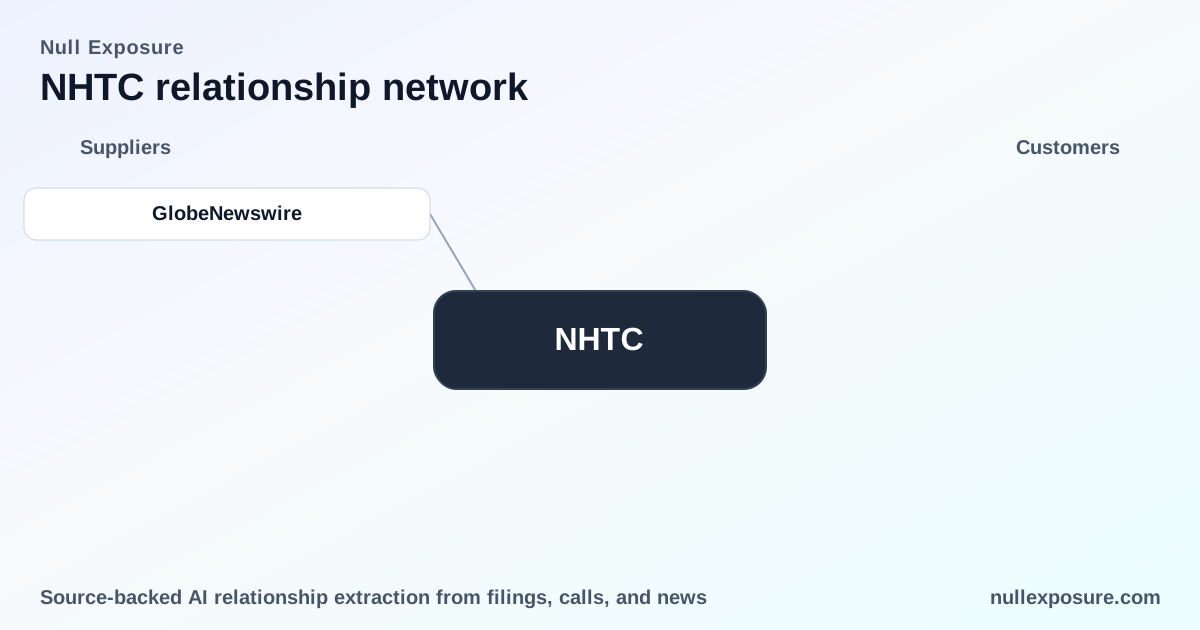
- GlobeNewswire press release distributed via QuiverQuant (FY2026): The company issued a market notice about its schedule to announce fourth-quarter and full‑year 2025 financial results, a standard investor communications item that can presage commentary on supplier impacts in the earnings release. (Source: GlobeNewswire via QuiverQuant, published March 2026: https://www.quiverquant.com/news/Natural+Health+Trends+Corp.+to+Announce+Fourth+Quarter+and+Full+Year+2025+Financial+Results+on+February+4%2C+2026)
This is the entirety of the explicit supplier‑related items returned in the search results; monitor the scheduled earnings release for any material updates to supplier terms or supply‑chain commentary.
What these constraints mean for business continuity and valuation
The disclosed supplier posture drives four investment-relevant implications:
- High concentration is a principal downside risk. When multiple products each represent ≥10% of revenue and are single‑sourced, a supplier disruption has direct, material top‑line impact. This elevates downside volatility relative to peers with multi‑sourcing.
- Long‑term contracts provide operational stability but lock in exposure. Automatic renewals reduce immediacy of renegotiation and ensure continuity, but they also reduce flexibility to shift sources quickly after an adverse event.
- Geographic diversification reduces regional single‑point failure but introduces multi‑jurisdiction complexity. Global manufacturing footprints mitigate localized disruption risk, yet they increase management and compliance overhead and exposure to trade/tariff shifts.
- Outsourced fulfillment centralizes logistical risk. Reliance on third‑party logistics partners means that operational issues at service providers (capacity, insolvency, geopolitical disruption) translate into direct revenue delivery risk.
From a valuation standpoint, margins and cash flow are tightly linked to supplier performance. With negative operating margins and negative EBITDA in the latest reported period (EBITDA -$1.699M, Diluted EPS -$0.08), material supplier interruptions would have an outsized effect on near-term profitability and the company’s ability to sustain dividend payments (Dividend per share $0.80; ex-dividend date Feb 17, 2026).
Practical recommendations for investors and operators
- Stress-test scenarios assuming loss of a single supplier for each core SKU; model immediate revenue declines of at least 10% per affected product and recovery timelines tied to re‑qualification of alternative manufacturers.
- Prioritize monitoring of the scheduled earnings release and subsequent filings for any changes to the single-supplier disclosures or to automatic renewal terms; these are the most likely triggers for immediate price/credit sensitivity.
- Engage on logistics counterparties: require transparency on third‑party fulfillment contracts, termination rights, and backup capacity plans given the outsized importance of distribution partners.
For ongoing monitoring and to access supplier exposure overlays that integrate these signals, check the Nillexposure homepage: https://nullexposure.com/.
Bottom line — where risk is concentrated and where value can be protected
Natural Health Trends operates with a concentrated supplier model for key revenue drivers, underpinned by long‑term, auto‑renewing contracts and global manufacturing sources. That structure supports continuity but creates acute single‑supplier risk for top products and elevated operational dependence on third‑party logistics. Investors should treat supplier disclosures as a core part of credit and equity due diligence; operators should prioritize supplier redundancy and contractual safeguards to reduce revenue volatility. If you want a consolidated view of supplier concentration and material contract terms, Nillexposure provides direct monitoring and alerts: https://nullexposure.com/.