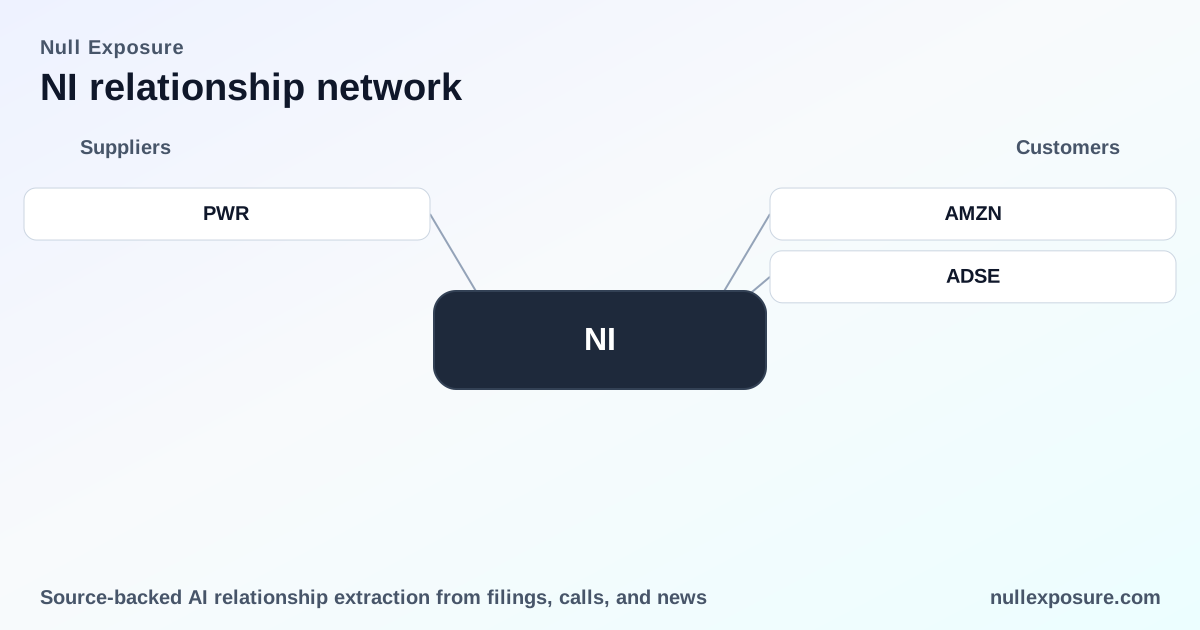
NiSource Inc (NI) — supplier relationships and contracting posture that shape investor risk
NiSource is a fully regulated U.S. utility that monetizes through rate-regulated gas and electric operations, long-term capacity and commodity contracting, and predictable tariff returns; investors receive cash flow via regulated margins and a modest dividend. With a market capitalization near $22.7 billion and FY‑TTM revenue of $6.64 billion, NiSource runs a capital‑intensive business whose supplier mix and contract tenor materially influence capital spending, reliability and regulatory outcomes. For a closer look at counterparties and contract signals, visit https://nullexposure.com/.
Executive takeaway: Capex-driven contractor exposure plus long-tenor contracts
NiSource’s supplier exposure is characterized by long-duration infrastructure contracts and a mix of operating-service agreements that create predictable fixed obligations and operational dependency. The company is a buyer of generation, pipeline capacity and transportation services, and also a counterparty to services providers building and maintaining infrastructure — a profile that benefits stability but concentrates vendor risk where large-scale construction or long-haul transportation is required.
- Financial context: NiSource trades at a forward P/E in the mid‑20s with EV/EBITDA around 12.7, and generates regulated cash flows that underpin capital investment programs.
- Commercial posture: NiSource uses long-term PPAs and pipeline service agreements to lock in capacity and transport; it also maintains shorter-term logistics contracts where needed.
For practitioners tracking counterparties or assessing credit exposure, explore further at https://nullexposure.com/.
What the supplier relationships say about how NiSource operates
NiSource’s contracting choices are strategic: long tenors secure capacity and transport and limit commodity exposure, while service providers execute construction and maintenance that deliver regulatory assets. The constraints disclosed by the company provide actionable signals for counterparties and investors:
- NiSource reports pipeline service agreements with expiration dates from 2030 to 2044 that include fixed monthly charges, indicating multi‑decade commitments to transmission and storage capacity.
- The company disclosed PPAs representing about 1,200 MW of capacity with contracts expiring between 2038 and 2045, reflecting an asset-backed approach to securing generation capacity for regulated customers.
- There are shorter-term rail contracts for coal transportation extending through 2026–2028, which indicate tactical use of short-tenor logistics contracts where appropriate.
- NiSource explicitly acts as both a buyer of energy commodities and capacity and as a service contract principal, with active purchase and service agreements that create future minimum payment obligations.
These are company‑level characteristics; they shape counterparty criticality, cash‑flow predictability and exposure to construction and commodity risk.
The Quanta Services relationship — what matters
Quanta Services was selected by NiSource to design, procure and construct generation and infrastructure capable of producing approximately 3 GW of power for a large Indiana data‑center campus. This is a construction and engineering engagement that exposes NiSource to single‑vendor execution risk on a large build program and creates immediate contractor cash flows tied to project milestones. (Sources: InsiderMonkey FY2026 coverage of Quanta’s Q4 2025 earnings call; TradingView recap of the same FY2026 commentary.)
Relationship inventory (complete)
NiSource’s supplier mentions in the collected material are concentrated and focused:
- Quanta Services, Inc. — NiSource selected Quanta to design, procure and construct generation and infrastructure to deliver approximately 3 GW for a large data‑center campus in Indiana, representing a material construction engagement for the company’s generation/infrastructure plans. Sources: Quanta’s FY2026 commentary as reported in InsiderMonkey (March 2026) and TradingView (March 2026).
(These are the only supplier relationships surfaced in the reviewed results.)
How contracting tenor shapes counterparty risk and regulatory economics
The dominant long-term contracting posture is a structural hedge for NiSource’s regulated business: it secures capacity and transport that feed into rate cases and depreciable assets, while shifting operational execution risk to contractors. Investors and counterparty risk managers should treat these characteristics as follows:
- Criticality: Long-term pipeline and PPA obligations are critical to NiSource’s ability to deliver regulated service and to recover investments through rates; counterparties that provide these services gain high strategic leverage.
- Concentration and single‑vendor risk: Large construction awards — for example the 3 GW Quanta engagement — concentrate execution risk; delays or cost overruns would have direct capex and regulatory filing implications.
- Maturity profile: Contract tenors stretching into the 2030s and 2040s lock in obligations that reduce short‑term volatility but raise long‑run exposure to regulatory change and technology shifts (e.g., distributed generation, electrification).
- Cash‑flow predictability: Fixed monthly charges and minimum payments improve predictability of future liabilities, which supports credit stability and capital planning.
Implications for investors and operators
For investors evaluating NiSource as a supplier counterparty or portfolio holding, the commercial signals are clear:
- Stability with embedded execution risk. The regulated framework and long tenors deliver stable cash flows, but large-scale construction engagements and concentrated logistics contracts create episodic execution and counterparty risk that should be stress-tested.
- Regulatory sensitivity is high. Long‑lived contracted assets feed rate cases; construction underperformance can translate into capital recovery disputes with regulators.
- Counterparty selection matters. Awards to established vendors (e.g., Quanta Services) reduce execution risk relative to smaller, less proven contractors, but do not eliminate schedule or cost exposure.
If you manage supplier exposure or diligence on counterparties, review the contract tenors and minimum-payment schedules embedded in NiSource filings and consider scenarios for construction delay and regulatory pushback. For tools and to track these supplier linkages, go to https://nullexposure.com/.
Final view and next steps
NiSource presents a predictable, rate‑regulated cash‑flow profile strengthened by long-term PPAs and pipeline agreements, while simultaneously concentrating execution risk in large contractor engagements and shorter-term logistics contracts. For investors, the trade-off is classic utility stability versus contractor and regulatory execution risk at scale.
If your investment or operational decisions depend on counterparties and contract tenor, continue monitoring awarded construction partners and the company’s disclosure of minimum payment obligations. For ongoing supplier intelligence and to map these relationships in context, visit https://nullexposure.com/.
Bold takeaway: NiSource’s long-tenor contracts underpin regulated stability but concentrate execution and vendor risk where large-scale construction and transport are required.