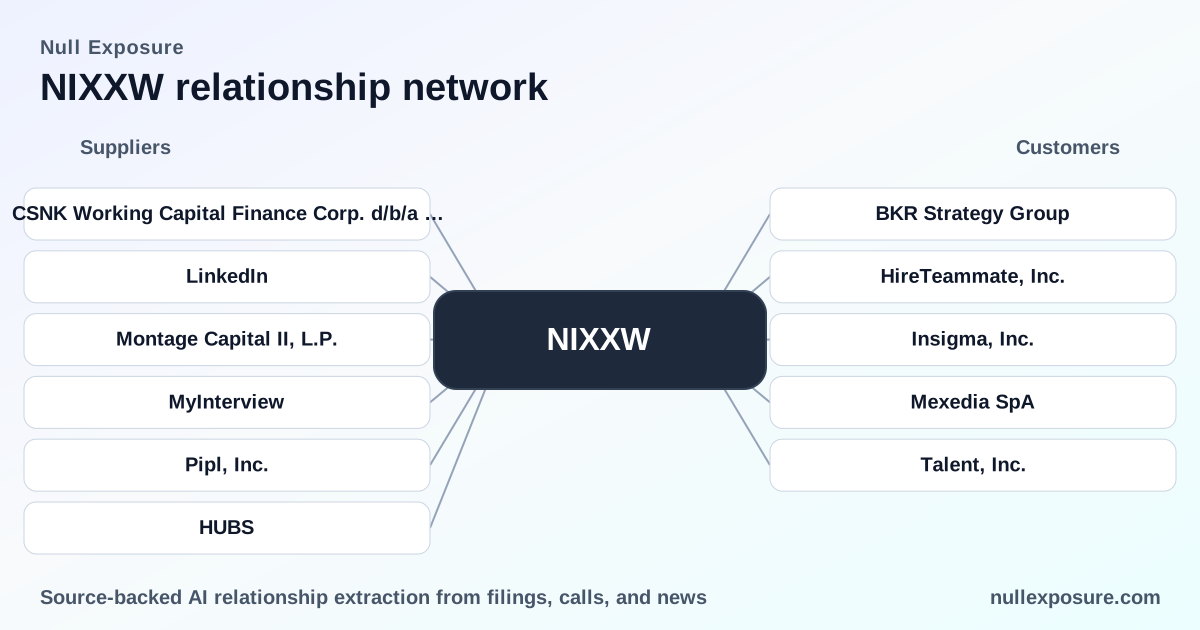
Nixxy, Inc. (NIXXW) supplier relationships: strategic dependencies and contract signals
Nixxy monetizes AI and data analytics through a mix of licensed technology, platform services, and third‑party integrations, while using receivables financing and short‑term vendor agreements to manage working capital. Revenue is primarily generated from product and service contracts built on licensed technology and commercial partnerships; liquidity is supported by factoring and a structured loan facility. For a deeper supplier map and contract signals, visit https://nullexposure.com/.
The quick thesis for investors
Nixxy is a growth‑stage technology provider that drives revenue through application licensing, hosted services and third‑party integrations. Its commercial profile combines long‑term licensed intellectual property with operational dependence on marketing and recruiting platforms and short‑to‑mid‑term financing providers, creating both scalable revenue levers and concentrated operational/liquidity exposures.
How Nixxy contracts, pays, and scales — what the agreements reveal
Nixxy’s FY2024 disclosures reveal several consistent patterns that drive operational risk and upside:
- Contracting posture: The company holds at least one long‑term, exclusive license structure (10‑year term with automatic renewals) and also maintains numerous shorter commercial agreements (12‑month terms with auto‑renewal language). These features create a hybrid of strategic asset control and tactical vendor flexibility.
- Concentration and related‑party activity: The 10‑K describes use of related‑party firms for core development and marketing work, signaling operational concentration in critical development and go‑to‑market functions.
- Liquidity and maturity: Nixxy uses recourse factoring plus a dedicated loan facility with multi‑year maturity (advances up to several million dollars and a 42‑month maturity), reflecting reliance on external financing to bridge cash flow variability.
- Spend scale: Contract language and loan advance sizes indicate mid‑range spending and financing buckets in the $1m–$10m band rather than enterprise‑scale supplier commitments.
These are company‑level signals drawn from the FY2024 10‑K rather than from any single counterparty disclosure. For an interactive supplier map and contract detail, see https://nullexposure.com/.
What the FY2024 10‑K lists — counterparty snapshots
CSNK Working Capital Finance Corp. d/b/a Bay View Funding
Nixxy entered a factoring agreement effective April 27, 2022, to factor trade accounts receivable with recourse; the proceeds are used to fund general working capital needs. According to Nixxy’s FY2024 10‑K, the arrangement is operationally significant because the factoring is recourse and supports day‑to‑day liquidity. (FY2024 10‑K)
Nixxy references LinkedIn as a commercially available third‑party recruiting, communications, and marketing platform used in its operations, indicating dependence on mainstream recruitment and marketing tools for talent and customer acquisition. (FY2024 10‑K)
Montage Capital II, L.P.
On October 19, 2022, Nixxy closed a Loan and Security Agreement with Montage Capital II, L.P., under which the lender committed up to $2,250,000 in advances with a 42‑month maturity profile. The FY2024 10‑K shows this facility is a structured source of growth capital and shapes the company’s medium‑term cash‑flow planning. (FY2024 10‑K)
MyInterview
Nixxy licenses video screening technology from MyInterview to support recruiting and candidate evaluation capabilities, integrating third‑party HR tech into its platform stack. (FY2024 10‑K)
Pipl, Inc.
The company disclosed it was served with a civil lawsuit filed by Pipl, Inc., creating a discrete legal exposure tied to supplier/data service relationships that investors should monitor for potential financial impact. (FY2024 10‑K)
HubSpot (HUBS)
HubSpot is listed alongside LinkedIn as a commercially available recruiting, communications, and marketing software used by Nixxy, underscoring reliance on established CRM/marketing automation platforms for go‑to‑market execution. (FY2024 10‑K)
Contractual constraints and what they imply for investors
Nixxy’s contract signals point to an operational model that mixes strategic intellectual property with tactical vendor relationships:
- Long‑term licensing (company‑level): The 10‑K references a 10‑year exclusive license with automatic two‑year renewals for fintech technology, indicating strategic control of core technology for an extended horizon and potential for durable revenue generation from licensed products.
- Mid‑term debt commitments: The Montage loan structure (advances and a 42‑month maturity) and the advance caps tied to receivables point to levered working capital management; lenders impose maturity discipline and material covenants that will influence capital allocation.
- Short‑term vendor churn: Existence of 12‑month agreements with auto‑renewal clauses creates flexibility for Nixxy but also exposes the company to recurring procurement decisions and potential re‑pricing risk.
- Service provider concentration (company‑level): Use of related‑party firms for development and marketing concentrates operational risk and can compress margins or raise governance questions if those relationships are critical to delivery.
- Spend/funding scale: Evidence of advance sizes and caps in the $1m–$10m range anchors the company’s external financing and vendor exposure to mid‑market levels rather than large enterprise contracts.
Collectively, these constraints show a company that controls important IP long‑term while funding growth through external credit and standard SaaS/third‑party tools, which is a balanced but levered profile for investors to evaluate.
For a supplier risk heatmap and ongoing monitoring tools, explore https://nullexposure.com/.
Practical takeaways for investors and operators
- Liquidity is a primary watch item. Receivables factoring with recourse and a $2.25M loan facility create refinancing and covenant risk that can compress operational flexibility. Track receivables sold and the remaining lender advance capacity closely.
- Legal and data‑vendor exposures are non‑trivial. The Pipl lawsuit and multiple third‑party screening/identification services (e.g., MyInterview, LinkedIn, HubSpot) require active diligence on vendor contracts and data‑use compliance.
- Long‑term licensing is a strategic asset. The 10‑year, auto‑renewing license referenced in filings is a material intellectual property backbone for product monetization and should be a valuation focal point.
Action checklist for next steps:
- Monitor quarterly disclosures for factoring and loan balances and covenant language.
- Follow the progress and potential financial impact of the Pipl litigation.
- Review vendor concentration and related‑party expense trends during earnings calls.
For a deeper supplier analysis and ongoing alerts on NIXXW counterparties, visit https://nullexposure.com/.
Final view
Nixxy’s supplier network and contract set-up signal a company that pairs durable licensed technology with mid‑market financing and reliance on mainstream marketing and recruiting platforms. That mix supports growth while concentrating liquidity and operational risk in a few key agreements and related‑party service flows. Investors should treat the long‑term license as a strategic value driver and treat receivables financing and the Montage facility as levers that can amplify both upside and downside. For a tactical monitoring playbook and real‑time supplier intelligence, go to https://nullexposure.com/.