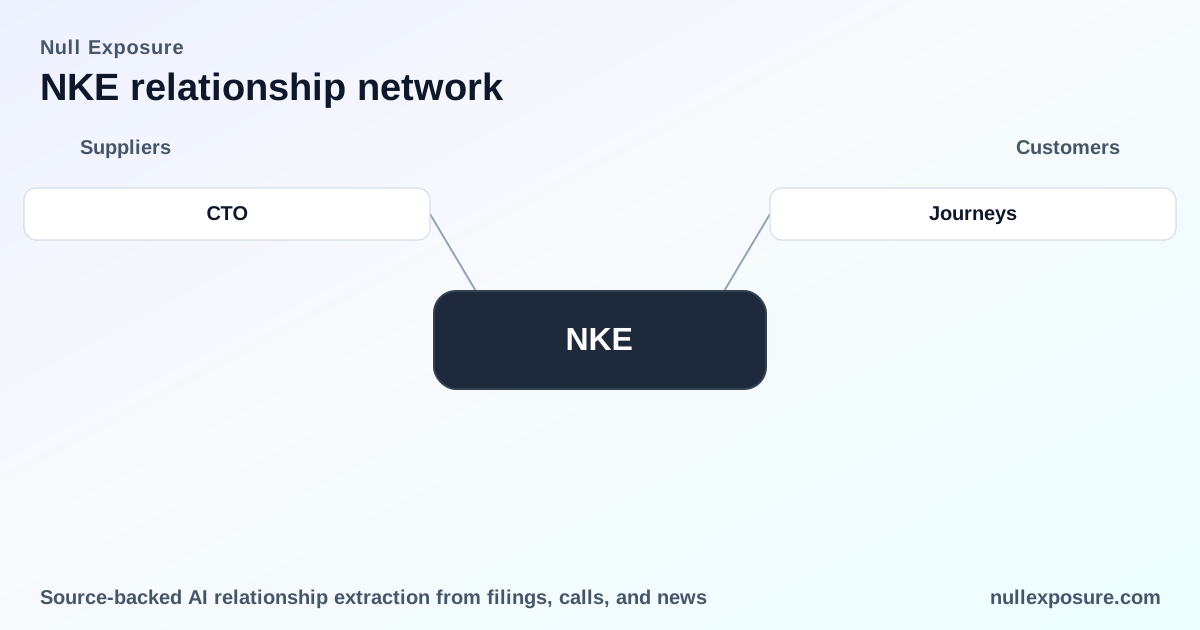
Nike Inc (NKE) — Supplier relationship profile and risk snapshot
Nike operates as a global design-to-retail athletic goods company that outsources almost all manufacturing to independent contract manufacturers and monetizes primarily through product sales (direct-to-consumer and wholesale), licensing and large-scale endorsement programs. The company captures margin through brand premium, global distribution, and a high-turn inventory model while carrying significant short-term supplier and endorsement obligations that drive working capital dynamics. For deeper relationship intelligence, visit the NullExposure homepage: https://nullexposure.com/
How Nike organizes its supplier footprint and what that means for buyers and investors
Nike’s operating model is built around outsourced manufacturing, concentrated footwear production, large endorsement commitments, and significant short-term purchase obligations. The company confirms that nearly all footwear and apparel are manufactured outside the U.S. by independent contract manufacturers, with manufacturing concentrated in APAC: Vietnam produced ~51% of Nike footwear, Indonesia ~28%, and China ~17% in fiscal 2025. Four footwear contract manufacturers collectively produced about 59% of footwear in fiscal 2025, creating a material supplier concentration. For fiscal 2025 Nike reported $7.9 billion in product purchase obligations payable within 12 months, and endorsement contract obligations totaling $16.2 billion (with $1.6 billion due within 12 months) that represent payments to individuals and teams. Accounts payable confirmed under supplier programs stood at $1,101 million as of May 31, 2025.
- Contracting posture: Heavy use of short-term purchase obligations and third-party factories means Nike maintains flexibility but is exposed to supply shocks and price volatility in the near term.
- Concentration and criticality: A small set of large contract manufacturers account for a majority of footwear output, increasing supplier leverage risk despite Nike’s scale.
- Counterparty mix: Relationships include manufacturers, logistics providers, and high-value individual endorsers—each with different operational and legal risk profiles.
- Spend scale: Supplier obligations and accounts payable indicate >$100m+ yearly procurement scale for core production and services.
Recent supplier-related coverage and an explicit relationship list
Below are every supplier-relevant relationship mentions pulled from recent coverage. Each entry is a plain-English summary with source attribution.
CTO Realty Growth — Nike is an anchor tenant at Palms Crossing (intellectia.ai, March 2026)
CTO Realty Growth announced the acquisition of Palms Crossing, a 399,000 sq ft open-air retail center that is 98% leased and anchored by Best Buy, Hobby Lobby, Burlington, Barnes & Noble and Nike, confirming Nike’s continued role as a retail anchor at the property. According to the transaction notice, Nike is identified among the primary tenants securing the center’s cash flows (intellectia.ai news item, March 10, 2026).
CTO Realty Growth, Inc. — Company press release confirms tenant mix (GlobeNewswire via ManilaTimes, March 2026)
CTO’s official announcement states that Palms Crossing was purchased for $81.6 million and lists Nike as an anchor tenant, highlighting Nike’s real estate presence in that market and the retail channel exposure tied to shopping-center occupancy (GlobeNewswire press release republished by The Manila Times, March 2, 2026).
CTO Realty Growth — QuiverQuant relay of the acquisition (QuiverQuant, March 2026)
QuiverQuant’s distribution of the CTO release reiterates the acquisition details and the anchor-tenancy of Nike at Palms Crossing, underlining the same tenant relationship and the asset’s leasing profile (QuiverQuant news, March 10, 2026).
What these tenant relationships signal about Nike’s supplier footprint and retail exposure
The Palms Crossing citations are real-estate centric rather than transactional supply arrangements: Nike's presence as an anchor tenant is a retail distribution signal, not a manufacturing supplier tie. For procurement and supply-chain risk, the company-level signals described earlier (APAC manufacturing concentration, four manufacturers producing a majority of footwear, short-term purchase obligations and large endorsement commitments) are the principal drivers of supplier risk for investors and operators.
- Retail anchor status matters for cash flow exposure: being an anchor tenant stabilizes retail sales in local markets and supports omnichannel inventory deployment, but does not change manufacturing concentration risk.
- Short-term obligations drive working capital cycles: $7.9 billion payable within 12 months and confirmed supplier obligations in the >$1 billion range illustrate significant near-term cash requirements that influence procurement negotiation leverage.
- Endorsement commitments link to counterparty risk with individuals: $16.2 billion of endorsement obligations is a company-level liability concentrated with individuals and teams, distinct from supplier payment flows but material to overall cash management.
For ongoing tracking of supplier exposure and tenant footprint, see details at NullExposure: https://nullexposure.com/
Operational and investment implications — how to act on this profile
Investors and procurement leaders should treat Nike’s supplier profile as a blend of high operational scale with notable concentration and short-term cash exposure:
- Manage concentration: The fact that four manufacturers supply ~59% of footwear production demands active monitoring of those suppliers’ capacity, labor conditions, and geopolitical exposure. A disruption at a single large supplier can materially alter fulfillment and margin.
- Stress test liquidity: The combination of $7.9 billion in near-term purchase obligations and sizable endorsement payments creates a working-capital sensitivity that requires scenario analysis, particularly in a downturn or in the event of shipping disruption.
- Distinguish retail presence from supply risk: Anchor tenancy in shopping centers (CTO’s Palms Crossing) supports retail sales and distribution but is not a substitute for diversified manufacturing sourcing.
- Operational maturity: Nike’s use of third-party logistics providers and a centralized sourcing hub (NTC) shows mature supply-chain architecture, but the model transfers execution risk to suppliers and logistics partners.
If you’re prioritizing supplier concentration analytics or preparing counterparty stress scenarios, NullExposure maintains relationship intelligence and aggregated supplier signals: https://nullexposure.com/
Bottom line for investors and operators
Nike’s business monetizes through global brand strength and diversified retail channels, while outsourced manufacturing and concentrated supplier footprints create a clear set of procurement and liquidity risks. The recent mentions of Nike as an anchor tenant at Palms Crossing are relevant for retail distribution analysis but do not alter the core supplier risk profile driven by APAC manufacturing concentration, short-term purchase obligations, and large endorsement commitments.
- Key takeaways: Nike is operationally mature but exposed to supplier concentration in APAC, significant short-term cash commitments in procurement and endorsements, and retailer-channel presence that supports demand but not supply diversification.
- Actionable next steps: Monitor disclosures on top contract manufacturers, track quarterly changes in purchase obligations and accounts payable, and model liquidity under shipping or supplier disruption scenarios.
For continuous supplier relationship monitoring and to integrate these signals in your investment or procurement workflow, visit NullExposure: https://nullexposure.com/