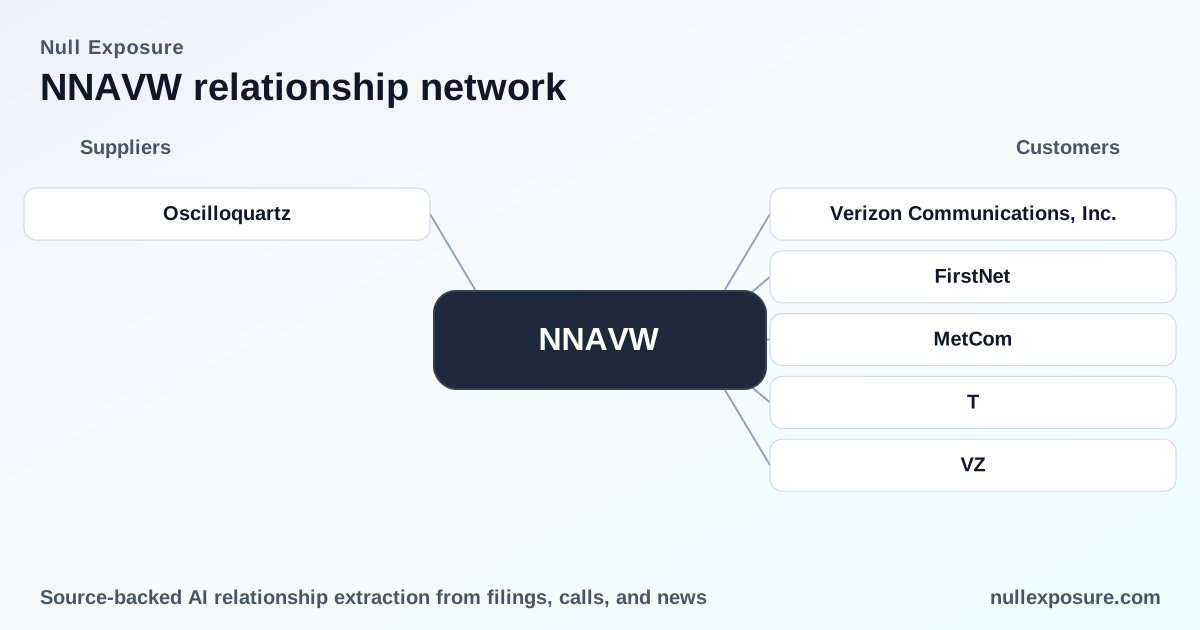
NextNav (NNAVW) — supplier posture and what the Oscilloquartz link tells investors
NextNav operates a proprietary 3D positioning and Precision Navigation & Timing (PNT) platform and monetizes through technology partnerships, service agreements, and location-based product offerings for telecommunications, public safety, and smart-infrastructure customers. The company couples in-house radio and software stacks with third‑party timing and GNSS components to deliver vertical‑positioning and indoor/outdoor hybrid location services; investors evaluating supplier risk should treat NextNav as an early commercial operator with outsized dependence on a small set of external technology partners.
Explore deeper supplier intelligence at https://nullexposure.com/.
Executive thesis: product-first company with supplier-driven integration risk
NextNav’s business model is product-led but integration-dependent: its value is delivered by combining its PNT radio stack and software with precision timing and GNSS hardware from specialist suppliers. That structure enables faster time-to-market for advanced location features, but it also creates concentration and operational dependency on a handful of integrators and cloud providers. Financials show constrained scale — TTM revenue roughly $5.54M against negative margins and a sizeable EBITDA loss — which makes supplier terms, reliability, and cost structure major drivers of near-term cash burn and commercial traction.
What the filings and call transcripts reveal about supplier posture
NextNav’s disclosures signal two corporate-level supplier themes:
- Global operating exposure. Management warns that changes in laws, regulations, or geopolitical conditions can materially affect its ability to buy from suppliers and sell internationally. This is a company-level signal that cross-border supply chains and export control environments are relevant risk vectors for the business.
- Service-provider dependency and cloud hosting. NextNav explicitly states it depends on contractors, vendors, and third‑party systems and hosts applications in Amazon Web Services (AWS), indicating a hybrid model where critical stack elements are outsourced rather than fully vertically integrated.
These constraints imply a contracting posture that blends in-house IP with outsourced critical infrastructure, creating potential single‑point supplier risks and commercial leverage issues when negotiating terms or recovering from outages. For more supplier oversight tools and intelligence, visit https://nullexposure.com/.
Single named supplier relationship: Oscilloquartz — integration of 5G PNT with GNSS timing
- NextNav disclosed a successful technology integration with Oscilloquartz, specifically combining its 5G-based PNT solution with an Oscilloquartz GNSS-enabled grandmaster clock to support timing and synchronization needs. According to NextNav’s 2025 Q3 earnings call, the integration is complete and positioned as a component of their timing strategy (2025 Q3 earnings call, transcript published Mar 2026).
- The Oscilloquartz relationship is a functional supplier tie: Oscilloquartz provides a GNSS-referenced high-precision timing source that complements NextNav’s radio-based position solution and enables synchronization across 5G and networked infrastructure (NextNav 2025 Q3 earnings call, Mar 2026).
Why the Oscilloquartz tie matters for operators and investors
Oscilloquartz supplies high-precision grandmaster clocks that anchor network timing. For NextNav, that timing is not a peripheral commodity: timing underpins PNT accuracy, regulatory compliance for network operators, and the ability to interoperate with carrier 5G infrastructure. The integration with Oscilloquartz therefore elevates that supplier from a simple vendor to a strategic systems partner for the deployed service.
Key implications:
- Operational criticality: Timing hardware like Oscilloquartz’s grandmaster clock is an essential component of accurate PNT delivery; replacement complexity and calibration requirements make this type of supplier relationship operationally critical.
- Commercial leverage: Given NextNav’s modest revenue base and negative margins, the economics of procurements and long‑term supply contracts with specialized vendors can materially affect gross margins and cash consumption.
- Interoperability path: The Oscilloquartz integration demonstrates management’s execution capability on systems integration and provides a clearer path to carrier and enterprise partnerships that require standardized timing.
Constraints mapped to business model characteristics
- Contracting posture — outsourced-critical: NextNav runs meaningful components on third‑party infrastructure (AWS) and integrates specialized hardware from vendors, signaling a contracting posture that prioritizes agility over complete vertical control.
- Concentration — supply concentration signal present: public filings identify dependence on external contractors and named integrations but list few suppliers; that limited public supplier disclosure raises concentration risk for procurement and contingency planning.
- Criticality — supplier relationships are service-critical: timing/clock and cloud-hosting partners are central to product performance, so supplier failures or long lead times will have direct product and revenue impact.
- Maturity — early commercial stage: negative EBITDA, small absolute revenue, and negative gross profit indicate the company is still working through service economics and scale, increasing the relative impact of supplier pricing and reliability.
These are company-level signals derived from regulatory disclosures and earnings commentary, not assertions tied to any single vendor unless explicitly named.
Practical due diligence checklist for investors and operators
- Validate contract terms with Oscilloquartz and other timing vendors: look for exclusivity, lead times, SLAs, and price escalation clauses. If SLAs are limited, operational risk increases.
- Assess AWS and cloud-redundancy posture: determine whether NextNav’s workloads are multi-region and what recovery playbooks exist for timing synchronization loss.
- Map supplier concentration: request a supplier register or vendor spend breakdown to quantify single‑vendor exposure and alternatives.
- Monitor geopolitical and export-risk metrics: since the firm flags global exposure, track key markets and regulatory regimes relevant to GNSS hardware and telecom infrastructure.
Bottom line and investor action points
NextNav’s integration with Oscilloquartz is a concrete demonstration of its systems-integration strategy and confirms that timing suppliers are functionally critical to product delivery. Given the company’s early commercial economics, supplier terms and continuity are central to the investment case.
- If you are prioritizing operational risk: request detailed supplier contracts and contingency plans from management.
- If you are prioritizing strategic upside: evaluate how supplier integrations accelerate carrier trials and commercial rollouts.
For ongoing supplier intelligence and to benchmark NextNav against peer procurement profiles, see https://nullexposure.com/. Final diligence should combine contract review, performance SLAs, and a close look at supply-chain resilience before concluding on supplier-related investment risk.