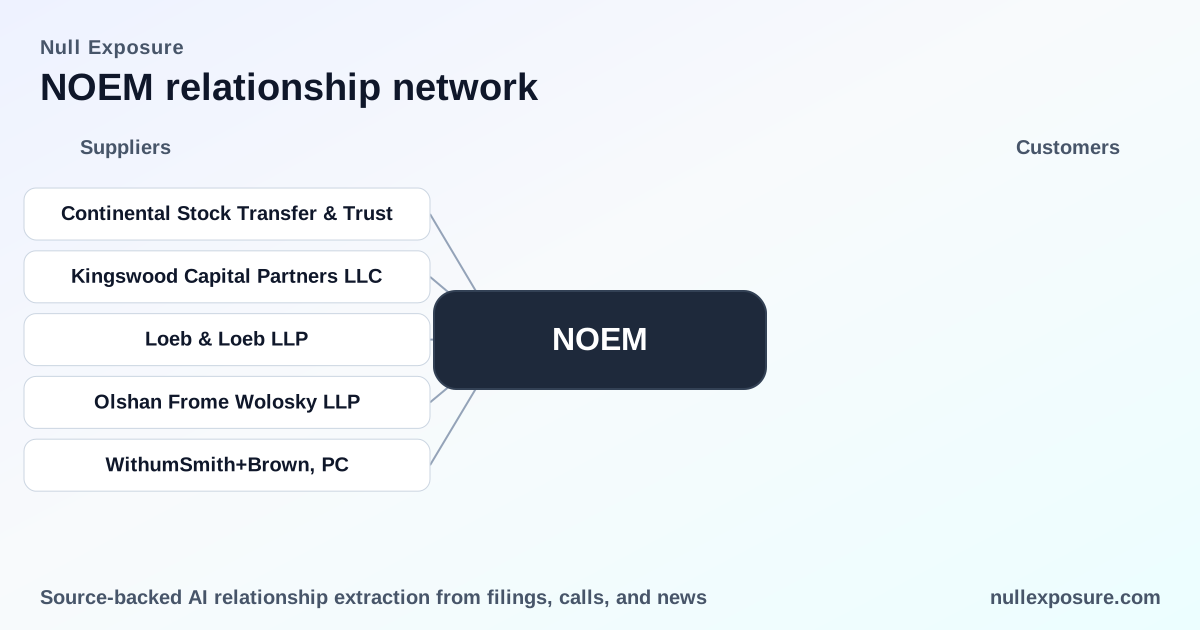
NOEM (CO2 Energy Transition Corp.): supplier map and commercial implications for investors
CO2 Energy Transition Corp. is operating as a SPAC-style shell that monetizes primarily through its sponsor arrangements, underwriting proceeds from its IPO and the eventual economics of a business combination; its balance sheet shows a near-zero operating revenue profile while concentrated, contract-driven fees (underwriting discounts, sponsor administrative payments) represent the real near-term cash flows. For investors evaluating supplier exposure, the relevant facts are straightforward: trustee, underwriter, counsel and auditor relationships are active, fee-bearing and structurally linked to the trust account and IPO economics. If you want a consolidated view of counterparty and contract risk for NOEM, visit https://nullexposure.com/ for our supplier intelligence portal.
Who supplies NOEM’s critical services — the short list investors need
Below are the named counterparties reported in public filings and news coverage, each with a concise plain-English role description and source.
- Continental Stock Transfer & Trust acts as the company’s trustee, holding and administering the trust account tied to the SPAC’s IPO proceeds. According to SPACInsider (March 10, 2026), Continental Stock Transfer & Trust is acting as trustee for CO2 Energy Transition Corp.
- Kingswood Capital Partners LLC served as the sole underwriter for the offering, responsible for bookrunning and managing allocation of the IPO units. A SPACInsider report (March 10, 2026) identifies Kingswood Capital Partners LLC as the sole underwriter of the offering.
- Loeb & Loeb LLP is serving as issuer counsel, advising the SPAC on regulatory disclosure and the legal structure of the offering. The same SPACInsider article (March 10, 2026) lists Loeb & Loeb LLP as Issuer’s Counsel.
- Olshan Frome Wolosky LLP is acting as underwriter’s counsel, representing the underwriting syndicate on legal diligence and securities work. SPACInsider (March 10, 2026) reports Olshan Frome Wolosky LLP as Underwriter’s Counsel.
- WithumSmith+Brown, PC serves as the independent registered public accounting firm (auditor) for the company, performing the financial statement attest work required for the IPO. SPACInsider (March 10, 2026) notes WithumSmith+Brown, PC as the company’s auditor.
Contracts, fees and what they signal about NOEM’s operating posture
The contractual excerpts embedded in filings and coverage reveal several company-level operating traits that matter to investors:
- Service-provider orientation and recurring contractual fees. Filings show the company has routine payments for administrative support to its sponsor (e.g., a $10,000 per month fee for office and secretarial services) and explicit underwriting discounts tied to the IPO proceeds; these indicate NOEM’s cost base is concentrated in a small set of third-party providers rather than in operating revenue. The filings state the sponsor fee arrangement commenced November 12, 2024, and administrative fees were accrued through December 31, 2024.
- Direct linkage of counterparty economics to the trust account. The underwriters are contractually entitled to both an upfront cash underwriting discount and a deferred underwriting discount payable from trust-account funds upon closing of a business combination. This structure creates direct counterparty leverage against the SPAC’s primary asset (the trust account) and elevates counterparty criticality.
- Materiality bands: non-trivial but not enterprise-scale single-vendor spend. The disclosed fee items fall into spend bands that investors should note: certain underwriting cash fees in the $100k–$1m range (for immediate discounts) and deferred underwriting discounts in the $1m–$10m range (notably a cited $2,070,000 deferred fee). These are company-level spend signals drawn from the offering disclosures.
- Active relationship stage and syndicate behavior. The underwriters elected to fully exercise an over-allotment option on November 22, 2024, which signals active market engagement and full syndicate participation at the IPO close. That operational detail confirms the underwriting relationship moved beyond planning into realized transaction execution.
- Contractual risk to public trust assets. The company’s disclosure explicitly acknowledges that vendors, service providers and others could attempt to challenge or attach monies in the trust account despite waivers — a legal risk that positions counterparties as potential claimants against the SPAC’s primary liquid asset.
Collectively, these constraints describe an operating model with high counterparty criticality, concentrated supplier spend, and contractual terms that prioritize underwriter and sponsor economics against the trust account.
How these supplier relationships translate to investor risk and opportunity
- Key risks: Because the SPAC model rests on the trust account and the ability to consummate a business combination, trustee, underwriter and sponsor contracts are critical; disputes or successful claims against the trust account would directly impair the SPAC’s most valuable asset. The presence of deferred fee mechanics increases the contingent outflow profile that investors must model when valuing a business combination pipeline.
- Operational maturity: The supplier list and the exercised over-allotment indicate the SPAC completed a fully subscribed IPO and has retained the standard set of professional service providers you expect for a listed blank-check vehicle — that is transactional maturity rather than operating maturity. Financial metrics confirm this: near-zero operating revenue and zero gross profit reflect a pre-combination balance sheet with little standalone cashflow generation.
- Concentration and negotiating posture: The small roster of service providers suggests concentration risk; with a single trustee and a single lead underwriter, the company relies on a narrow supply base for mission-critical functions. Contract terms giving counterparties claims on trust funds also signal a sellers’-market posture in negotiations for essential services.
If you want a structured supplier risk scorecard and comparative peer view for NOEM, see our analysis hub at https://nullexposure.com/ — we track exactly these counterparty footprints and contractual clauses.
Relationship-by-relationship takeaway for due diligence
- Continental Stock Transfer & Trust — essential operational custodian of the SPAC’s trust assets; any dispute here affects liquidity access and redemptions. (SPACInsider, Mar 10, 2026)
- Kingswood Capital Partners LLC — sole underwriter and primary syndicate counterparty responsible for IPO placement and subject to the underwriting discounts that affect the trust account. (SPACInsider, Mar 10, 2026)
- Loeb & Loeb LLP — issuer counsel overseeing disclosure and transactional legal work; counsel quality impacts enforceability of waivers and defense against trust-account claims. (SPACInsider, Mar 10, 2026)
- Olshan Frome Wolosky LLP — underwriter’s counsel supporting the syndicate’s legal interests, particularly in structuring deferred compensation from the trust. (SPACInsider, Mar 10, 2026)
- WithumSmith+Brown, PC — independent auditor providing the financial attest function required for capital markets access; audit scope and opinions affect investor confidence in the SPAC’s financial statements. (SPACInsider, Mar 10, 2026)
What investors should watch next
- Monitor any legal challenges to the trust account or public disclosures about claims from vendors or other counterparties; successful claims would be an immediate value impairment.
- Track disclosures around the deferred underwriter fee and any movement toward a business combination — those events trigger cash flows and shifts in counterparty economic exposure.
- Validate the sponsor’s administrative arrangements and cumulative accruals; recurring sponsor fees can erode trust-account returns over time.
For a deeper supplier-risk breakdown and linked primary documents, visit our research portal at https://nullexposure.com/.
Conclusion: NOEM’s supplier footprint is compact, fee-centric and intimately tied to the trust-account economics that define SPAC value. For investors and operators, the practical focus is on counterparty enforceability, deferred-fee exposure, and the legal protections around the trustee account — variables that will determine whether NOEM’s structure supports value creation through a successful business combination or concentrates downside risk before a deal is completed.