Nomadar (NOMA): Brand licensing and travel technology — a focused but concentrated supplier profile
Nomadar operates a combined travel-technology and brand-commercialization business that monetizes through digital travel services and selective intellectual-property licensing. The company complements platform revenues with exclusive brand deals that create incremental commercial channels — for example, global trademark commercialization rights tied to sports heritage IP — while maintaining a small public equity footprint and high insider control. For further supplier intelligence, visit https://nullexposure.com/.
How Nomadar actually generates cash and commercial leverage
Nomadar’s public narrative mixes two revenue engines: travel technology platforms and select commercial licensing of branded assets. The travel-technology products underpin recurring transaction and service fees, while exclusive licensing agreements convert cultural or sports IP into retail and merchandising revenue across geographies where Nomadar holds commercialization rights. This dual approach explains why Nomadar’s reported top line is modest today but structured to scale if licensing rollouts and platform adoption accelerate.
Visit https://nullexposure.com/ for supplier diligence and relationship mapping.
The Cádiz CF / “Mágico González” deal — an unusually explicit licensing asset
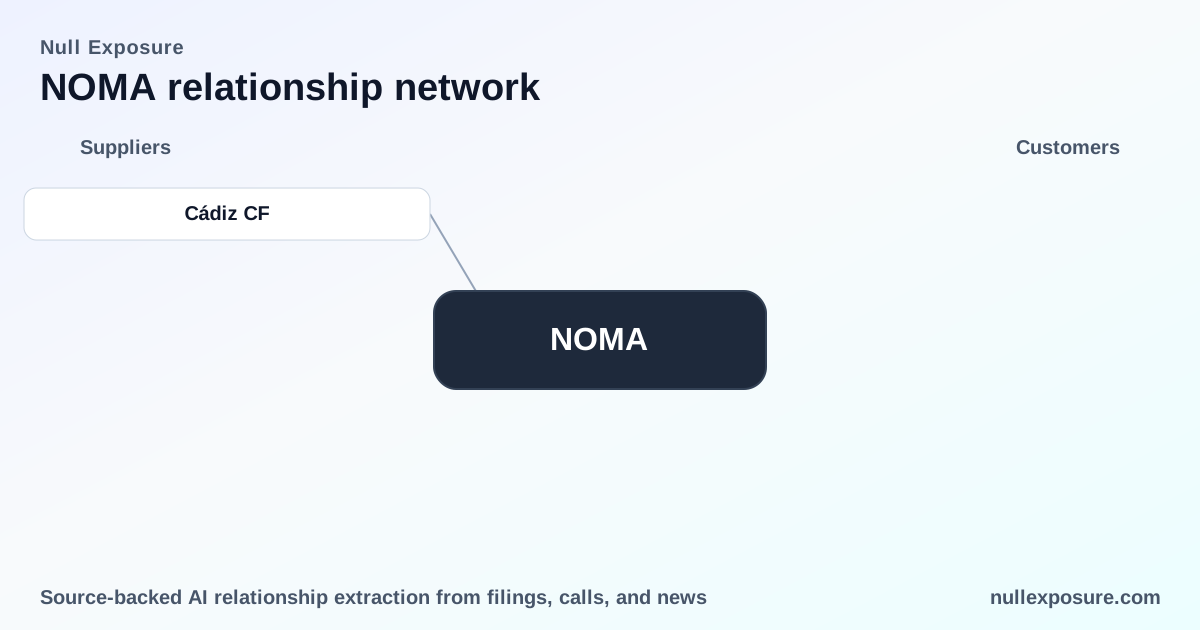
Nomadar holds exclusive global trademark rights (excluding Spain) to the “Mágico González” brand under an agreement with Cádiz CF, giving the company the sole right to commercialize that IP outside Spain. According to PR Newswire and CityBiz reporting in March 2026, the agreement grants Nomadar comprehensive trademark rights tied to the player’s brand, positioning the company to exploit merchandising, digital IP, and related licensing revenue streams. (PR Newswire / CityBiz, March 2026.)
This single named supplier/partner relationship illustrates Nomadar’s strategy to buy or license iconic cultural assets and convert them into monetizable products and partnerships across regions where the partner cedes rights.
Complete relationship rundown
Below is the complete list of supplier relationships surfaced in publicly available coverage and filings:
- Cádiz CF — Nomadar holds exclusive trademark rights to “Mágico González” and the exclusive right to commercialize the brand globally (excluding Spain); this was reported in company press releases and independent coverage in March 2026 (PR Newswire; CityBiz). These rights give Nomadar a defined IP asset to commercialize through retail, licensing, or platform integrations outside Spain.
What these relationships imply about Nomadar’s operating posture
The public record and disclosed agreements support several company-level operating signals:
- Contracting posture: exclusive and selective. Public reporting highlights exclusive licensing structures rather than commoditized, multi-license arrangements. That posture increases potential upside on successful commercialization but concentrates execution risk into a few deals.
- Concentration of commercial levers. Nomadar’s supplier/partner model relies on high-value, limited-scope IP rights rather than very broad, diversified supplier lists. That creates concentrated counterparty importance for individual licensing deals.
- Criticality to near-term revenue. With modest overall revenue, each successful license rollout can be material to growth; conversely, delayed commercialization can have outsized negative effects on short-term performance.
- Early-stage commercial maturity. Financial indicators (negative operating margin and limited revenue base) align with a company in the commercialization phase where licensing monetization is still proving out.
These are company-level signals drawn from public disclosures and financials rather than contract-level caveats.
Financial and governance indicators that shape supplier risk
Nomadar’s financial profile as of the latest quarter (2025-09-30) frames supplier and execution risk:
- Revenue: $885,690 TTM; Gross profit: $535,690 TTM.
- Profitability: Negative operating margin (operating margin TTM -0.8) and diluted EPS of -$0.12.
- Valuation: Extremely elevated multiples relative to revenue (Price-to-Sales ~83.4; EV/Revenue ~84.6), indicating market pricing that assumes outsized future growth.
- Ownership: Insider ownership ~74.8%, institutional ownership ~1.85%, and a small public float — governance and liquidity factors that shape negotiation dynamics with suppliers and partners.
According to the company’s public profile and latest quarter data, these indicators mean that Nomadar is capital-light, controlled, and dependent on successful rollout of a small number of commercial initiatives to justify current market valuation (company filings and public disclosures, latest quarter 2025-09-30).
Investment implications and operational risks
For investors and operators evaluating supplier relationships with Nomadar, prioritize the following:
- Execution is binary and concentrated. Exclusive brand rights can generate high-margin revenue when commercialized but rely on successful product launches and channels outside Spain.
- Counterparty leverage is significant. With a high insider ownership structure and low institutional presence, negotiation dynamics and the speed of commercialization can be influenced by a compact decision-making group.
- Valuation sensitivity is acute. Market multiples already reflect optimistic growth; any delay in monetizing licensed IP or scaling travel-platform revenue will materially affect equity returns.
- Operational dependence on distribution and merchandising partners. The licensing model requires competent distribution networks and co-sourcing for manufacturing, retail, or digital activations to convert IP into cash.
Key takeaways: exclusive licensing is a strategic differentiator, but execution, distribution, and concentrated counterparties are the dominant operational risks.
What operators and procurement teams should ask next
When engaging Nomadar as a supplier or partner, secure clarity across these dimensions: contract exclusivity and territorial carve-outs; performance milestones and revenue-share mechanics; go-to-market channels and sample merchandising plans; and escalation clauses tied to commercialization timelines. These specifics will determine whether a license generates predictable revenue or becomes a stranded asset.
For deeper supplier analytics and to map Nomadar’s commercial counterparties across IP and platform initiatives, consult https://nullexposure.com/.
Conclusion — a high-conviction structural view
Nomadar’s commercial strategy blends travel-technology revenue with selective, exclusive licensing of cultural and sports IP, exemplified by its Cádiz CF / “Mágico González” rights. That model delivers asymmetric upside if commercialization succeeds but also creates concentration and execution risk given the company’s modest revenue base and tight ownership structure. Investors and operators should evaluate deals with an emphasis on distribution capability, contract milestones, and the timeline to monetize non-Spanish territories.
For supplier mapping, relationship verification, and ongoing monitoring, visit https://nullexposure.com/ — the single place to track supplier exposures and commercialization outcomes.