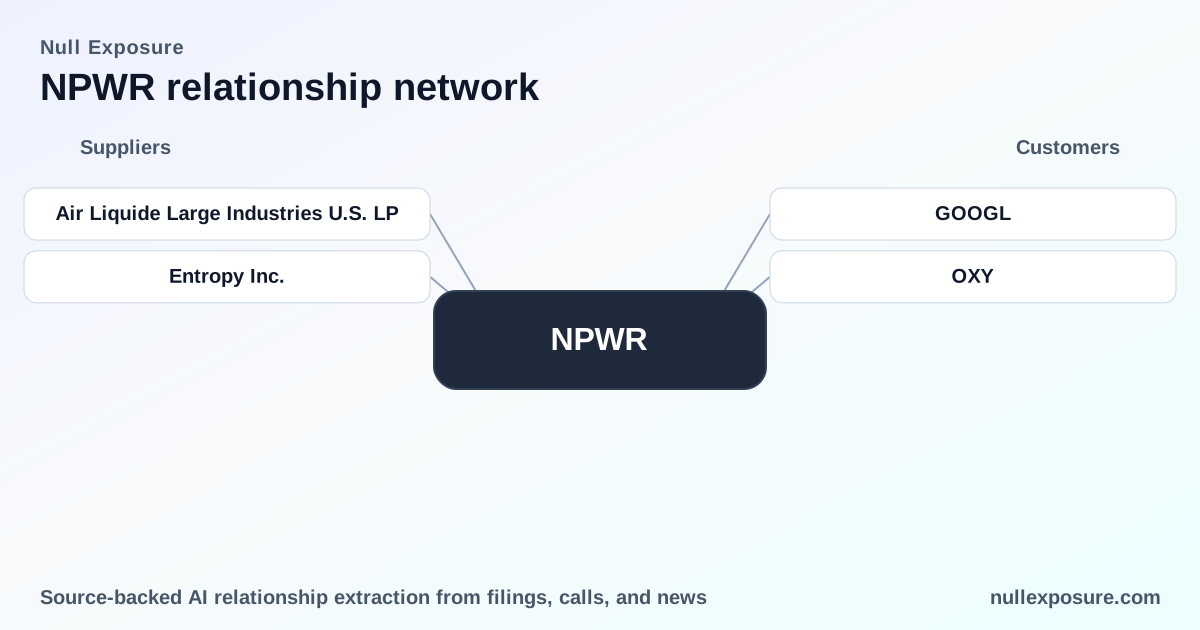
NET Power (NPWR) — supplier relationships that shape commercialization
NET Power develops and licenses the Net Power Cycle: a natural‑gas power technology that uses CO2 as the working fluid and is monetized through perpetual technology licenses, product supply and service agreements, and project asset commitments. Investors evaluating NPWR supplier exposure should focus on a small number of strategic partners tied to plant construction, CO2 capture integration and related long‑term commercial arrangements that determine near‑term cash requirements and long‑term royalty streams. For a concise vendor risk view and sourcing intelligence, visit https://nullexposure.com/.
Two commercial relationships that matter today
NET Power’s public disclosures list a compact supplier/supplier‑adjacent footprint. Below are the relationships disclosed in the filings and reporting examined for this profile.
Air Liquide Large Industries U.S. LP
NET Power has an enduring product supply and sales arrangement with Air Liquide dating back to a 2015 Product Supply and Sales Agreement, which positions Air Liquide as a supplier for plant‑level gas handling and related services. According to NET Power’s 2024 Form 10‑K, the agreement is documented as a Product Supply and Sales Agreement dated July 1, 2015 (FY2024 filing).
Entropy Inc.
NET Power secured exclusive U.S. power‑sector rights to use Entropy’s solvent‑based carbon capture solvent as part of a strategic partnership announced alongside third‑quarter results; the arrangement gives NET Power prioritized capture technology for its projects in the U.S. A Carbon Herald report from March 2026 described the agreement granting NET Power exclusive U.S. power‑sector rights to Entropy’s solvent‑based capture technology (news report, March 2026).
What these relationships imply about NET Power’s operating model
NET Power operates as a technology licensor and project developer, and the disclosed supplier relationships reinforce that dual model.
-
Licensing and IP are central. The company’s filings document a perpetual, irrevocable license acquired from 8 Rivers for the Net Power Cycle. That contract establishes NET Power’s role as a licensor that sells perpetual rights to a core process, positioning revenue toward long‑dated royalties and license fees rather than recurring commodity sales (10‑K language describing the 2014 license with 8 Rivers).
-
Project commercialization requires specialist suppliers. The Air Liquide supply agreement is a classic example of the company sourcing plant‑level industrial services from established gas‑handling majors, which is typical for a firm moving from pilot to commercial plants. These supplier agreements are operationally critical because they relate to on‑site utilities and product supply.
-
Strategic technology partnerships expand scope. The Entropy agreement demonstrates NET Power’s use of partner capture technology to deliver a complete, low‑emissions offering—integrating third‑party capture is a commercial lever for faster plant uptake and an enabler of project financing.
-
Contracting posture is long‑term. Corporate filings list leases for office space extending to December 2028 and a Houston lease with an initial 68‑month term plus extension options; these disclosures and the long‑dated IP licenses indicate multi‑year contractual commitments across real estate, IP and supplier lines (10‑K lease disclosures, FY2024).
-
Spend concentration and timing risk are present. Public excerpts show a range of spend exposures: current related‑party payables ($325k at year‑end 2024), an $89.6 million remaining asset‑purchase obligation through 2026, and small reported master services costs (reported as $1,585 in the filing). Collectively these items point to lumpy, project‑phase capital outlays rather than evenly distributed supplier spend (10‑K footnotes and obligations schedule).
-
Service and IP risk are intertwined. Filings also reference third‑party cybersecurity service processes and the potential need to in‑license additional proprietary rights, indicating both operational dependencies on external service providers and ongoing IP sourcing activity as business drivers (10‑K governance and IP discussion).
How to read supplier risk and upside
NET Power’s supplier map creates a distinct risk/reward set for investors and operator partners.
-
Upside: exclusive capture rights (Entropy) and a durable IP licensing model accelerate the company’s ability to deliver full‑stack power + capture solutions to customers, improving project bankability and potential licensing revenue once projects scale.
-
Risk: concentrated project spend and long lead‑time obligations place a premium on execution; the $89.6 million in remaining asset purchase obligations through 2026 and the related‑party payables noted in the 2024 filing highlight near‑term cash demands. Additionally, reliance on specialist suppliers such as Air Liquide for plant utilities creates operational concentration at the plant level.
-
Operational maturity: The company has moved beyond pure R&D into contractually committed pilots and commercial arrangements (multi‑year leases, supply agreements, and exclusivity deals), so execution risk now dominates technological risk.
Place these items in your decision framework: if you underwrite NET Power as a licensing platform that needs successful first‑of‑a‑kind commercial plants to unlock royalties, then supplier execution and partner capture technology adoption are primary value levers.
For a deeper supplier risk profile and alerts on new partner disclosures, see https://nullexposure.com/.
Tactical considerations for investors and operators
-
For equity investors: monitor capital commitments and milestone payments tied to asset purchase obligations through 2026, and track announcements of capture‑integrated projects that deploy the Entropy solvent at scale.
-
For potential customers/operators: evaluate supplier concentration (e.g., reliance on Air Liquide for plant utilities) and ensure contractual performance guarantees are in place for both supply and capture hardware/software.
-
For suppliers and service providers: NET Power’s business model favors long‑term, project‑level relationships and exclusivity for strategic capture solutions; proposals that reduce project execution risk and align with licensing timelines have higher commercial value.
Bottom line: focused partner map, concentrated execution risk
NET Power runs a license‑centric commercial model supported by targeted supplier agreements (Air Liquide) and strategic capture partnerships (Entropy). The company’s public filings signal long‑term contracting posture, heavy project‑phase spend, and a reliance on specialist suppliers that together define near‑term execution risk and the pathway to scaling royalties. Review the Form 10‑K disclosures for contractual schedules and the March 2026 press coverage for the Entropy capture arrangement to stay current.
To track NPWR supplier changes and get notified when new partner agreements surface, visit https://nullexposure.com/.