Natural Resource Partners (NRP): Mineral lease cash flow, a strategic carbon tie-up, and what suppliers should know
Natural Resource Partners LP owns, manages and leases a portfolio of U.S. mineral properties and monetizes through long-term mineral leases, royalties and property management, with incremental strategic value from non-core uses of acreage such as carbon sequestration hubs. For investors and supplier-side operators, the model is a cash-generative real-asset lease business with high operating margins and limited operating leverage; supplier relationships are principally long-dated and low to mid spend but can acquire strategic importance when acreage is repurposed for energy transition projects. For a deeper look at counterparties and contractual posture, visit the Null Exposure research hub: https://nullexposure.com/.
How NRP makes money and why suppliers should care
Natural Resource Partners collects lease payments and royalties from energy producers that extract thermal coal and other minerals from its acreage, and it steadily monetizes through renewals, acreage sales and structured leases. Financially, NRP is a compact but profitable public partnership — market capitalization roughly $1.36B, trailing EBITDA of $165M and profit margins above 60% — which underpins a material dividend yield and stable supplier cash flow needs. The asset-light nature of the business drives predictable operating margins, while the commodity exposure and evolving energy landscape create occasional strategic repurposing of acreage.
Suppliers and service providers should note three operating-model characteristics up front:
- Long-term contracting posture: core tenant leases are structured over multiple years with renewal options, creating predictable contracted cash flows for both parties.
- Low-to-moderate spend per supplier: most non-capital supplier relationships fall in the low six-figure annual range, limiting single-vendor concentration risk.
- Strategic event risk: when acreage is repurposed — for example into carbon storage hubs — counterparties become higher-value and contractual arrangements can change materially.
If you evaluate supplier exposure or vendor concentration for clients in energy land and leasing, see Null Exposure’s supplier intelligence platform: https://nullexposure.com/.
The front-page relationship: Occidental / Oxy Low Carbon Ventures
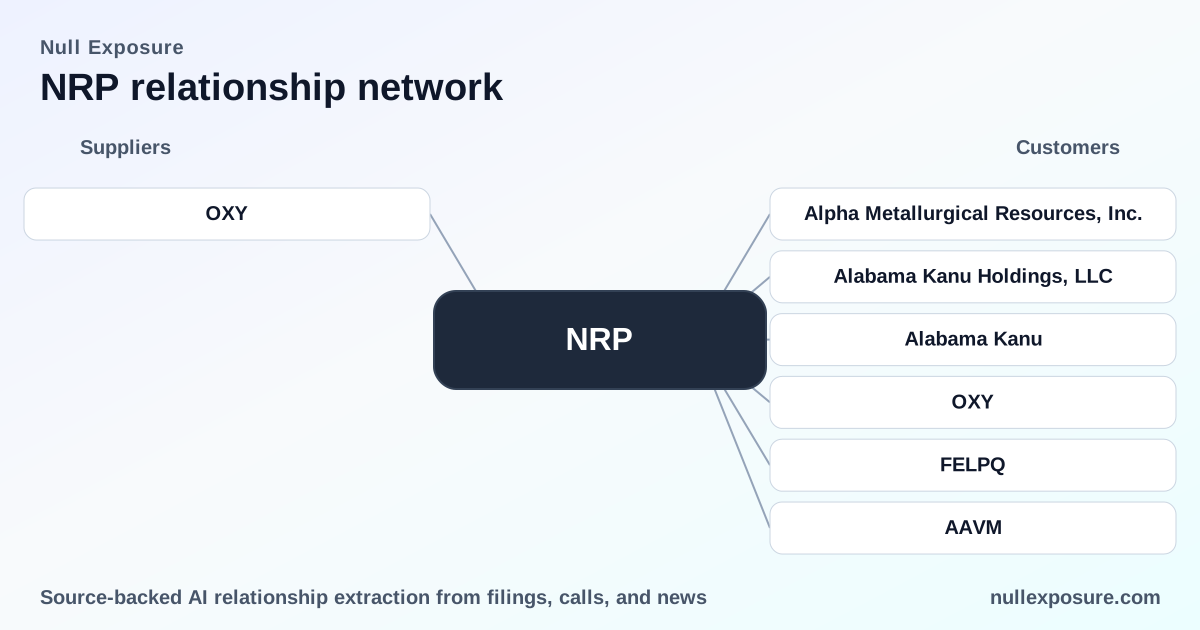
Natural Resource Partners executed an agreement with Occidental’s Oxy Low Carbon Ventures (OLCV) to evaluate and potentially develop a permanent CO2 sequestration hub using approximately 65,000 acres of NRP land in southeast Texas. This is a strategic, asset-based collaboration that converts passive acreage into active low-carbon infrastructure, creating a new pathway for lease monetization beyond traditional extraction. According to an InvestingNews report dated March 10, 2026, the companies announced the execution of the evaluation agreement for the hub (InvestingNews, 10-Mar-2026).
Implication: this relationship elevates certain acreage from a pure-royalty profile to a potentially higher-value, long-duration infrastructure play, which changes the counterparty risk profile for suppliers tied to that project (construction, engineering, subsurface services).
Every listed relationship in the public results
- Occidental / Oxy Low Carbon Ventures (OLCV / OXY): NRP provided roughly 65,000 acres to OLCV to evaluate and potentially develop a permanent CO2 sequestration hub in southeast Texas, signaling an active pivot into carbon storage monetization (InvestingNews, 2026-03-10). This is the only counterparty explicitly listed in the public relationship results for supplier scope.
Lease and supplier constraints visible in filings — and what they signal
NRP’s filings disclose operationally relevant supplier and lease constraints. These are company-level signals unless the excerpt names the counterparty directly.
- The lease with Western Pocahontas Properties Limited Partnership is explicitly named in filings: NRP leases an office building in Huntington, West Virginia from Western Pocahontas and entered a new lease on January 1, 2019 with a five-year base term plus five five-year renewal options; NRP paid approximately $0.8 million to Western Pocahontas under that lease in the year ended December 31, 2024 (company filings covering 2024). This is a named landlord–tenant relationship and represents a multi-year, service-provider/lessor arrangement with modest spend intensity.
- Company-level constraint signals from filings:
- Contract type: long-term. Filings show multiple multi-year leases and renewal options, indicating NRP’s contracting posture favors duration and stability rather than short-term spot arrangements.
- Geography: North America (NA). Operations and leasing are U.S.-centric; supplier exposure is regionally concentrated in U.S. jurisdictions where mineral rights and regulatory regimes apply.
- Relationship role: service provider. Where NRP leases property or services, the counterparty role is typically as landlord or long-term provider rather than ad-hoc contractor.
- Spend band: $100k–$1M. Disclosed lease payments in the low six-figure range show typical supplier or lessor spend is modest relative to revenue, which reduces single-supplier financial dependence.
Taken together, these constraints paint a clear operating posture: NRP prefers low-concentration, long-tenor commercial relationships that deliver predictable cash flows; only specific strategic projects (e.g., carbon hubs) materially change the exposure and required supplier capabilities.
What this means for suppliers and operator due diligence
NRP’s model rewards suppliers that can deliver long-duration service and demonstrate compliance and risk controls for U.S. mineral and subsurface work. Key considerations for vendors:
- Prioritize performance and longevity: long-term contracts are the norm; vendors that align pricing and service to a multi-year horizon compete effectively.
- Prepare for strategic upsizing: carbon sequestration and infrastructure projects convert large-acreage leases into capital-intensive programs; suppliers with subsurface, environmental or construction capabilities can capture disproportionate value.
- Expect modest transactional value in routine leases: day-to-day office or admin service contracts sit in the low six-figure band; operational concentration risk for suppliers remains low unless tied to repurposed acreage.
If you want granular counterparty profiles or supplier risk scoring on NRP counterparties, explore our analysis and tools: https://nullexposure.com/.
Conclusion — investor and operator takeaway
Natural Resource Partners is a capital-efficient, lease-driven business with predictable cash generation and a conservative contracting posture that favors long-term relationships and modest supplier spend. The Occidental/OLCV agreement is an explicit pivot: 65,000 acres shifting toward carbon sequestration increases strategic supplier opportunity and elevates counterparty criticality for affected parcels. For suppliers, the path to scaled revenue with NRP runs through demonstrated longevity, subsurface competence and readiness for infrastructure-scale projects.
For tailored supplier exposure reports or to commission a counterparty diligence package on NRP and its partners, visit Null Exposure: https://nullexposure.com/.