NRx Pharmaceuticals (NRXPW): supplier footprint, commercial levers, and what operators should price in
NRx Pharmaceuticals is a clinical-stage small-molecule pharmaceutical company that monetizes through licensing, milestone/royalty streams and outsourced manufacturing tied to future product sales, while it develops treatments for CNS and lung disorders and positions selected products for distribution via its HOPE clinic franchise. The company today has negligible product revenue and sustains operations through partner agreements, service contracts and financing activities; the supplier relationships disclosed in the FY2024 filing are therefore operationally critical to any near‑term commercialization path. For a quick supplier-risk briefing and relationship maps, visit https://nullexposure.com/.
How NRx runs its supplier base and what that implies for investors
NRx operates with a deliberately outsourced model. The company does not manufacture internally and relies on development and manufacturing contracts to produce clinical and commercial supplies. Key company-level constraints documented in FY2024 show a mix of short-term contracting posture, recurring mid‑six‑figure spend relationships, U.S.-centric supply chains and licensing obligations that will convert into royalties if products reach the market.
- Contracting posture and maturity: NRx maintains month-to-month office leasing and uses consulting and placement agents for capital and M&A activities, indicating a flexible, low‑fixed‑cost operating stance rather than long-term supplier lock‑ins. (FY2024 Form 10‑K)
- Outsourced manufacturing and geography: Clinical trial supplies for NRX-101 and other programs are manufactured in the U.S.; the company has no internal manufacturing capabilities, increasing dependence on external manufacturers. (FY2024 10‑K)
- License-driven monetization and royalty exposure: The company is party to license agreements that prescribe royalty rates (for example, royalty bands described in the filing), signaling that future revenue will be shared and capped by contract terms. (FY2024 10‑K)
- Spend profile: Recurring service and IP maintenance payments are generally in the $100k–$1m band, so supplier contracts are material to cash flow but not immediately cash-burn dominant. (FY2024 10‑K)
If you are evaluating supplier counterparty risk for NRXPW, focus on manufacturing continuity, patent/licensing expense timing, and the ability of the HOPE distribution plan to scale clinic supply demand without requiring new large capital investment. Learn more about supplier risk metrics at https://nullexposure.com/.
The supplier relationships on record (what’s disclosed in FY2024)
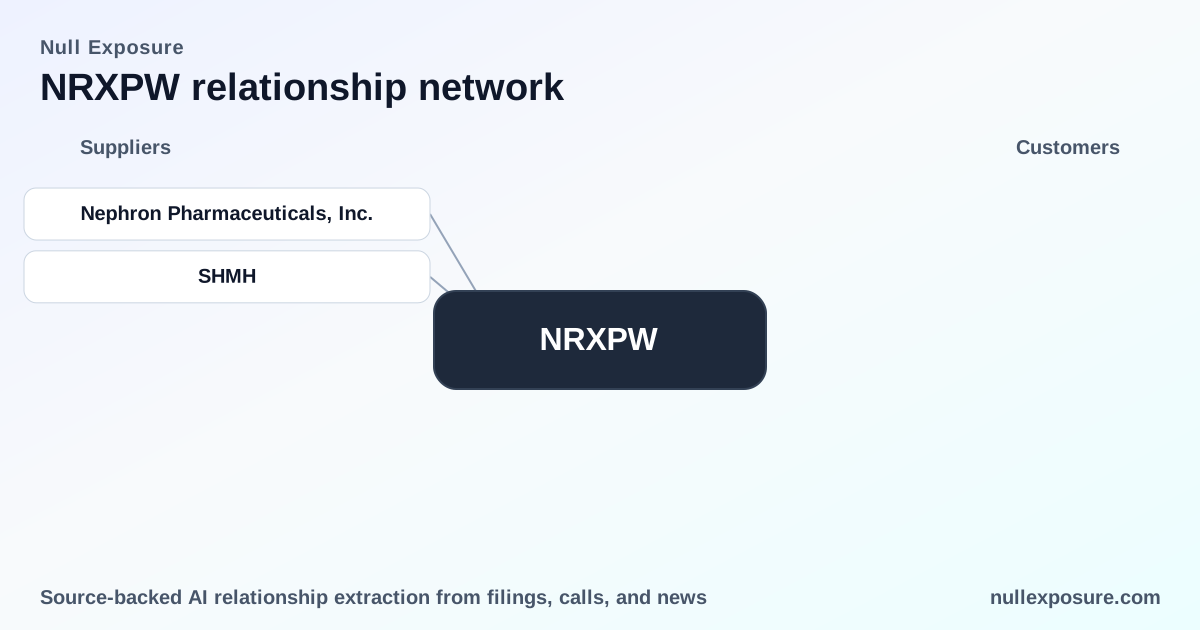
The 10‑K for FY2024 lists two direct supplier / counterparty relationships relevant to operations and commercialization. Each relationship is concise in the filing; below are plain‑English summaries and the filing source.
Nephron Pharmaceuticals, Inc.
NRx entered a development and manufacturing agreement with Nephron in 2023 to manufacture ketamine HCl (NRX‑100 / HTX‑100), positioning Nephron as the primary external manufacturer for that program intended for HOPE network distribution. According to the FY2024 Form 10‑K, the Nephron agreement covers development and production of ketamine HCl for the company’s planned distribution channels. (FY2024 Form 10‑K)
SHMH (Sarah Herzog Memorial Hospital Ezrat Nashim)
NRx maintains a license relationship requiring it to reimburse SHMH for costs incurred in filing and prosecuting licensed patents and to make ongoing maintenance payments tied to the SHMH License Agreement; this creates recurring patent-related cash obligations and royalty structure implications for any product incorporating the licensed IP. The FY2024 filing explicitly notes the company’s reimbursement obligations under the SHMH agreement. (FY2024 Form 10‑K)
How these relationships translate into commercial and operational risk
Both disclosed relationships are small in number but large in strategic importance.
- Concentration and criticality: With no in‑house manufacturing, the Nephron manufacturing agreement is operationally critical—any disruption to that contract could delay clinical supply or early commercial shipments for NRX‑100. The company’s FY2024 disclosure confirms reliance on Nephron for manufacture of ketamine HCl. (FY2024 Form 10‑K)
- Contract length and flexibility: Company filings indicate a preference for short‑term contracts in general (for example, month‑to‑month office leases) and recurring, service‑oriented engagements elsewhere; this signals operational flexibility but lower supplier lock‑in, which is positive for cost control but increases execution risk during scale-up. (FY2024 Form 10‑K)
- Licensing and margin pressure: The filing describes royalty mechanics (different rates depending on patent coverage), which will compress future gross margins relative to wholly owned IP and must be factored into go‑to‑market pricing and profit forecasts. (FY2024 Form 10‑K)
- Spend profile: The company’s disclosed payments—annual license maintenance fees and recurring technical support fees in the low‑hundreds of thousands—indicate manageable but recurring cash outflows that scale with program activity rather than large upfront capital commitments. (FY2024 Form 10‑K)
For operators evaluating supplier continuity or investors stress‑testing cash flows, the combination of an outsourced manufacturing model, royalty obligations and mid‑six‑figure recurring spend is a clear signal to prioritize contractual hygiene and contingency manufacturing options.
If you want a supplier risk scorecard or to benchmark NRXPW’s supplier relationships against peers, go to https://nullexposure.com/ for tools and research.
What to watch next (timing and triggers)
- Watch for definitive manufacturing milestones and capacity guarantees in the Nephron agreement; any amendment that increases volume commitments or provides backup manufacturing partners materially reduces execution risk. (FY2024 Form 10‑K)
- Track patent prosecution payments and milestone schedules under the SHMH license; missed payments or failure to meet milestone conditions can change royalty exposure and IP rights. (FY2024 Form 10‑K)
- Monitor the company’s pursuit of clinic acquisitions (LOIs referenced in the filing) because scaling the HOPE network is the demand driver that will convert contract manufacturing capacity into revenue. (FY2024 Form 10‑K)
Conclusion — how to position around supplier risk
NRx’s supplier profile is compact: outsourced manufacturing via Nephron and licensed IP obligations to SHMH create a concentrated but transparent supplier footprint. This structure reduces capital intensity but increases execution and contractual risk tied to a small set of external partners. Investors and operators should price in the operational dependence on Nephron for NRX‑100, the royalty and maintenance costs embedded in license agreements, and the company’s reliance on short‑term, service‑oriented contracts for flexibility.
For a deeper supplier‑level diligence pack and comparative analytics on counterparties and contract risk, visit https://nullexposure.com/ and request the NRXPW supplier brief.