Insperity (NSP): supplier relationships that shape margins and growth
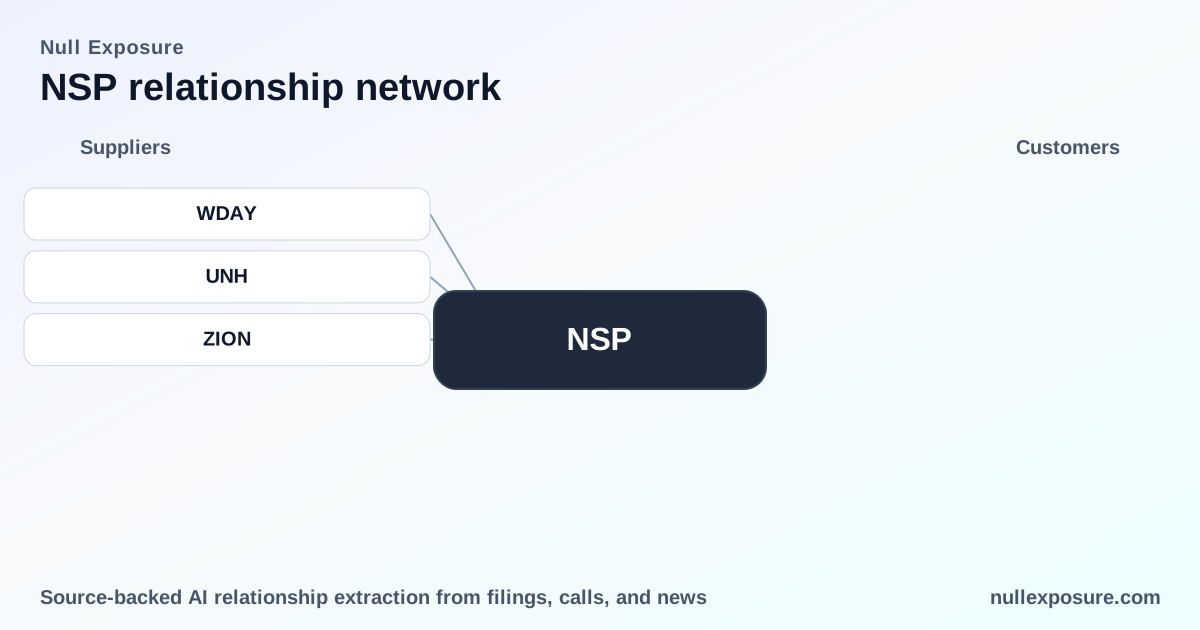
Insperity runs a full-service professional employer organization (PEO) and HR solutions business, monetizing through recurring service fees, benefits administration margins, and ancillary HR products sold to small and mid-market employers. Strategic supplier relationships — notably a technology tie-up with Workday, benefits contracts with UnitedHealthcare and Chubb, and a revolving credit relationship with Amegy/Zions — materially influence Insperity’s margin profile, risk of benefits cost volatility, and capacity to scale HRScale into the mid-market. For a focused map of these supplier dynamics and what they imply for NSP’s financial trajectory, visit https://nullexposure.com/.
Why supplier relationships matter to valuation Insperity’s economics are driven by three linked dynamics: fee-based revenue from HR administration, the company’s role as a pooled buyer of employee benefits, and the platform’s need to modernize technology to retain and expand accounts. That combination creates both leverage and vulnerability.
- Contracting posture: Insperity negotiates large-scale, long-dated supplier contracts for benefits and insurance products, which directly determine claims exposure and retention economics.
- Concentration and criticality: The company explicitly treats certain partners — UnitedHealthcare and the Chubb Group — as core to its benefits program, meaning supplier disruption would be operationally and financially significant.
- Maturity and spend scale: Workers’ compensation has been supplied via the Chubb arrangement for decades, and Insperity manages billions of benefit dollars annually, so supplier terms have outsized impact on margins and cashflow.
These are company-level signals: Insperity’s exposure to benefit cost volatility is large (its disclosure cites total benefits cost estimates around $3.2 billion for 2025), and the firm’s supplier relationships are critical and mature, not transactional.
Supplier relationships — the primary evidence base Insperity’s public commentary and press filings over 2025–2026 identify three supplier relationships that matter to investors. Below I cover each and cite the reporting that underpins the point.
Workday: HRScale as a transformational technology partner
Insperity has launched HRScale, a mid-market HR platform developed in partnership with Workday that bundles Insperity’s PEO services with Workday’s HCM suite; the company positions HRScale as a core growth lever to serve 150–5,000 employee clients and improve retention and pricing power. According to the Q4 2025 earnings call transcript published March 2026, Insperity called HRScale “one of the most significant transformations” designed to enhance its PEO solution set (InsiderMonkey, March 10, 2026). Tech press and investor commentary during early 2026 also framed the Workday tie-up as a major modernization and potential margin upside (TechRSeries release; Finviz and SahmCapital analysis, early 2026).
UnitedHealthcare: renegotiated benefits contract to reduce pooling risk
Insperity renegotiated its UnitedHealthcare contract effective January 2026, cutting the pooling level from $1 million per member per year to $500,000 and implementing plan design changes aimed at controlling benefit cost and margin pressure. Management discussed these changes on the Q4 2025 call (InsiderMonkey transcript, March 10, 2026), and independent commentary has noted UnitedHealthcare’s role in the broader margin-repair narrative (SahmCapital and other coverage, February–March 2026).
Zions Bancorporation / Amegy Bank: credit facility amendment for liquidity flexibility
On December 15, 2025, Insperity disclosed an eighth amendment to its amended and restated credit agreement with Zions Bancorporation, N.A. dba Amegy Bank and other lenders, signaling active management of its revolving financing and covenant profile. The press notice describing the facility change was reported in December 2025 (The Globe and Mail press release, December 15, 2025).
How these relationships shape operating constraints and upside Insperity’s supplier map creates a clear playbook for investors evaluating upside and downside.
- Criticality and concentration: Management explicitly identifies UnitedHealthcare and the Chubb Group as among the most significant elements of its benefits package because those contracts would be most difficult to replace; that elevates supplier concentration risk into a strategic consideration for long-term margins.
- Maturity where it matters: The workers’ compensation program with Chubb has been in place since 2007, indicating long-term operational continuity rather than a nascent or experimental arrangement.
- Scale of spend: Insperity disclosed sensitivity around an estimated $3.2 billion in total benefits costs for 2025, which frames supplier negotiations as direct drivers of operating leverage and cashflow.
These constraints imply a two-track thesis: HRScale/Workday provides growth and retention upside that can expand the addressable mid-market and support better margins over time, while benefits supplier dynamics (contract terms, pooling levels, plan design) dictate near-term margin recovery and claim volatility.
What investors should watch next
- Adoption metrics and revenue contribution from HRScale: modernization must translate into higher client lifetime value and improved retention to validate the Workday investment.
- Renewals and terms with UnitedHealthcare and Chubb: changes to pooling, stop-loss, or pricing will flow directly to benefits expense and operating margin.
- Benefit cost trendlines relative to the disclosed $3.2 billion baseline and any additional plan-design actions management takes.
- Liquidity and leverage: monitor covenant compliance and utilization under the Amegy/Zions facility after the December 2025 amendment.
Key takeaways for a supplier-risk-aware valuation
- HRScale is a strategic revenue lever: the Workday partnership modernizes NSP’s product set and targets the higher end of the mid-market where fees and retention are stronger.
- Benefits supplier terms are the primary margin control: UnitedHealthcare and Chubb are not interchangeable vendors — their contracts are material and critical to Insperity’s P&L.
- Finance flexibility is being actively managed: the December 2025 credit amendment with Amegy/Zions underscores management’s focus on liquidity as it executes margin repair and platform rollouts.
If you are modeling Insperity, integrate a benefits-cost sensitivity around the $3.2 billion baseline, explicitly stress-test pooling levels and stop-loss arrangements, and create a staged adoption curve for HRScale that drives retention lift and new-account economics. For ongoing supplier intelligence and relationship signal tracking, explore more at https://nullexposure.com/.
Conclusion and next steps Insperity’s supplier relationships are not peripheral; they are central levers of profitability and strategic scaling. Workday provides the growth engine; UnitedHealthcare and Chubb determine the margin runway; Amegy/Zions supports balance-sheet flexibility. For investors and operators who need a concise supplier-risk perspective tied to valuation, review the detailed relationship evidence and monitor the three items above. Learn more about supplier mapping and risk signals at https://nullexposure.com/.