NSPR (InspireMD) — Supplier Relationships and What Investors Should Price In
InspireMD commercializes the MicroNet stent platform and monetizes through device sales across Europe, LATAM, the Middle East and Asia, with revenues driven by per-stent shipments to hospitals and distributors. The company’s cost structure and operational continuity depend on third‑party manufacturing and sterilization services, usage‑priced component contracts, and single‑source inputs for key materials, which together create a supplier profile that directly constrains margins and commercialization timing. For a focused view of supplier exposures and their investment implications, see more at https://nullexposure.com/.
How InspireMD’s supplier posture shapes cash flow and valuation
InspireMD sells a high‑value medical device with relatively modest current revenue (approximately $7.78 million trailing twelve months) and negative operating margins; suppliers therefore exert outsized influence on near‑term cash flow and regulatory timelines. Key operating characteristics to price into any valuation:
- Usage‑based procurement: The company contracts certain suppliers on a per‑stent pricing basis, creating direct variable cost exposure that scales with sales volume and directly compresses gross margin as unit prices shift.
- Contractual flexibility: Some supplier agreements are short‑term and terminable on roughly eight months’ notice, which gives InspireMD tactical flexibility but raises execution risk for multi‑period manufacturing plans.
- Single‑source criticality: Certain raw materials are currently single‑sourced; loss of a vendor has prompted inventory purchases to bridge to 2027 and ongoing validation of an alternative PET source — a concentrated supply chain that is a principal operational risk.
- Outsourced manufacturing and sterilization: The company relies on third‑party manufacturers for device production and a vendor for sterilization services, making quality controls and vendor capacity central to regulatory compliance and commercial throughput.
These are company‑level signals drawn from InspireMD’s own disclosures and materially affect the timing of revenue growth and the stability of margins. Explore supplier risk monitoring tools and portfolio integrations at https://nullexposure.com/ to track developments.
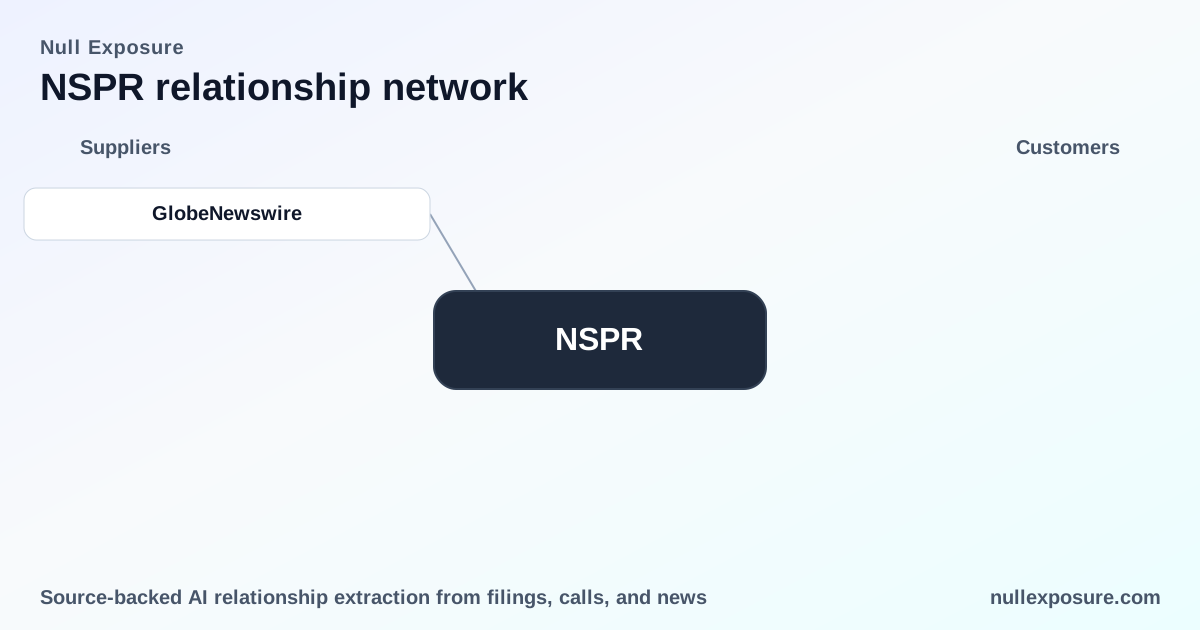
GlobeNewswire coverage tied to clinical positioning — the single relationship in recent media
GlobeNewswire (reported via QuiverQuant) issued a press release summarizing positive outcomes from the CREST‑2 study that support carotid stenting for asymptomatic patients; the distribution was noted on March 10, 2026. This media mention underlines the clinical narrative that can expand addressable markets for stent suppliers and support commercial uptake. Source: GlobeNewswire press release hosted on QuiverQuant, March 10, 2026.
Operational constraints that drive supplier risk and negotiating leverage
InspireMD’s public disclosures identify a compact set of supplier constraints that investors must treat as structural:
- Usage‑based pricing for nitinol stent production — the company confirms agreements priced on a per‑stent basis, which directly ties cost of goods sold to unit volume and reduces fixed cost leverage. This is a company‑level contract signal derived from contract language in disclosures.
- Short‑term termination rights — agreements allow InspireMD to terminate supplier arrangements with roughly eight months’ notice, which limits long‑term lock‑in but requires active supplier management to avoid supply disruptions.
- Single‑source/critical components — the firm disclosed that some components are currently supplied by only one vendor and that a mesh supplier could not supply polymer fiber in the future; InspireMD purchased inventory sufficient through the end of 2027 and is validating an alternative PET source. This is a critical supply continuity issue that has direct regulatory and commercial implications.
- Third‑party manufacturing responsibility — quality control obligations rest partially with third‑party manufacturers; failure to maintain standards can delay clinical development and commercialization.
- Third‑party sterilization — sterilization is outsourced, which introduces an operational dependency external to manufacturing and can bottleneck product release if capacity or process validation issues arise.
Each constraint is a company‑level signal taken from official disclosures and public press distributions; together they frame supplier risk as both a margin and a timeline issue for investors.
What these constraints mean for the investment case
- Revenue sensitivity to supplier pricing: Because procurement includes per‑stent pricing, faster unit growth will increase revenue but also scale variable costs in lockstep; investors should expect margins to improve only when per‑unit costs decline through scale or renegotiation.
- Concentration risk is a near‑term pricing and regulatory risk: The single‑source mesh issue forced inventory purchases to cover supply through 2027 — this buffer reduces immediate disruption risk but locks capital into inventory and signals elevated regulatory dependency on successful validation of alternative PET.
- Contractual flexibility is a double‑edged sword: Short termination windows provide bargaining power and limit long‑term exposure to underperforming vendors, but they increase the need for active supplier management and a rolling validation program for alternatives.
- Operational criticality of outsourced sterilization and manufacturing: Outsourced services accelerate time to market but transfer systemic operational risk outside the company’s direct control; quality or capacity failures in these vendors will have immediate clinical‑trial and commercial consequences.
Financially, InspireMD’s small revenue base, negative EBITDA, and thin gross profit create limited ability to absorb sudden supplier cost increases. Investors should treat supplier developments as leading indicators for both near‑term revenue recognition and longer‑term margin expansion.
For actionable monitoring, integrate supplier event tracking and inventory metrics into your diligence: https://nullexposure.com/.
Questions to ask management and KPIs to watch
- What percent of raw‑material spend is single‑sourced today, and what is the timeline to fully validate alternative PET supplies?
- How many months of on‑hand inventory does the company maintain for critical components beyond the stated buffer to end‑2027?
- What per‑stent pricing trends has management negotiated with manufacturers, and what are targeted unit cost reductions at relevant volume thresholds?
- Are sterilization partners validated in multiple geographies, and what contingency capacity exists for scale‑up?
- What are the specific termination and renewal timelines across major supplier contracts beyond the eight‑month termination clause?
Track quarterly disclosures on supply agreements, inventory roll‑forward, and supplier CAPEX commitments as early signals of supplier risk resolution.
Bottom line — position suppliers as the primary operational lever
Supplier architecture is the principal operational and valuation lever for InspireMD. Usage‑based contracts, short contractual horizons, and single‑source components create both negotiating leverage and acute execution risk; inventory purchases to 2027 buy time but not a permanent fix. Investors should underwrite scenario outcomes that reflect cost volatility per unit and the regulatory timeline for qualifying alternative materials.
For deeper supplier analytics, comparative scoring, and alerting on material supplier events, visit https://nullexposure.com/ for tools tailored to investor due diligence.