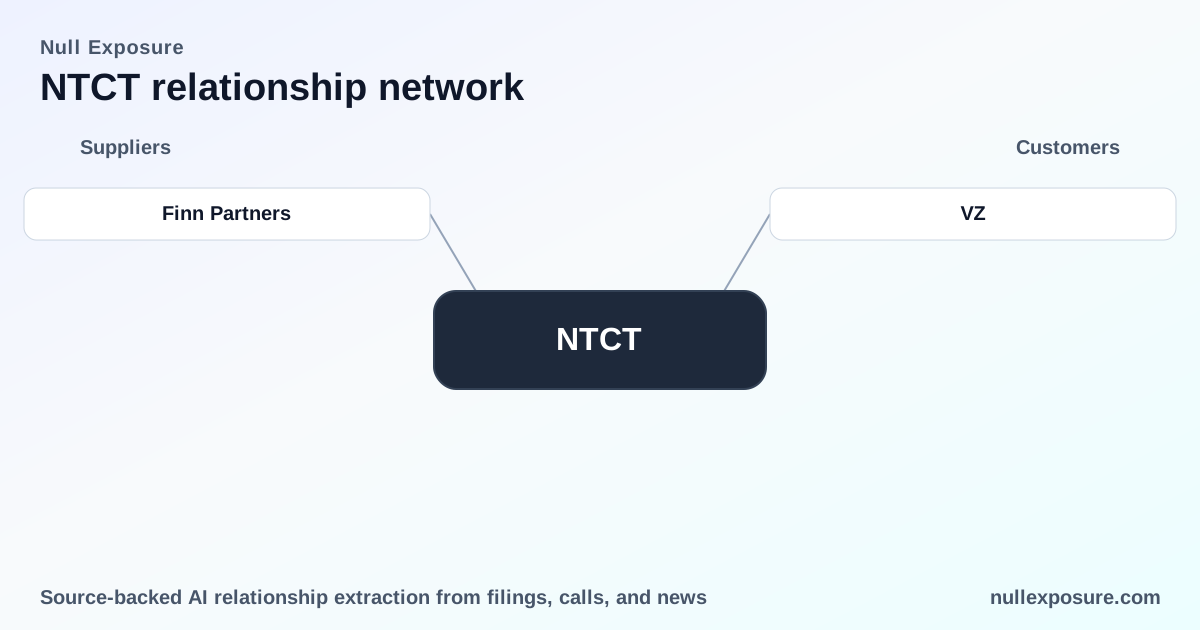
NetScout (NTCT) — supplier relationships, contracts and what they signal for investors
NetScout sells service assurance and cybersecurity hardware and software to enterprises and service providers and monetizes through a mix of product sales, recurring software/licenses and support services. The company converts deep network visibility into predictable recurring revenue and margin profile, supported by durable customer and supplier contracts that show both long-term commitments and short-term flexibility. For a granular view of partner and supplier posture, visit https://nullexposure.com/.
How NetScout operates and how that affects suppliers
NetScout is a mid-cap infrastructure software company with a 12‑month revenue run‑rate near $861 million and gross profit of $683 million, delivering an operating margin above 25% on trailing figures. The business is structured around three monetization levers: hardware and appliance sales, software licensing/subscription and professional/support services. These revenue streams create predictable demand for components, logistics and third‑party services while concentrating supplier importance around manufacturing, cloud hosting and PR/communications spend.
From a finance perspective, NetScout carries a valuation consistent with infrastructure peers (EV/Revenue ~1.9x, EV/EBITDA ~9.5x) and trades with modest volatility (beta ~0.64). High institutional ownership (>96%) and no dividend policy reflect a capital-allocation focus on reinvestment and margin expansion rather than yield. The company is covered by equity analysts with a consensus target roughly in the low‑30s per share.
For deeper coverage of supplier exposures and contracts, researchers can use NetScout’s public filings and curated partner reporting via https://nullexposure.com/.
What the supplier-related disclosures reveal about operating posture
NetScout’s supplier and contract signals combine long-term, structural commitments with short-term operational flexibility. Key company-level signals extracted from filings and disclosures:
- NetScout reports both long‑term and short‑term operating lease expense, showing a dual leasing posture: stable facility/infra commitments alongside tactical short-term leases for nimble capacity needs. The fiscal 2025 lease schedule listed long‑term operating lease cost of roughly $11.8 million and short‑term lease cost of $1.334 million. This indicates a baseline fixed-cost run rate with incremental short‑term capacity to handle workload spikes or project-based needs.
- The company reported unconditional purchase obligations of $80.4 million at March 31, 2025, reflecting open purchase orders and commitments for inventory, products and services used in normal operations. That positions NetScout within a $10m–$100m supplier spend band on committed procurement, large enough to matter to strategic vendors but not so large as to imply outsized single‑supplier concentration on the face of it.
These items together generate a clear operating characteristic: mature supplier relationships with recurring commitments and the ability to flex for tactical needs, which supports gross margins but creates defined fixed-cost and committed-spend exposure that investors must monitor.
(If you want a structured supplier risk profile for NetScout to support diligence or portfolio decisions, start here: https://nullexposure.com/.)
What investors should read between the lines
- Contracting posture: A mix of long‑term leases and short‑term rentals implies NetScout secures foundational capacity (real estate, data center presence or long‑term vendor relationships) while preserving tactical levers for variable demand. This reduces immediate disruption risk but keeps fixed-cost leverage.
- Spend concentration: The $80.4 million in purchase obligations is material at company scale but distributed enough to suggest multiple suppliers; it is a firm-level signal of moderate procurement exposure rather than a single-vendor dependency.
- Operational criticality: Suppliers tied to hardware components, cloud services and logistics are strategically important because product shipments and software support directly affect revenue recognition and renewal cycles.
- Maturity: Lease schedules and multi-year purchase commitments are consistent with a mature operations model—NetScout runs an established supply funnel rather than an early-stage, spot-market procurement strategy.
Relationship coverage: what’s on record
Finn Partners
NetScout’s PR contact information for Finn Partners was included in a corporate press release distributed via STT Info on March 10, 2026, listing a Finn Partners media contact (Chris Shattuck) and an email for NetScout communications. This indicates NetScout uses an external PR/communications firm for public messaging and media distribution. (Source: press release distributed on STT Info, March 10, 2026.)
Investment implications and risk factors investors should prioritize
- Supply-side predictability supports margins. NetScout’s mix of recurring software revenue and committed procurement helps sustain a high gross margin profile (gross margin ~79% implied by reported values).
- Committed spend is material but not alarmingly concentrated. The $80.4 million of purchase obligations requires monitoring for supplier concentration and component availability, particularly if hardware cycles accelerate.
- Leases lock in baseline fixed costs. Long‑term operating leases create expense floors that increase leverage on revenue swings; short‑term leases give operation flexibility but do not eliminate fixed-cost risk.
- Communications outsourcing is visible and routine. External PR firm usage like Finn Partners is standard for enterprise tech and reduces in‑house communication overhead while centralizing media relations—useful for managing reputational events.
Practical monitoring checklist for operators and investors
- Track changes in unconditional purchase obligations each quarter and supplier disclosures for signs of concentration or vendor disputes.
- Watch the composition of lease expense and maturities in subsequent filings to anticipate fixed‑cost pressure.
- Follow PR activity and external communications partners for evidence of reputational work or crisis messaging (external firms are often engaged during product incidents or major corporate events).
- Reconcile reported margins and operating leverage with supplier commitments; rising purchase obligations without revenue growth indicates inventory build or project backlog risk.
For more supplier-level intelligence and to build a supplier risk dashboard for NetScout, see https://nullexposure.com/.
Bottom line: actionable view
NetScout operates with a mature, predictable supplier base supported by material but manageable purchase commitments and a hybrid lease strategy that balances stability with nimbleness. Key investor takeaways: moderate committed spend, high gross margins supported by recurring revenue, and supplier relationships oriented toward operational continuity rather than short‑term cost savings. Monitor purchase obligations, lease maturities and vendor concentration measures to detect shifts in operational risk.
If you want ongoing supplier tracking and alerts tailored to NetScout and its peers, begin here: https://nullexposure.com/.