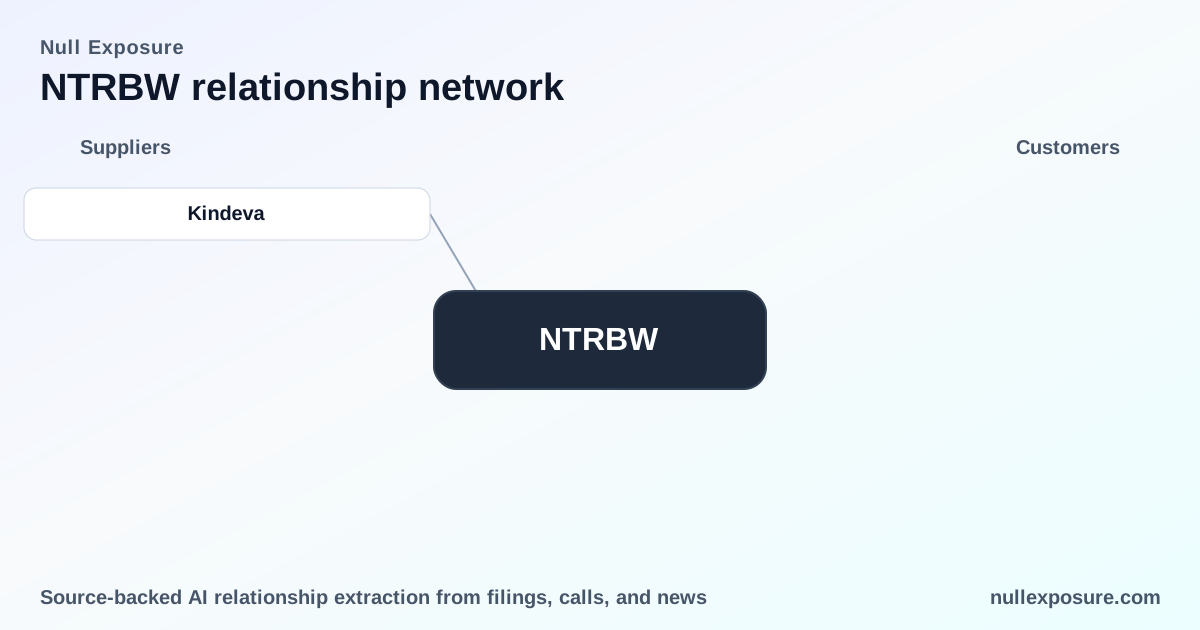
NTRBW supplier profile: what Nutriband’s manufacturing ties tell investors
Nutriband operates as a specialty biotech focused on transdermal drug delivery systems, monetizing through proprietary product development, licensing and partner-enabled commercialization. The company advances clinical-stage programs (notably AVERSA™ abuse-deterrent formulations) and outsources critical manufacturing and CMC work to contract partners, capturing value through milestone payments, future product sales and licensing economics as its candidates progress through FDA review. For investors and operators evaluating supplier exposure, the relationship network—and the commercial terms embedded in it—drive both development execution risk and potential upside alignment.
If you want a deeper supplier-risk view and benchmarking against peers, visit the NullExposure homepage: https://nullexposure.com/
The single-supplier picture matters more than it looks
Nutriband’s public disclosures and press activity show an operating model that relies on external manufacturers to move programs from development into regulatory submission. That posture creates a compact set of counterparty risks: schedule sensitivity to manufacturing partners, financial exposure to contract spend and milestone structures, and an operations model that is deliberately non-asset-intensive.
Key company signals:
- Contract manufacturing is a stated strategy. Nutriband discloses ongoing reliance on contract manufacturers for commercial quantities and CMC work, which defines a contracting posture that outsources manufacturing risk and execution complexity to partners. This is a company-level signal grounded in its filings for FY2025.
- Development-stage commercialization and tight budgets. Financials show negative EBITDA and limited revenue (Revenue TTM ~$2.28M; EBITDA -$9.03M), consistent with early-stage biotech economics where supplier spend is a critical lever on runway and timelines.
- Spend concentration in the low single-digit millions. Company disclosures document incurred spend of $3.0 million under the agreement and estimates to complete work; the recorded budgets and amendments place agreement-level spend in the $1–$10 million band, a material but not enterprise-scale commitment for a small-cap biotech.
These constraints signal a supplier strategy that prioritizes specialist manufacturing partnerships but leaves Nutriband exposed to the execution and cashflow profile of a handful of counterparties.
What we see on the books: Kindeva (full relationship note)
Kindeva is the only supplier relationship surfaced in the available results for NTRBW. The relationship is public-facing and tied directly to Nutriband’s AVERSA™ FENTANYL program.
Kindeva will perform commercial manufacturing process development, manufacture clinical supplies for a human abuse liability study, and develop CMC information required by the FDA in support of an NDA—functions that place it squarely in a manufacturer/service-provider role for this program. Source: Nutriband company filing highlights and program disclosures (FY2025).
A public announcement confirms the collaboration centers on combining Nutriband’s AVERSA™ abuse-deterrent technology with Kindeva’s FDA-approved fentanyl patch platform to produce AVERSA™ FENTANYL. Source: Sahm Capital news release covering the partnership, December 18, 2025.
What the Kindeva tie means in plain English
- Kindeva is the contracted manufacturer and technical services partner for Nutriband’s fentanyl patch program, responsible for manufacturing development and the CMC dossier elements needed for an NDA. (Source: Nutriband filing, FY2025.)
- Nutriband has recorded $3.0 million of expenses under the agreement as of January 31, 2025 and outlined budget amendments that reduce hourly labor costs while adding a $3.0 million approval-contingent milestone; the remaining budget through NDA submission was reduced to about $3.2 million under the amended plan. These cost and milestone mechanics influence cashflow timing and supplier incentives. (Source: Nutriband FY2025 disclosures.)
Operational and commercial implications for investors
Kindeva’s responsibilities make it a high-criticality supplier for the AVERSA program: its work directly supports regulatory filing and commercial readiness. Because the agreement delegates CMC and clinical-supply manufacturing externally, Nutriband’s time-to-NDA and commercialization curve are tightly coupled to Kindeva’s delivery and regulatory-quality outputs.
Constraints that shape valuation and diligence focus:
- Concentration risk. Public data surfaces a primary manufacturing partner for the lead program. Concentration amplifies single-counterparty execution risk and creates vendor leverage over timelines.
- Milestone-aligned economics. The amended contract trades current hourly rates for an approval-triggered milestone; this aligns incentives but creates binary cashflow outcomes—large payment only upon approval—impacting net cash required if delays occur.
- Moderate absolute spend but material relative to company size. A $1–$10 million spend band is substantial for Nutriband’s scale and affects capital planning and runway assumptions.
- Maturity: development-stage dependency. With negative EBITDA and low revenue, Nutriband’s supplier relationships sit within a cash-constrained, development-focused corporate profile; manufacturing failures or rework would have outsized financial consequences.
If you need granular counterparty scoring or benchmarking against other contract manufacturers, explore the supplier risk tools at NullExposure: https://nullexposure.com/
Risks and upside for operators and investors
- Upside: Aligned milestone structure means Nutriband’s vendor economics tilt toward success—approval triggers material payment, reducing upfront cash burn and sharing commercial upside at launch.
- Downside: Single-provider dependency for CMC creates schedule and quality concentration risk that could delay an NDA or require costly remediation or second-source validation.
- Regulatory sensitivity: manufacturing and CMC work are mission-critical to FDA review; any deficiencies in Kindeva’s deliverables create direct regulatory risk to Nutriband’s approval timeline.
- Cashflow leverage: given negative earnings and modest revenue, funding incremental manufacturing costs or milestone shortfalls will be central to dilution and financing discussions.
Practical takeaways and next steps
- For investors: model supplier execution as a binary driver of timeline and cash needs—delays in manufacturing/CMC typically mean longer runway consumption and increased financing risk.
- For operators/partners: negotiate contingency plans for scale-up and second-source validation in parallel with primary manufacturing to de-risk critical-path activities.
- For diligence teams: verify the scope of Kindeva’s CMC deliverables, review amendment terms (especially milestone triggers and liability clauses), and quantify remaining outflows tied to FDA submission.
For an integrated supplier-risk assessment and comparative metrics for contract manufacturers, visit NullExposure’s analysis hub: https://nullexposure.com/
In summary, Nutriband’s supplier profile—anchored by a manufacturing and CMC relationship with Kindeva—creates a clear, high-impact dependency tied to near-term regulatory milestones and modest but material contract spend. Investors should treat manufacturing execution and milestone cashflow mechanics as central variables in any valuation or financing plan.