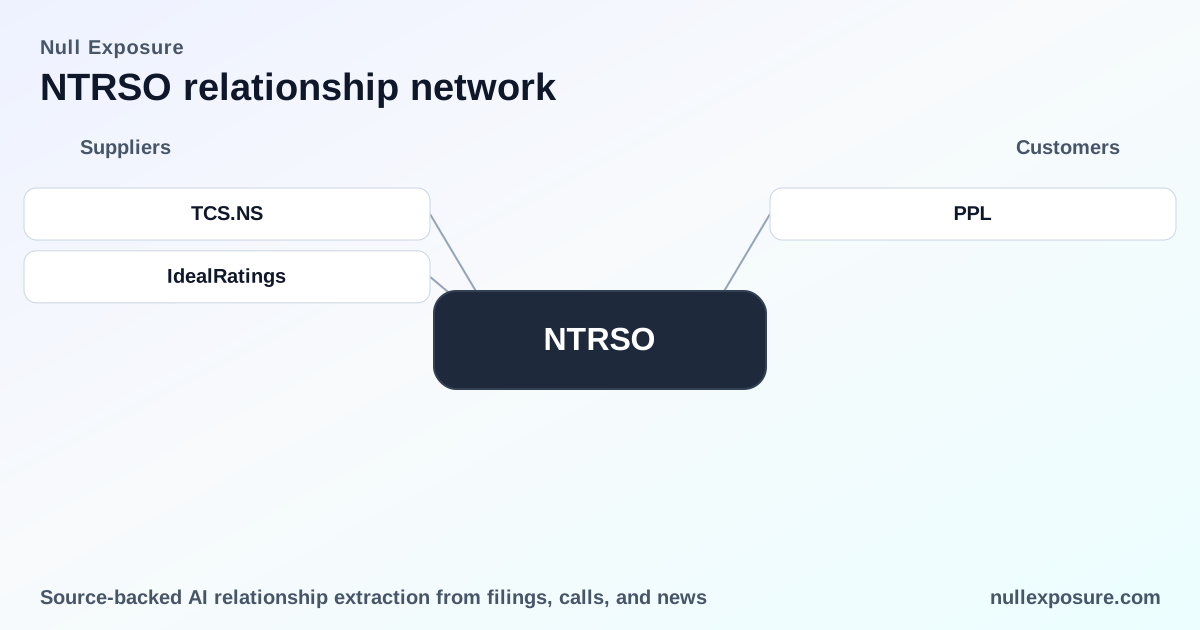
Northern Trust (NTRSO) — Supplier Map and Operational Implications for Investors
Northern Trust Corporation operates as a global provider of wealth management, asset servicing, asset management and banking solutions, monetizing through custody and servicing fees, asset management fees and net interest income derived from client balances. The preferred security ticker NTRSO represents investor exposure to a firm whose operating model depends on a mix of in‑house capabilities and third‑party suppliers for mission‑critical technology and data. Investors and operators should evaluate supplier concentration, vendor criticality, and contract posture when assessing operational resilience and franchise durability. For a deeper look at supplier relationships and risk signals, visit Null Exposure.
How suppliers play into Northern Trust’s business model
Northern Trust’s revenue mix—fees for custody/asset servicing and recurring asset management fees—depends on uninterrupted, high‑quality execution of transaction processing, settlement and client reporting. Third‑party vendors underpin several of these functions, providing the infrastructure that translates custody assets into fee revenue. The company’s profitability and client retention therefore hinge not just on market performance but on vendor performance, integration, and contractual terms.
- Fee stability depends on flawless settlement and custody services.
- Product differentiation increasingly rests on analytics and ESG capabilities built with specialist partners.
- Operational risk concentrates where critical back‑office platforms and data feeds are outsourced.
Visit Null Exposure to benchmark Northern Trust’s supplier posture against peers and stress scenarios.
Strategic supplier relationships identified
Below I cover every supplier relationship flagged in the available records and what each means for investors and operators.
TCS — an expanded partnership on the settlement platform
Northern Trust has expanded its collaboration with Tata Consultancy Services to enhance its global securities settlement platform, signaling a continuing reliance on a third‑party technology integrator for critical post‑trade processing. This relationship aligns TCS as a strategic systems partner for core processing and settlement operations, which raises the vendor to high criticality for operational continuity. According to AssetServicingTimes (March 10, 2026), Northern Trust and TCS increased collaboration to upgrade the global settlement platform.
Source: AssetServicingTimes article on March 10, 2026.
IdealRatings — ESG analytics integrated with custody data
Northern Trust integrated its global custody asset information with analytics from IdealRatings to expand ESG investment capabilities, indicating a targeted partnership to enhance product offerings for ESG‑focused clients. This relationship is product‑enabling rather than core‑processing critical, but it materially affects marketing, product competitiveness and asset retention in ESG mandates. A BenefitsCanada piece referencing FY2021 described the firm's use of IdealRatings to strengthen ESG analytics.
Source: BenefitsCanada (report referencing FY2021).
What the constraint signals tell us about Northern Trust’s supplier posture
The company‑level constraint language states that third‑party vendors provide key components of business operations such as data processing, transaction recording/monitoring, online banking interfaces and network access. That constraint is a company‑level signal and not specific to any single supplier in the records. From an investment and operational perspective, this generates several actionable characterizations:
-
Contracting posture — strategic outsourcing: Northern Trust outsources non‑differentiated and some specialized infrastructure, reflecting a posture that balances cost, scale and time‑to‑market. Outsourcing key functions to mature vendors accelerates product deployment while transferring operational complexity to partners.
-
Concentration and criticality — high for core platforms, medium for analytics: When vendors support settlement and transaction processing, they become single points of failure; analytics partners like IdealRatings are critical for product competitiveness but do not halt settlement if disrupted.
-
Maturity and vendor selection — enterprise grade: Partnerships with established providers such as TCS indicate a preference for enterprise‑grade vendors capable of handling global scale, regulatory demands and integration with legacy systems.
-
Operational implications — ongoing vendor management imperative: Strong service level agreements, redundancy planning, and contract exit terms are essential to mitigate vendor concentration risk and preserve fee continuity.
Risk and opportunity implications for investors and operators
Northern Trust’s supplier structure creates a concentrated operational profile where a few strategic vendors influence the cost, reliability and speed of product innovation.
-
Operational risk: The expanded TCS collaboration elevates dependency on a third‑party for post‑trade processing, which places settlement resilience and regulatory compliance squarely at the vendor boundary. Operational disruptions at that layer could translate into client attrition and fee pressure.
-
Competitive opportunity: Partnerships like the one with IdealRatings enable quicker roll‑out of ESG products and marketing claims, supporting asset gathering in a high‑growth segment and protecting fee revenue as clients shift toward ESG mandates.
-
Contract risk and negotiation leverage: As Northern Trust scales product differentiation through specialist partners, its bargaining position depends on vendor uniqueness and switching costs. Enterprise providers reduce negotiating leverage; niche analytics vendors are more replaceable but also provide differentiation.
Practical due diligence checklist for investors and operators
- Confirm whether settlement and custody SLAs are supported by redundancies and vendor transition plans.
- Review contract length, termination rights, and liability caps with critical suppliers.
- Evaluate segregation of duties and incident response coordination between Northern Trust and each vendor.
- Monitor product roadmaps where third parties contribute to ESG and client reporting features.
These points should guide diligence conversations with management and vendor contract review.
What to watch next and recommended actions
- Operational disclosure: Seek management commentary on vendor concentration, incident history, and contingency plans at the next earnings call.
- Contractual transparency: Request summaries of SLAs for settlement platforms and analytics integrations to assess outage risk and remediation obligations.
- Competitive positioning: Track asset flows tied to ESG products enabled by partners like IdealRatings to judge revenue retention and growth.
For investors and operators who need a deeper supplier intelligence baseline and comparative scoring across peers, start with Null Exposure to access curated supplier signals and structured vendor risk profiles.
Bottom line
Northern Trust monetizes fee and interest streams that are materially supported by third‑party vendors—notably for settlement infrastructure and ESG analytics. The TCS relationship underscores dependency on enterprise IT partners for mission‑critical processing, while the IdealRatings link demonstrates targeted use of specialist vendors to preserve product competitiveness in ESG. Active vendor governance, rigorous SLAs, and contingency planning are essential to protect fee stability and franchise value.
For a systematic supplier risk assessment and peer benchmarking, visit Null Exposure and request the Northern Trust supplier dossier.