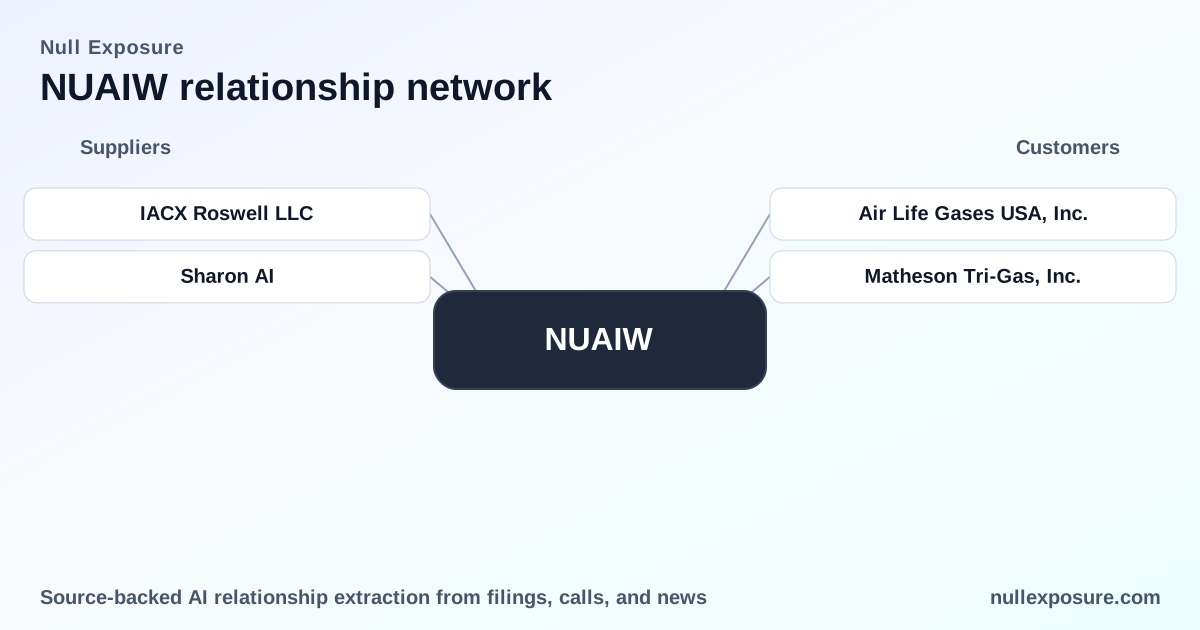
New Era Energy & Digital (NUAIW): Supplier relationships and operational constraints that shape near-term value
New Era Energy & Digital operates as an upstream exploration and production platform focused on helium, oil, natural gas and NGLs in the U.S.; it monetizes by selling raw natural gas and processed helium to third-party processors and by taking direct ownership of midstream or infrastructure projects that carry higher-margin optionality. Revenue today is small and the company is loss-making, so counterparty arrangements for processing (tolling) and the completion of strategic asset acquisitions are primary drivers of near-term valuation. Learn more about supplier exposure and contract risk at NullExposure.
How New Era’s operating model ties to suppliers and processors
New Era’s business model depends on two operational realities: production is commodity-facing, and value capture beyond raw sales requires third-party processing or infrastructure control. The company sells raw natural gas out of its reserves to processors that produce helium and purified natural gas; it also pursues ownership of downstream projects to internalize margins and optionality.
- Contracting posture is mixed: the company has documented a multi-year tolling construct for helium processing, while other obligations — for example, office occupancy — are short-term. The tolling construct is designed to secure processing capacity, which is critical because New Era lacks internal helium liquefaction assets.
- Concentration and criticality: a small revenue base and reliance on external processors create single‑counterparty exposures that can materially affect cash flow timing and realized pricing.
- Maturity and financial position: with Revenue TTM of $885,400 and reported negative EBITDA, New Era is in an early commercial phase where supplier and processing agreements are determinative of operating leverage and scalability.
Supplier relationships you need to track now
Below I walk through every supplier relationship surfaced in the public record for NUAIW and what each means for investors and operators.
IACX Roswell LLC
New Era currently sells raw natural gas to IACX Roswell LLC, which processes volumes to produce helium and purified natural gas; this is a direct commercialization pathway for the company’s extracted gas. This relationship is documented in the company’s FY2024 filing (10‑K), which describes the sale of raw gas to IACX for helium production. (Source: company FY2024 10‑K filing.)
Sharon AI (Texas Critical Data Centers LLC transaction)
New Era agreed to acquire Sharon AI’s 50% interest in Texas Critical Data Centers LLC (TCDC) for $70 million, taking 100% ownership of the project, a move that shifts the company from joint‑venture exposure to full ownership of a strategic asset. This transaction was reported in market coverage on March 10, 2026. (Source: Proactive Investors news, March 10, 2026.)
A notable third‑party processor: the Helium Tolling Agreement with Keyes Helium Company
The company’s filings also document a Helium Tolling Agreement with Keyes Helium Company (KHC) under which KHC was contracted to provide purification and liquefaction services and container fills for New Era’s crude helium. The tolling agreement is structured for a five‑year term measured from the Tolling Commencement Date, and the contract grants KHC the right to terminate if deliveries do not commence. According to the FY2024 filing, the Tolling Commencement Date had not occurred by September 30, 2024, and KHC therefore retains termination rights. (Source: company FY2024 10‑K filing.)
Why this matters: the tolling agreement is functionally a long‑term processing commitment designed to convert crude helium into a marketable product, but the contract’s conditional commencement creates execution risk that can alter revenue timing and throughput availability.
Operational constraints that shape supplier risk
The public record flags several constraints that are material to how New Era contracts and operates:
- Long‑term processing intent, conditional execution: The Helium Tolling Agreement is a five‑year commitment once deliveries commence, which reflects an intention to secure processing capacity for multiple years; however, the contract’s benefits are conditional on commencement, creating timing risk that is contractually meaningful. (Company filing excerpt.)
- Short‑term facilities costs: New Era occupies office space in Midland, Texas under a month‑to‑month arrangement, a company‑level signal that administrative overhead is being managed with short-term flexibility rather than long-term fixed leases. (Company filing excerpt.)
- Geographic concentration in North America: filings reference Midland, Texas, indicating U.S. operating geography and the regulatory and commodity dynamics tied to that region. (Company filing excerpt.)
- Service provider reliance: filings describe external tolling by third-party processors (KHC) to purify and liquefy helium, confirming that the company operates as a producer that outsources key processing functions. (Company filing excerpt.)
These constraints are not isolated data points; they define the commercial posture: a small operator attempting to scale by locking third‑party processing and by converting JV interests into wholly‑owned infrastructure.
What investors and operators should monitor next
Actionable items to track as these supplier relationships evolve:
- Monitor the Tolling Commencement Date and any notices under the KHC agreement; failure to commence triggering termination rights would re‑introduce processing scarcity and sales timing risk.
- Track IACX Roswell processing throughput and purchase patterns reported in subsequent filings or market briefs; sustained off‑take volume is the near‑term revenue engine.
- Watch the TCDC ownership transition and any capital injections tied to the $70 million acquisition from Sharon AI, because full ownership changes the company’s margin profile and operational responsibilities.
- Review financial cadence: given the negative EBITDA and limited revenue base, supplier or processing disruptions will have outsized cash‑flow implications.
A short checklist for monitoring:
- Confirm tolling commencement progress in SEC filings or press releases.
- Review operating metrics tied to IACX Roswell and TCDC project milestones.
- Evaluate capital structure moves that affect the company’s ability to fund processing or infrastructure completion.
For deeper supplier risk and counterparty exposure analysis, visit NullExposure.
Bottom line: concentrated counterparty exposure is central to the story
New Era’s near‑term value creation depends on converting physical production into marketable helium and capturing downstream project economics. The IACX Roswell relationship is the immediate commercialization channel for gas sales; the TCDC acquisition converts a JV interest into a strategic infrastructure asset; and the KHC tolling agreement — while structured as a multi‑year commitment — remains conditional on commencement, which is a key execution risk. Given the company’s limited revenue and negative EBITDA, these supplier relationships are high‑impact levers for cash flow and valuation.
If you need a concise supplier‑risk briefing or ongoing monitoring of NUAIW counterparties, see how we map exposures and contractual constraints at NullExposure.