Nucor (NUE) supplier relationships: where scrap, brokers, and long-term contracts shape margin resilience
Nucor Corporation operates as a vertically integrated steel producer that monetizes through rolling, melting, and downstream steel products while capturing margin via raw-material sourcing and processing. The company supplements its mill operations with metal brokerage and scrap-processing activities that lower input volatility and create feedstock optionality across its mills. For investors, the supplier posture—long-term purchase commitments, in-house brokerage, and buyer-driven procurement—translates into operational predictability and margin defense that are as important as steel-cycle dynamics for forecasting cash flow.
Explore a structured supplier view and primary takeaways at https://nullexposure.com/.
How Nucor captures supplier-side advantage
Nucor’s operating model is built on two supplier-side levers: owning or controlling upstream flow (scrap handling, brokering) and contracting multi-year supply terms for energy and feedstocks. These levers create lower input cost volatility and higher utilization optionality for its electric-arc furnace (EAF) footprint.
- In-house or affiliated brokering and processing: Nucor routes scrap and secondary metals through dedicated entities and affiliates that provide both market access and processing services. That reduces reliance on spot-market purchases.
- Multi-year contracts for critical inputs: Company disclosures note contracts with minimum purchase requirements for scrap, iron ore, electricity, and natural gas, locking prices or floors and smoothing procurement cost trajectories.
- Buyer posture and global sourcing: Nucor purchases pig iron and other intermediate inputs from overseas sources when needed, preserving feedstock flexibility.
These structural elements are company-level signals drawn from public disclosures (company filing language referencing December 31, 2024) and recent reporting; they should be treated as ongoing constraints on the supplier strategy rather than one-off arrangements.
Learn more about supplier intelligence at https://nullexposure.com/.
Relationship audit — who Nucor relies on, in plain English
Below I summarize every supplier-related relationship surfaced in the review and provide the source for each line.
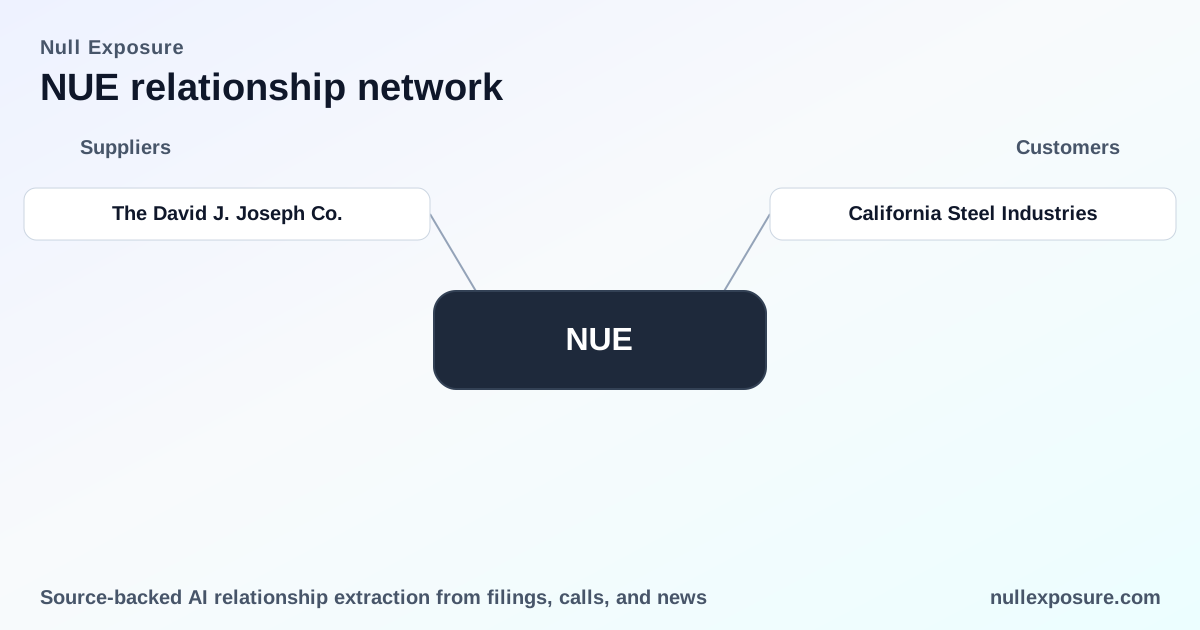
- The David J. Joseph Co.: Through The David J. Joseph Co. and its affiliates, Nucor brokers ferrous and nonferrous metals and performs scrap processing, giving the parent company an integrated channel for buying, conditioning, and reselling scrap feedstock. (IndexBox blog post, March 10, 2026: https://www.indexbox.io/blog/nucor-executive-vice-president-daniel-r-needham-announces-retirement/)
That single relationship result shows Nucor’s strategic integration of brokerage and scrap-processing capability, which operates as both a supply stabilizer and an internal source of margin capture.
What the constraints tell investors about operating posture
Company-level disclosures produce three actionable signals about Nucor’s supplier strategy:
- Contracting posture — long-term commitments dominate procurement: Filings indicate that Nucor enters multi-year contracts and minimum annual purchase requirements for scrap, iron ore, electricity, natural gas, and other inputs, which reduces spot exposure and smooths unit costs across cycles (company filing language referencing prices in effect on December 31, 2024). This is a structural risk-mitigation approach aligned with capital-intensive steel operations.
- Role concentration — Nucor is primarily a buyer: The company states it purchases pig iron and other feedstocks, often from overseas sources, signaling a buyer-dominant role rather than a seller of primary feed. This posture preserves negotiating leverage for mills with scale and flexible sourcing.
- Maturity and criticality — supplier relationships are operationally critical and mature: The presence of affiliated brokers and long-term supply contracts points to mature supplier arrangements that are critical to plant utilization and cost control rather than discretionary partnerships.
These constraints function as a risk-reducing framework: long-term contracts and an internal brokerage/processing capability lower input volatility, but they also create contractual minimums that can elevate fixed costs in low-cycle revenue periods.
Strategic implications for investors and operators
Nucor’s supplier architecture produces several investment-relevant outcomes:
- Margin insulation: By brokering and processing scrap internally, Nucor captures processing spreads and reduces premium paid to third parties, which supports its gross margins and operating leverage.
- Capital allocation signal: Investment decisions that expand scrap-processing or brokerage capacity are effectively investments in vertical integration rather than downstream product expansion; these moves prioritize raw-material security over incremental finished-goods capacity.
- Contract risk versus flexibility trade-off: Long-term purchase commitments reduce spot exposure but introduce minimums that can pressure working capital and cash flow in demand troughs. For operators, managing contract durations and geographic sourcing remains a core operational priority.
- Competitive advantage in EAF-based production: Nucor’s model is particularly effective for electric-arc furnace operations, where scrap access directly correlates with production throughput and cost competitiveness.
Risks investors must weigh
- Counterparty and concentration risk: Long-term contracts can concentrate counterparty exposure; while not explicitly tied to a single supplier in the disclosed constraints, minimum purchase obligations impose financial commitments regardless of market direction.
- Commodity and energy cost sensitivity: Even with contracted volumes, price resets and indexation clauses can transmit commodity shocks through to margin if contracts reference market prices.
- Operational execution: The value of in-house brokerage and processing depends on operational efficiency and logistics; missteps reduce the intended margin capture and can create inventory friction.
Bottom line and recommended action
Nucor’s supplier posture is a strategic asset: integrated brokering and scrap-processing through affiliated entities plus multi-year supply commitments deliver predictable feedstock flows and margin resilience. For investors, the company’s approach trades some short-term flexibility for lower long-term input volatility and stronger control over upstream economics.
For a deeper supplier-risk profile and to track relationship dynamics over time, visit https://nullexposure.com/ for ongoing reporting and alerts.
Final call-to-action: for portfolio teams and operational managers evaluating steel-supply exposure, use the Nucor supplier view at https://nullexposure.com/ to monitor changes in contracts, affiliate activity, and material flows that drive cash generation.