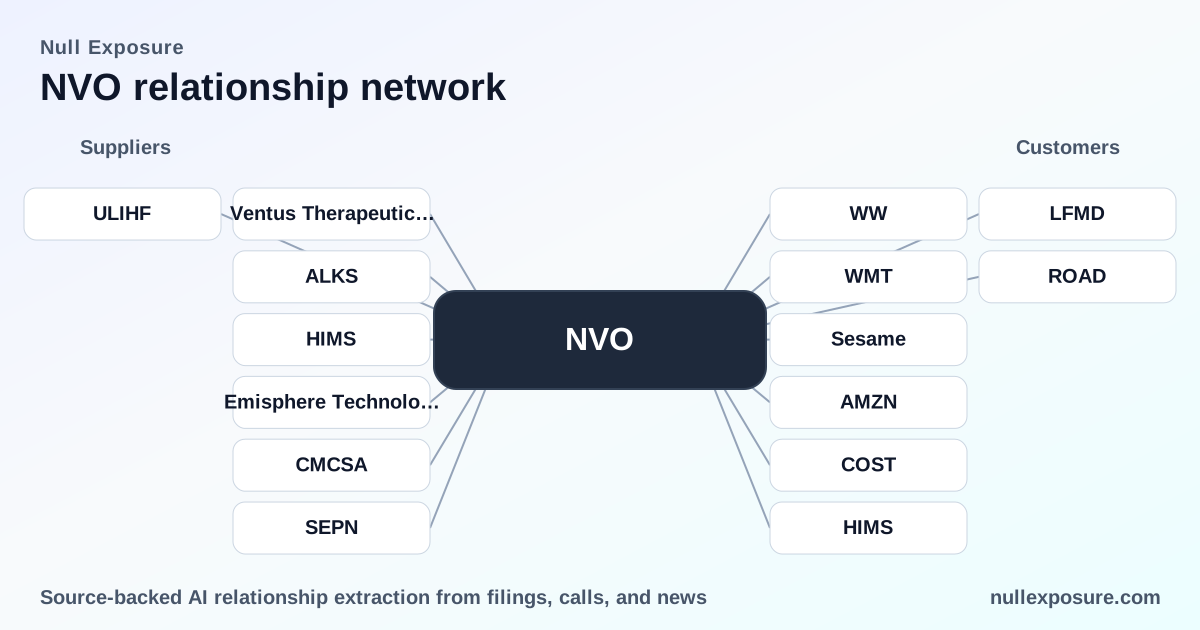
Novo Nordisk (NVO): supplier relationships, strategic posture, and what investors should price in
Novo Nordisk is a vertically integrated pharmaceutical powerhouse that monetizes through global drug sales, strategic licensing and targeted acquisitions, and the control of manufacturing capacity for high-demand products. The company captures value by commercializing premium-priced GLP‑1 therapies and by buying or licensing technology and capacity that protect product rollouts and expand oral and small-molecule pipelines. For investors, the supplier landscape is a window into how Novo balances organic R&D, external innovation, and supply‑chain control to sustain growth. Learn more about supplier risk and opportunity at https://nullexposure.com/.
Why supplier links matter for Novo’s earnings durability
Novo Nordisk’s commercial momentum rests on three linked levers: product innovation (licensing & acquisitions), manufacturing capacity, and brand/marketing access. Each supplier or partner relationship in the public record performs one of those levers—whether it is a technology license that enables an oral formulation, an M&A-driven capacity purchase, an external R&D collaboration, or media buys that sustain patient demand. With a market capitalization north of $172 billion, Novo’s strategy is to internalize critical capabilities when scale or IP protection requires it and to outsource or co-develop where speed or specialized expertise gives it an edge.
- Contracting posture: active and strategic — Novo pursues exclusives, outright purchases of capacity, and large-value development deals.
- Concentration and criticality: supplier set is diverse across functions, but a handful of relationships are critical for specific products (for example, oral carrier technology and manufacturing sites).
- Maturity: deals range from longstanding licensed tech (multi-year, product-enabling) to large, recent commercial deals that shape near-term supply and margins.
No supplier-level contractual constraints were disclosed in the provided supplier results; that absence itself is a company-level signal that public supplier reporting in this scope is primarily transactional and deal-oriented rather than covenant-heavy.
Supplier relationships: what each link reveals for investors
Ventus Therapeutics — cash up-front and R&D for NLRP3 program
Novo Nordisk signed an exclusive development and license agreement with Ventus that includes a $70 million upfront cash payment plus research and development funding, reflecting Novo’s willingness to pay materially for preclinical/early clinical assets that expand metabolic and inflammation-related pipelines. According to Ventus Therapeutics’ press release (March 10, 2026): https://www.ventustx.com/ventus-therapeutics-enters-exclusive-development-and-license-agreement-with-novo-nordisk-for-nlrp3-inhibitor-program/
Alkermes — purchase of a pill factory to secure capacity
Novo purchased a pill manufacturing facility in Athlone from Alkermes for approximately $91 million, a clear move to secure production capacity for oral formulations and scale commercialization. FiercePharma reported that the acquisition of the plant was announced in late 2023 and cited ongoing strategic implications for supply: https://www.fiercepharma.com/manufacturing/amid-wegovy-pills-flying-start-us-doustdar-eyes-ireland-expansion-supply-overseas
Hims & Hers — intellectual property enforcement against unauthorized product offerings
Novo initiated legal action against Hims & Hers alleging unauthorized versions of Ozempic and Wegovy, signaling defensive enforcement of market exclusivity and brand protection as critical to preserving pricing and channel integrity. CBS News covered Novo’s lawsuit and the commercialization conflict (FY2026): https://www.cbsnews.com/miami/video/novo-nordisk-sues-hims-hers-over-ozempic-wegovy-knockoffs/
Emisphere Technologies — carrier technology embedded in oral semaglutide
Novo is using Emisphere’s carrier technology under a license for its oral semaglutide product (Rybelsus), an example of product-enabling licensed tech that converts injectable biology into an oral offering—and a past acquisition that has become an embedded part of the commercial franchise. GlobeNewswire documented Novo’s acquisition of Emisphere and the use of its carrier tech: https://www.globenewswire.com/news-release/2020/11/06/2121986/0/en/Novo-Nordisk-to-Acquire-Emisphere-Technologies-for-1-35-Billion.html
NBC / Comcast — high‑profile media placements to sustain awareness
Novo’s commercial strategy includes large-scale media buys; the company scheduled commercials during NBC programming and the 2026 Winter Olympics to sustain consumer awareness and accelerate adoption of pill formulations, underscoring the importance of media partners to demand creation. FiercePharma reported on the planned NBC ad placements and campaign timing (FY2026): https://www.fiercepharma.com/marketing/novo-adds-star-studded-first-super-bowl-ad-wegovy-pills-dramatic-rollout-blitz
Septerna — multi‑billion collaboration for oral small molecules
Novo signed a $2.2 billion deal with Septerna to co-develop and commercialize oral small-molecule medicines targeting obesity, diabetes, and related cardiometabolic diseases, demonstrating Novo’s push to expand beyond peptide therapeutics into oral chemistries via high-value partnerships. TradingView summarized the strategic terms of the agreement (FY2026): https://www.tradingview.com/news/zacks:e66308c14094b:0-nvo-crashes-21-in-a-month-is-this-an-indication-to-sell-the-stock/
United Laboratories — regional rights transactions for candidate assets
United Laboratories sold Novo the ex-China rights to UBT251 for a $200 million upfront payment; this type of regional rights transaction highlights Novo’s selective geographic allocation of rights and its willingness to pay to control non‑China ex‑China assets for global development and commercialization. FierceBiotech covered the UBT251 rights sale and upfront payment (FY2026): https://www.fiercebiotech.com/biotech/novo-nordisks-triple-g-candidate-drives-20-weight-loss-phase-2-china
(For readers who want a consolidated feed of supplier exposure and implications, visit https://nullexposure.com/.)
What investors should price in now
Novo’s supplier moves collectively show a company that is allocating capital to secure both upstream technology and downstream capacity. The mix of licensing (Emisphere, Ventus), manufacturing purchases (Alkermes), multi‑billion development deals (Septerna), regional rights transactions (United Laboratories), and aggressive IP enforcement (Hims & Hers) supports the thesis that Novo is protecting near-term revenue streams while investing heavily in future product classes.
Key investment takeaways:
- Revenue protection is active. Litigation and capacity purchases limit downstream leakage and supply constraints that could impair sales of premier products.
- Pipeline expansion is execution‑oriented. Large upfronts and R&D commitments for external assets show conviction in diversifying beyond injectable GLP‑1s.
- Marketing and channel investment are deliberate. National media placements with partners like NBC signal continued willingness to spend to maintain demand and pricing power.
Final read and action items
For investors evaluating NVO supplier risk and strategic optionality, the record shows a clear, consistent pattern of buying or licensing what is critical and partnering where scale or expertise accelerates development. That posture supports revenue durability but requires monitoring: watch for additional capacity purchases, larger milestone payments, or litigation outcomes that could influence margins and cost of goods.
If you want a consolidated investor view of supplier relationships and how they translate to commercial risk, check the full resource hub at https://nullexposure.com/. For bespoke research or to track supplier-driven inflection points in real time, return to https://nullexposure.com/ and subscribe for alerts.
Bold positioning, targeted deals, and active enforcement paint Novo Nordisk as a company that treats supplier relationships as strategic levers rather than mere inputs—investors should price both the upside from controlled rollout and the execution costs of large external partnerships into valuation models.