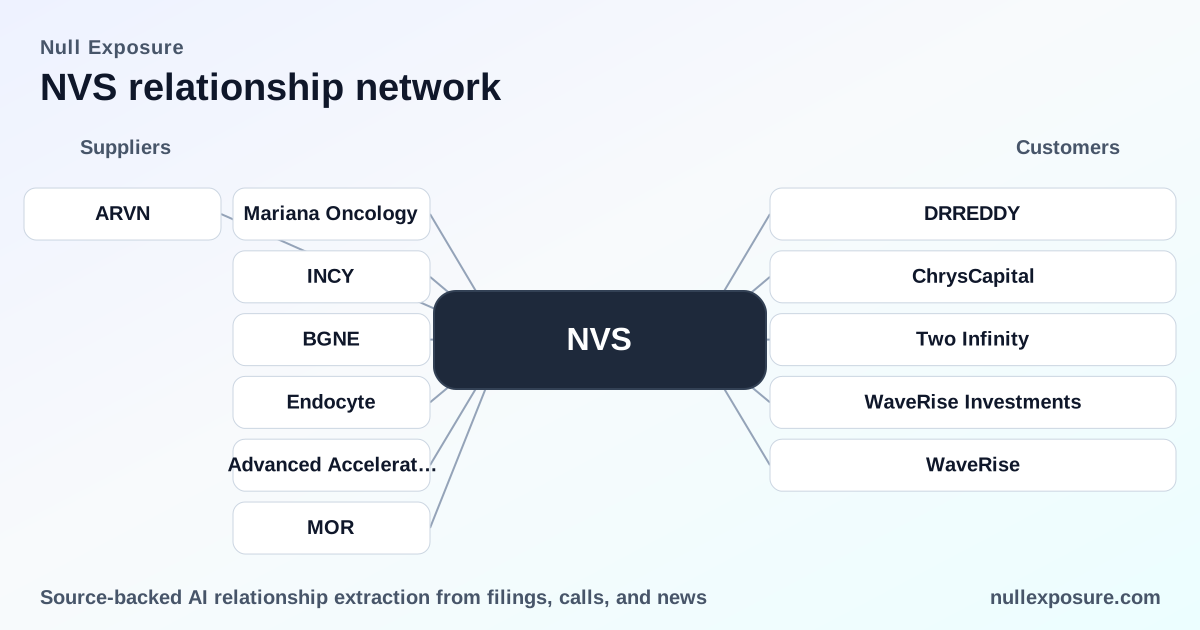
Novartis (NVS) — supplier relationships shaping a larger radiopharma and partnered R&D franchise
Novartis monetizes through a diversified healthcare platform: global commercialization of branded therapeutics, targeted acquisitions to secure manufacturing and late-stage assets, and licensing deals that extend ex‑US rights for partnered molecules. Revenue is driven by scale in oncology and radioligand therapy, supported by an acquisitive posture and selective licensing arrangements that convert external R&D into owned, manufacturable assets. With a market capitalization near $300 billion and 2025 revenue above $56.6 billion, Novartis leverages buyouts and licenses to accelerate time‑to‑market and control supply chains for high‑margin specialty treatments.
For a quick overview of what we track and why it matters for counterparties and investors, visit https://nullexposure.com/.
Why supplier and partner news matters for investors
Novartis operates at the intersection of internal R&D and external sourcing: manufacturing capacity and clinical supply capabilities are as strategically important as pipeline assets themselves. The recent wave of deals signals a choice to internalize manufacturing and clinical supply for radioligand therapies and to expand optioned pipelines via licensing. That has direct implications for supplier concentration, contract leverage, and capital allocation priorities.
The active relationships that inform Novartis’ supplier posture
The dataset returned seven distinct relationships. Below I cover each one and what it signals for investors and operators.
Mariana Oncology
Novartis agreed to acquire Mariana Oncology for $1 billion to gain control of Mariana’s preclinical radioligand pipeline and clinical supply capabilities, reinforcing Novartis’ push to own end‑to‑end radiopharmaceutical workflows. This transaction was reported by BioSpace on March 10, 2026.
Incyte Corporation
Novartis licensed ruxolitinib from Incyte for development and commercialization outside the United States, cementing a territory‑based licensing strategy that converts partner IP into Novartis’ international revenue streams. The licensing arrangement appears in Novartis’ March 10, 2026 media release covering new ASCO/EHA data.
BeiGene
Novartis holds rights to develop, manufacture, and commercialize BeiGene’s tislelizumab in North America, Europe, and Japan under a 2021 collaboration and license agreement, demonstrating long‑dated strategic partnerships that secure late‑stage immuno‑oncology assets for core markets. This relationship is described in Novartis’ ASCO/EHA news release dated March 10, 2026.
Endocyte
Novartis integrated Endocyte’s assets after earlier acquisitions that brought Lutathera and Pluvicto into the portfolio, illustrating prior consolidation in radioligand and targeted therapy franchises and precedent for now‑continued vertical integration. The historical acquisition context was summarized in a BioSpace piece on March 10, 2026.
Advanced Accelerator Applications
Advanced Accelerator Applications (AAA) was acquired in 2018 alongside Endocyte to add Lutathera and related radiopharma capabilities to Novartis’ lineup, a prior strategic move showing consistent emphasis on acquiring manufacturing and radioligand IP. BioSpace reviewed these 2018 transactions in the March 10, 2026 article.
MorphoSys
Novartis completed a deal to acquire MorphoSys for €2.7 billion, a transaction that expands Novartis’ biologics and oncology portfolio and exemplifies the company’s readiness to fund large, bolt‑on acquisitions to fill clinical gaps. BioSpace reported the MorphoSys transaction details on March 10, 2026.
Arvinas
Novartis licensed a Phase III‑ready protein degrader from Arvinas for $150 million, signaling targeted investments in late‑stage modalities that complement internal discovery and reduce time‑to‑market risk. This arrangement was noted in a BioSpace summary on March 10, 2026.
Operating model and supplier‑management constraints (company‑level signals)
The coverage contains no supplier‑specific constraints or contractual red flags surfaced in the current feed. That absence itself is informative: Novartis operates with an acquisitive and licensing‑oriented contracting posture, focused on converting external R&D into in‑house or tightly controlled supply chains rather than relying on long‑term external manufacturing alone. The pattern of buyouts and in‑territory licensing suggests:
- Concentration control via acquisition: Novartis reduces supplier concentration risk by bringing manufacturing and clinical supply capabilities in‑house through acquisitions.
- Criticality of radiopharma supply: Repeated transactions focused on radioligand therapy highlight manufacturing and clinical supply as business‑critical capabilities where control is prioritized.
- Maturity of relationships: Many partnerships are late‑stage or post‑acquisition, indicating a preference for acquiring proven assets rather than funding early‑discovery risk indefinitely.
These are company‑level signals, not attributions to any single relationship unless explicitly named by source material.
Visit https://nullexposure.com/ for a consolidated view of third‑party relationships and supplier risk exposure across the healthcare sector.
Investment implications: upside drivers and operational risks
Novartis’ model converts licensing and acquisitions into predictable commercial lift and secured supply, supporting a forward P/E of about 16.9 versus a trailing P/E around 21.7, and EV/EBITDA near 13.9. That valuation embeds confidence in execution: if Novartis successfully integrates these assets and scales radioligand production, revenue and operating margin upside is measurable.
Risks are operational and capital allocation related: acquisitions require integration capital and can create near‑term costs that compress free cash flow; controlling clinical supply increases fixed‑cost exposure in specialized manufacturing. For counterparties, Novartis’ acquisitive stance reduces long‑term supplier leverage but increases demand for highly specialized manufacturing partnerships only where Novartis decides not to internalize.
Conclusion and next steps for investors and operators
Novartis is executing a clear strategy to own more of the value chain for high‑margin oncology modalities through a mix of targeted licenses and decisive acquisitions. That strategy supports predictable commercial scale but concentrates operational exposure in radiopharma manufacturing and clinical supply.
For further, structured analysis of Novartis’ supplier footprint and to monitor evolving counterparties, see the consolidated coverage at https://nullexposure.com/.
If you are evaluating supplier risk, contract strategies, or M&A impacts for Novartis, start with the company’s public releases and the trade coverage cited above — then augment with supplier performance and manufacturing capacity data available through our platform at https://nullexposure.com/.