Nuvve Holding Corp (NVVE): Supplier relationships that drive — and constrain — a V2G software play
Nuvve develops vehicle-to-grid (V2G) software and monetizes through software integration, project sales, recurring service/maintenance contracts, and milestone-based royalties. The company does not build physical chargers; instead it integrates its GIVe platform into third‑party, V2G‑capable charging hardware and contracts for projects where it supplies platform services, project engineering coordination, and ongoing maintenance revenue. For investors and operators, the supplier picture is a dual reality: critical hardware dependence combined with project-level revenue capture that yields both lump-sum and recurring cash flows. Learn more about supplier signal intelligence at https://nullexposure.com/.
Why suppliers matter to NVVE’s economics
Nuvve’s product economics hinge on reliable access to bidirectional chargers and capable EPC/installation partners. The company’s revenue streams include direct project sales and platform royalties, while operating leverage depends on standardized integrations with hardware vendors and predictable installation partners. If suppliers deliver at scale, Nuvve can realize higher software penetration per project and steady maintenance revenues; if supply is constrained or concentrated, deployment cadence and margins deteriorate. For hands-on investors, supplier diligence is therefore as important as software metrics.
Visit https://nullexposure.com/ for supplier due-diligence tools and relationship maps.
What the filings and press disclose — relationship-by-relationship
Rhombus Energy Solutions
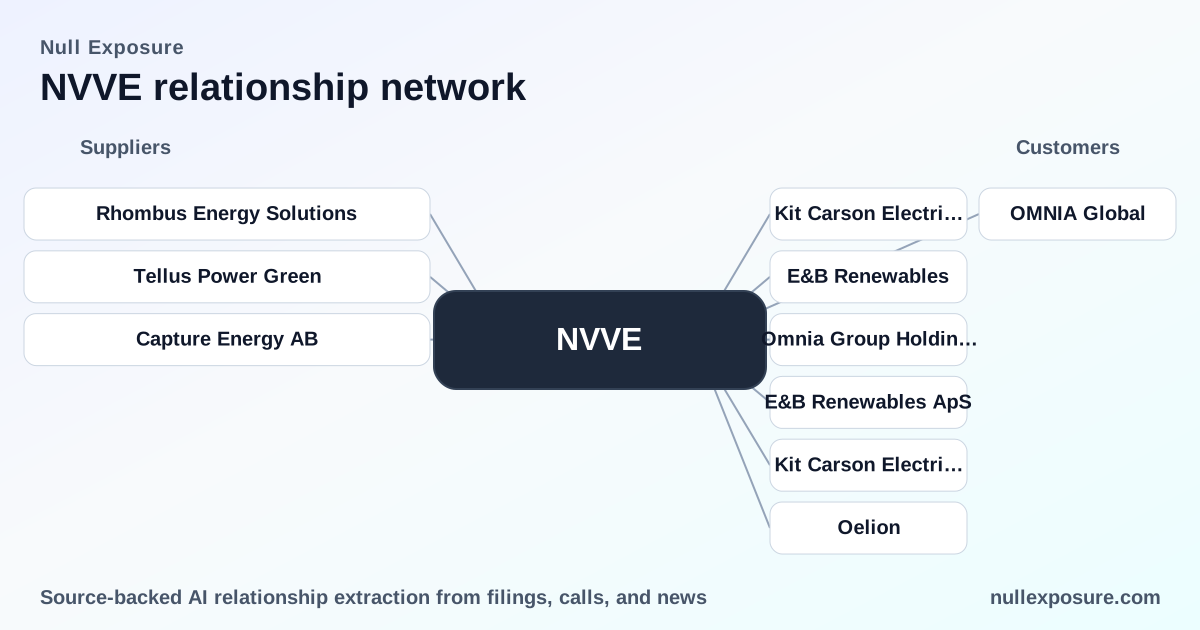
Nuvve identifies Rhombus as one of its principal suppliers of bidirectional DC chargers in the FY2024 10‑K; the filing also documents a material purchase order: a July 20, 2021 PO to Rhombus for DC chargers worth $13.2 million, indicating sizable capital commitments to that partner historically. According to Nuvve’s FY2024 10‑K, Rhombus is therefore both a key hardware source and a counterparty to multi‑million dollar procurement flows.
Source: Nuvve FY2024 10‑K (company filing referencing principal suppliers and a July 20, 2021 PO).
Tellus Power Green
The FY2024 10‑K names Tellus Power Green among Nuvve’s principal suppliers of bidirectional DC chargers, establishing it as another primary hardware partner used to enable V2G installations; the filing also notes ongoing evaluation and onboarding of additional suppliers to supplement capacity. Tellus is therefore part of the core hardware roster that supports Nuvve’s platform deployments.
Source: Nuvve FY2024 10‑K (principal suppliers list, FY2024).
Capture Energy AB
A March 10, 2026 industry report stated that Nuvve and Capture Energy AB signed a framework agreement for BESS projects, under which Capture Energy handles design, delivery, and installation while Nuvve captured nearly $5 million in sales contracts for three projects with E&B Renewables; the agreement also includes 10 years of maintenance services provided by Capture Energy. This arrangement demonstrates Nuvve’s use of third‑party engineering and installation partners to execute projects and secure recurring maintenance-related value.
Source: Intellectia.ai news report, March 10, 2026 (Nuvve and Capture Energy framework agreement).
Operating model constraints and what they mean for investors
The primary constraints in the record signal a supplier-driven operating model with several defining characteristics:
- Contracting posture — buyer/integrator: Nuvve consistently acts as a buyer of hardware and an integrator of its GIVe platform rather than a manufacturer of chargers. The company issues purchase orders and enters project agreements rather than producing hardware itself, which keeps capital intensity lower but increases dependence on vendor performance.
- Spend concentration and commitment levels: Evidence shows a wide range of contractual spend: one-off POs in the $10M+ range (a $13.2M PO to Rhombus) coexists with recurring or milestone-based smaller payments (examples include minimum annual payments of ~$400k and royalty caps in the low‑millions). This mix implies both significant episodic capital outlays and steady, project-linked payments.
- Supplier criticality and exposure: Bidirectional chargers are mission‑critical; the FY2024 disclosure naming a shortlist of principal suppliers underscores high criticality and a need to maintain diversified vendor access. The company’s continued onboarding process for additional suppliers is a direct response to this exposure.
- Maturity of supplier relationships: Contract evidence ranges from historic large POs to more recent framework agreements for BESS delivery and long-term maintenance, indicating progression from one-off purchases toward integrated project partnerships that include long service tails (e.g., 10‑year maintenance terms).
- Financial flexibility and risk allocation: Royalties and milestone payments (up to several hundred thousand or multi‑million dollar caps in some agreements) show Nuvve leverages contingent payments to align vendor incentives with deployment scale, transferring some performance risk to suppliers while accepting capital procurement risk.
Where a constraint excerpt names a partner (for example, the $13.2M PO referencing Rhombus), it signals direct historical concentration in that supplier relationship; otherwise these constraints read as company-level operating attributes.
Investment implications — risks and opportunities
- Opportunity: Asset-light software model with recurring maintenance and royalty upside when integrated into third‑party hardware; project contracts (e.g., near $5M in secured sales tied to Capture Energy) validate commercial traction on the project delivery side.
- Risk: Hardware supply and concentration risk — substantial POs and a small set of principal suppliers create execution exposure for deployments; vendor performance directly affects revenue timing and margins.
- Operational lever: Onboarding additional suppliers is a clear strategic priority cited in filings; success here reduces concentration risk and improves delivery cadence.
- Financial lever: Use of milestone-based royalties and multi‑year maintenance contracts spreads revenue over time and reduces reliance on purely upfront hardware margins.
Actionable next steps for investors and operators
- Review contractual terms and service-level agreements with principal hardware suppliers to confirm delivery timelines, warranty commitments, and maintenance economics.
- Validate the supplier diversification roadmap — how many additional suppliers and certifications are required to scale deployments profitably.
- Monitor project pipelines where third‑party installers like Capture Energy have an installation and maintenance mandate; these projects convert platform integrations into recurring cash flows.
For direct access to relationship maps and supplier intelligence for NVVE, visit https://nullexposure.com/. For deeper research workflows and supplier due diligence tools, start your analysis at https://nullexposure.com/.
Final takeaway
Nuvve is a software‑centric V2G operator that monetizes through integration, project sales, royalties, and maintenance, but its success is tethered to the reliability and capacity of a small set of hardware suppliers and installation partners. Large historical purchase orders (including a documented $13.2M order to Rhombus) and recent project frameworks (Capture Energy) show both scaleable revenue opportunities and clear supplier concentration risk — a tradeoff investors must quantify when assessing NVVE’s path to profitable growth.