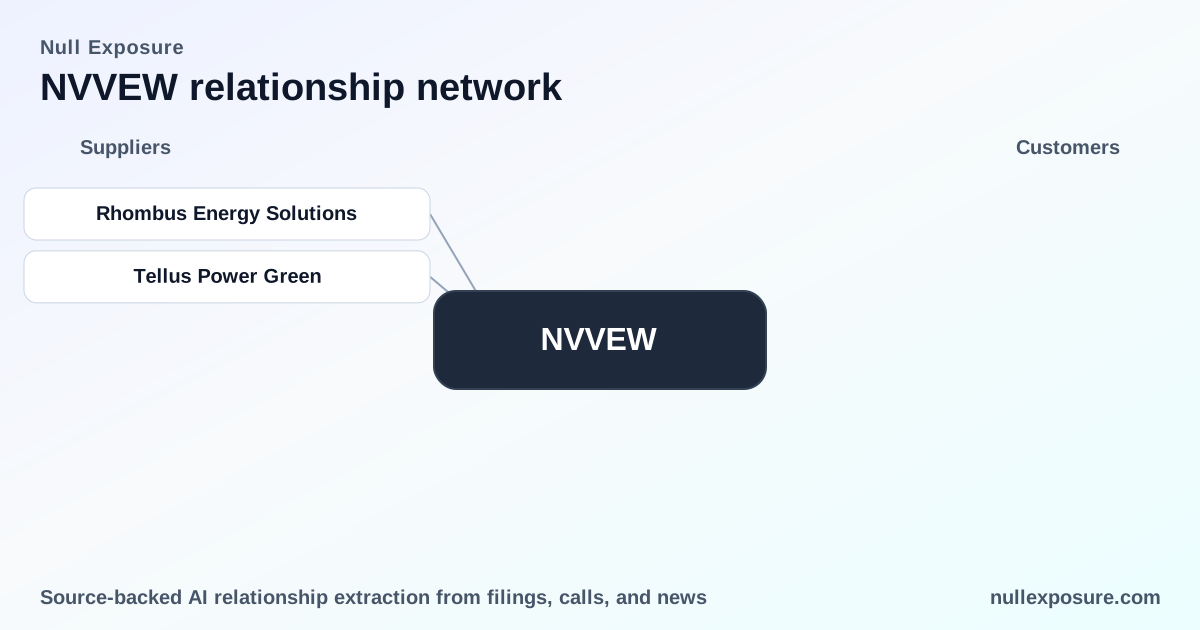
Nuvve Holding (NVVEW): supplier dependencies that determine scale and execution risk
Nuvve develops vehicle‑to‑grid (V2G) software and positions itself as the integrator of bidirectional charging intelligence into third‑party hardware; it monetizes through platform subscriptions, milestone royalties and licensing revenues while sourcing bidirectional DC chargers from specialized manufacturers under a mix of purchase orders and shorter‑term payment arrangements. Investors should treat Nuvve as a software platform whose commercial progress and capital intensity are tightly coupled to a small set of hardware suppliers and to a long‑running licensing posture. For a quick look at supplier coverage and risk scoring, visit https://nullexposure.com/.
Why supplier choice is a strategic lever for Nuvve
Nuvve does not build chargers. The company integrates its GIVe platform into V2G‑capable charging stations manufactured by partners located throughout the world, making suppliers functionally critical: without compatible hardware the software has no channel to market. The FY2024 disclosure emphasizes that selection and onboarding of suppliers is an ongoing, extensive process, which underscores two operating realities:
- Concentration and criticality: Nuvve names a small set of principal suppliers for bidirectional DC chargers, creating single‑point dependencies on hardware delivery and certification cycles.
- Global sourcing and integration complexity: Manufacturing partners are distributed globally, so procurement timing, cross‑border logistics and regional certification regimes directly affect revenue ramp.
These supplier dynamics convert procurement and payment terms into immediate business risks that are material to execution and cash flow. Learn more about how supplier exposures translate into investment signals at https://nullexposure.com/.
Supplier relationship inventory (directly from company filings)
Rhombus Energy Solutions
Nuvve identifies Rhombus Energy Solutions as one of its principal suppliers of bidirectional DC chargers, and the company’s filings disclose sizable historical purchase commitments: a July 20, 2021 purchase order for DC chargers totaling $13.2 million, and a separate arrangement calling for an aggregate $2.4 million in payments for certain DC chargers with staged payment timing (minimum 50% within 12 months of the settlement date, remainder within 24 months). According to Nuvve’s FY2024 Form 10‑K and related disclosures, these arrangements establish both material spend and short‑term payment obligations tied to hardware shipments. (Source: Nuvve FY2024 10‑K and related purchase‑order/settlement excerpts.)
Tellus Power Green
Tellus Power Green is named alongside Rhombus as a principal supplier of bidirectional DC chargers, indicating it is a core manufacturing partner used to deliver V2G‑capable charging stations that integrate Nuvve’s software. The FY2024 Form 10‑K lists Tellus as a principal hardware supplier as part of Nuvve’s ongoing supplier onboarding effort. (Source: Nuvve FY2024 10‑K.)
What the contractual and spend signals mean for investors
The company‑level and relationship‑level constraints disclosed in filings create a coherent picture of Nuvve’s supplier posture:
- Contracting posture: Nuvve operates a hybrid model: some supplier obligations are short‑term and payment‑linked to shipment, while the company also maintains long‑dated licensing agreements for intellectual property (non‑exclusive, expiring at either patent expiry or 20 years from first licensed product sale). This mix creates immediate cash‑flow sensitivity from hardware payables and a steady, long‑tail revenue stream from licensing rights.
- Spend variability and capital exposure: Documents show a range of commercial scales — recurring minimum payments (for example, a minimum of $400,000 annually under certain agreements), milestone‑based royalties (up to $7.5 million aggregate contingent on usage milestones), and discrete purchase orders that reached $13.2 million. These tiers indicate Nuvve can hit both low‑touch recurring payments and high‑capex procurement events that require working capital or financing.
- Role and maturity signals: The firm is an integrator and service manager rather than a manufacturer, engaging service providers for cybersecurity and operations while relying on external hardware partners. The ongoing, “extensive” supplier onboarding suggests a growth‑stage vendor network that is not yet fully diversified.
Present company‑level constraints as signals: the disclosed licensing term, global partner footprint, hardware focus and service provider engagements are all company‑level characteristics that shape procurement cadence and scalability.
Quick investment implications
- Concentration risk is tangible. Principal supplier names are limited; execution delays or quality issues at those vendors translate directly into revenue timing risk.
- Cash flow sensitivity is high. Short‑term payment schedules for hardware and large one‑off purchase orders increase the need for predictable working capital.
- Long‑tail IP value exists. The non‑exclusive licensing agreement with extended expiry creates potential recurring revenue that supports valuation upside if platform adoption scales.
Near‑term financial context and risk profile
Nuvve is operating with a small revenue base relative to its market capitalization and negative operating metrics: Revenue TTM of $4.63 million, operating margin well into negative territory, and an EBITDA loss reported in the latest TTM figures. Those financials increase the importance of supplier terms and milestone receipts: hardware delivery schedules and milestone‑linked royalties are direct drivers of near‑term liquidity. The company’s global integration model raises additional operational risks tied to certification and cross‑border logistics.
If you are modeling downside scenarios, stress test supplier delivery delays and extended payment schedules; if you are modeling upside, prioritize acceleration of licensing milestones and the removal of single‑vendor bottlenecks. For additional supplier risk analytics and portfolio integration tools, visit https://nullexposure.com/.
Bottom line: suppliers are both a lever and a constraint
Nuvve’s value proposition depends on its ability to embed software into third‑party DC chargers and to monetize that embedding through subscriptions, royalties and licensing. Hardware suppliers are therefore strategic assets and execution chokepoints. Rhombus Energy Solutions and Tellus Power Green are explicitly named principal suppliers; contractual excerpts show both material purchase orders and staged payment obligations, while company‑level disclosures reveal long‑dated licensing and a global manufacturing posture. Investors should weigh supplier concentration, payment timing and milestone exposure as primary determinants of short‑term liquidity and long‑term scaling potential.
For a deeper supplier map and exposure scoring tailored to investment use cases, visit https://nullexposure.com/ and explore supplier‑level analytics that translate filings into actionable signal sets.