NorthWestern Energy (NWE): Strategic supplier relationships and what they signal for investors
NorthWestern Energy operates as a regulated utility providing electricity and natural gas across the Upper Midwest and Mountain West. The company monetizes through rate-regulated energy delivery, supplemented by generation ownership and contracted supply positions; recent balance-sheet and news activity show NorthWestern is consolidating thermal generation interests while relying on mixed-term purchase agreements and third‑party service providers to meet load and reliability obligations. For investors, the critical lens is how those supplier arrangements affect operating risk, rate-case narratives, and capital allocation.
For ongoing supplier intelligence and relationship profiling, visit https://nullexposure.com/.
What happened with Colstrip and why investors should care
NorthWestern completed the acquisition of additional interests in Colstrip Units 3 and 4 effective January 1, 2026, through agreements with Avista and Puget Sound Energy. The transactions were reported as transfers of interests with no cash consideration, increasing NorthWestern’s ownership to 55% of the plant and consolidating control over a material thermal asset that has implications for fuel, emissions, and regulatory exposure. According to press coverage of the transaction, NorthWestern closed definitive agreements with Avista and Puget to acquire their respective interests effective Jan. 1, 2026 (Washington State Standard, Aug. 4, 2024; company financial reporting summarized by AIJourn, March 2026).
Why this matters financially
- Earnings and cash flow: Control of a larger share of Colstrip affects operating costs (coal fuel and O&M) currently recovered through regulated rates, and will influence future depreciation and capital investment profiles.
- Regulatory risk: Owning a larger portion of a coal-fired plant increases exposure to environmental policy and state-level rate proceedings; this converts supply-side arrangements into a balance-sheet and regulatory story.
- Counterparty risk reduction: Purchasing interests from peers reduces dependency on third-party owners but puts NorthWestern squarely responsible for escalation and decommissioning exposures.
The relationships you need to know (short, actionable brief)
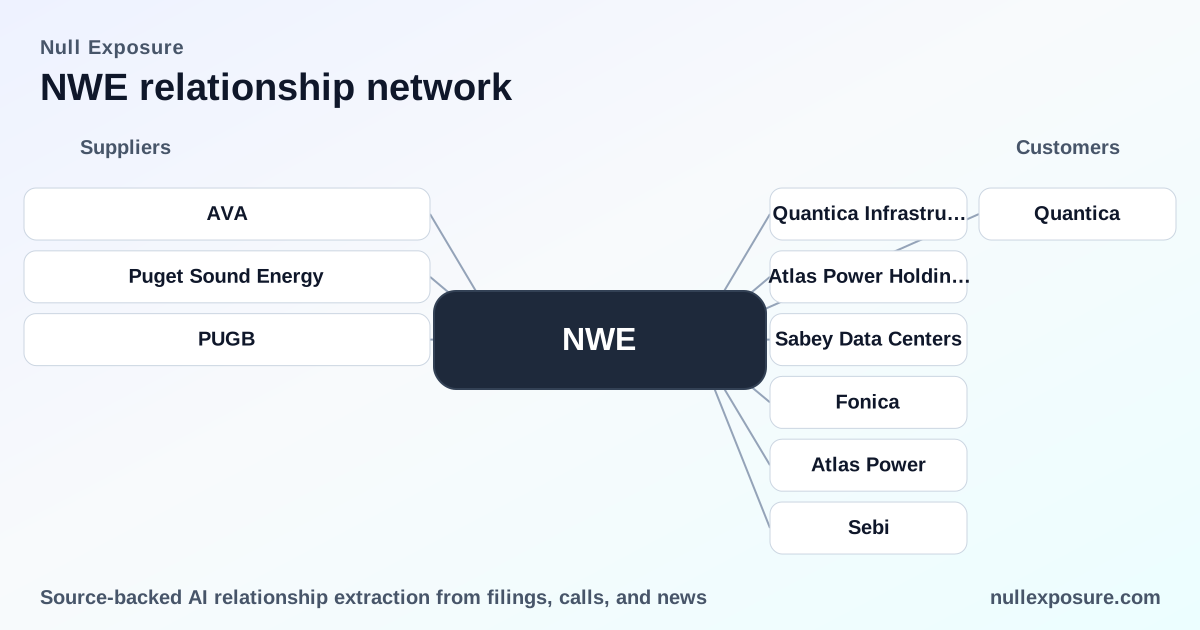
NorthWestern’s relevant supplier/partner mentions in public reporting and coverage fall into two counterparties tied to the Colstrip transaction. Each entry below is a concise, plain-English summary with the source cited.
-
Avista: NorthWestern acquired Avista’s 222 megawatts of interest in Colstrip Units 3 and 4 effective Jan. 1, 2026, under a definitive agreement reported as having no direct purchase price. This transfer increases NorthWestern’s consolidated ownership and operational responsibility for those units (Washington State Standard, Aug. 4, 2024; company results reporting, March 2026).
-
Puget Sound Energy (Puget): NorthWestern acquired Puget’s interest in Colstrip Units 3 and 4 effective Jan. 1, 2026, completing the previously disclosed agreement that transferred ownership for no monetary consideration, contributing to NorthWestern’s 55% ownership stake (Washington State Standard, Aug. 4, 2024; AIJourn financial results summary, March 2026).
How contracts and supplier posture shape operational risk
NorthWestern’s supplier footprint is a hybrid of owned generation and contracted supply with mixed tenors. Company disclosures describe both long‑term and short‑term power purchase commitments — a signal that the firm balances firm supply through long-duration contracts and portfolio flexibility through shorter commitments. Long-term contracts include wind, unspecified resources and thermal or gas generation nameplate capacities referenced in filings, while short-term arrangements cover market purchases and seasonal balancing.
- Contracting posture: The company operates as both a buyer of fuel and generation and as a service operator that depends on third-party materials, equipment and labor — a dual posture that translates into operational complexity but also negotiating leverage as a regulated utility.
- Geographic sourcing: NorthWestern benefits from access to major North American gas-producing regions, with contract ties reported to Rocky Mountain basins and Canadian Alberta — a geographically diversified procurement base that reduces single-source exposure.
- Maturity and criticality: Long-term power purchase agreements and ownership stakes in baseload generation increase the maturity and criticality of select relationships; these are not transient, low-value contracts but driver arrangements embedded in rate-base considerations.
- Relationship life-cycle: Reported agreements and filings categorize many of these supplier relationships as active and operational, indicating ongoing performance obligations rather than exploratory or contingent arrangements.
Risk vectors investors should watch
- Regulatory outcomes: Expanded ownership of coal-fired assets introduces potential for higher capital recovery uncertainty in future state rate cases and environmental compliance cost allocation. Regulatory risk is the single-largest lever on utility cash flows when generation ownership changes.
- Operational concentration: Increasing ownership of Colstrip shifts more generation concentration to a single complex; any forced outages, remediation, or accelerated retirement decisions would have outsized rate-base and customer-impact consequences.
- Counterparty dynamics: The zero-cash transfers from Avista and Puget reduce short-term financing strain but transfer long-term operational and decommissioning responsibility to NorthWestern — a balance-sheet and contingent-liability tradeoff.
For a deeper, relationship-level perspective on how these and other supplier ties drive credit and operational outcomes, explore additional supplier profiles at https://nullexposure.com/.
What investors should monitor next
- Rate-case filings and state commission dockets that reflect cost recovery mechanics for the newly consolidated Colstrip ownership.
- O&M and environmental capital expenditures disclosed in quarterly reports tied to Units 3 and 4.
- Any long-term fuel supply renegotiations or procurement hedges that adjust NorthWestern’s exposure to coal and natural gas price swings.
Bottom line and action items
NorthWestern’s recent acquisitions of Avista’s and Puget’s Colstrip interests are material strategic moves that shift supply-side risk onto the company’s balance sheet while reducing third-party ownership fragmentation. Investors should evaluate this through the twin lenses of regulatory recoverability and operational concentration: if cost recovery remains intact, consolidated ownership supports predictable cash flow; if not, it amplifies downside.
For ongoing monitoring of how supplier relationships evolve into financial outcomes, visit https://nullexposure.com/ for updated supplier intelligence and relationship analytics.
If you want a concise briefing tailored to portfolio risk or credit analysis, review our supplier mapping resources at https://nullexposure.com/ and contact our research desk for a focused memo.