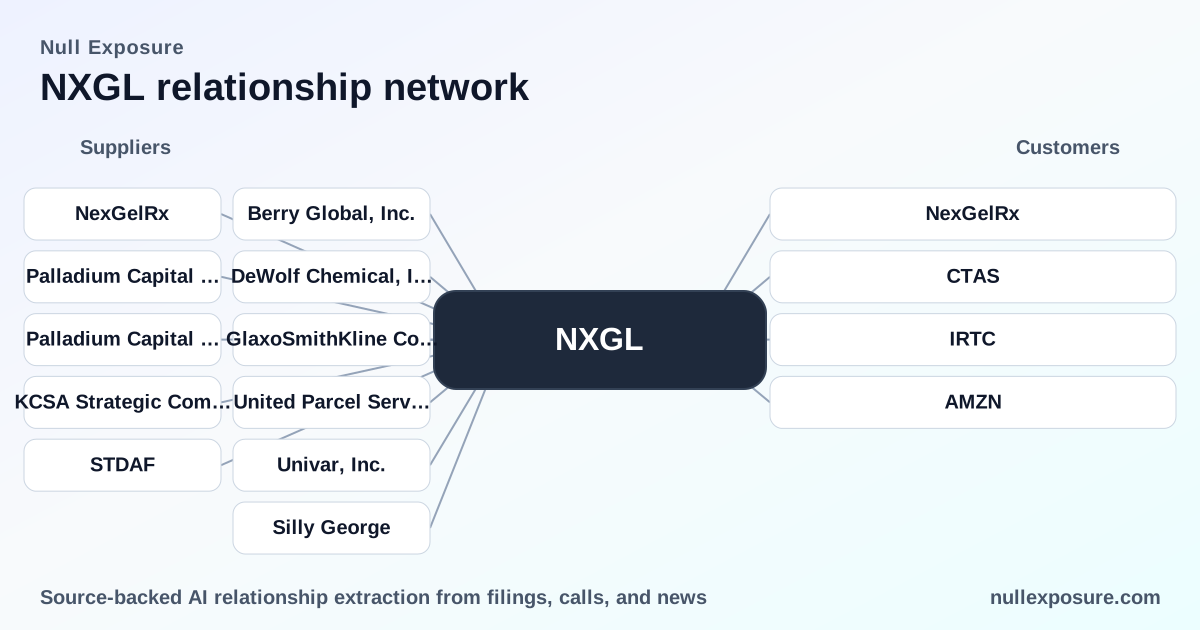
NexGel (NXGL) — supplier map and what it means for investors
NexGel manufactures high‑water‑content hydrogels and monetizes through direct sales of biomedical and consumer hydrogel products, contract manufacturing, and selectively spinning out targeted drug‑delivery programs while retaining manufacturing rights. The company’s revenues derive from product sales and manufacturing services; strategic acquisitions and financing actions have been used to scale consumer brands and fund near‑term expansion. For investors, the most material levers are supplier continuity for core polymers, exclusive manufacturing arrangements, and transactional financing that affects dilution and working capital.
Discover more supplier insights at https://nullexposure.com/.
What the supplier footprint reveals about NexGel’s operating model
NexGel’s supplier map indicates a manufacturing‑centric, supply‑sensitive business. The FY2024 Form 10‑K lists a short roster of principal raw material suppliers, which signals concentration risk for inputs. The filing also documents logistics reliance on contract carriers for finished‑goods distribution and multiple recent commercial agreements that expand end‑market reach. Together these facts define a company that is operationally dependent on a handful of upstream partners, while simultaneously pursuing downstream brand and program expansion.
Two company‑level constraints extracted from filings provide additional context. First, NexGel discloses reliance on two major chemical manufacturers for the polymers it uses, identifying Dow Chemical and BASF as primary sources for polyethylene oxide and polyvinylpyrrolidone—this is a direct indicator of strategic vendor concentration and criticality for core inputs (company‑level signal). Second, NexGel’s FY2024 reporting lists the named suppliers as principal and active partners, confirming these are ongoing relationships rather than one‑off vendors (company‑level signal). These constraints imply a contracting posture that is operationally critical but not broadly diversified, and a maturity profile of small‑scale industrial production paired with commercial development.
Detailed relationship checklist — the partners investors should know
-
Berry Global, Inc. — According to NexGel’s FY2024 Form 10‑K, Berry Global is listed among the principal suppliers for raw materials used in hydrogel production, indicating a standing procurement relationship for packaging or polymer components. (FY2024 10‑K)
-
DeWolf Chemical, Inc. — The FY2024 10‑K names DeWolf Chemical as a principal raw materials supplier, underscoring continued reliance on specialty chemical vendors for formulation inputs. (FY2024 10‑K)
-
Univar, Inc. — NexGel’s FY2024 filing lists Univar as a principal supplier for raw materials, reflecting active procurement of distribution‑grade chemicals or ingredients. (FY2024 10‑K)
-
GlaxoSmithKline Consumer Healthcare Holdings (US) LLC / Haleon — NexGel entered into a Services Agreement on March 21, 2023 to supply material for a planned consumer product, indicating a commercial supply relationship with a major consumer‑health player. (FY2024 10‑K)
-
United Parcel Service, Inc. — The FY2024 10‑K notes that finished gels are generally shipped to customers via contract carriers such as UPS, signaling reliance on third‑party logistics for distribution. (FY2024 10‑K)
-
Silly George — A GlobeNewswire release (May 16, 2024) reported that NexGel acquired the Silly George beauty brand, with the seller providing inventory at cost to be paid after unit sales, which reduces immediate inventory cash outflow but shifts receivables and execution risk to NexGel. (GlobeNewswire, May 16, 2024)
-
NexGelRx — NexGel announced a spin‑off of its drug‑delivery program into NexGelRx and will remain the exclusive manufacturer of hydrogel for that business, creating a captive internal customer and potential revenue concentration tied to the spin‑off’s success. (GlobeNewswire, Dec 11, 2025; TradingView coverage)
-
Palladium Capital Group / Palladium Capital Group LLC — Regional reporting and market commentary indicate Palladium acted as placement agent for a financing and will receive cash fees and warrants contingent on an approved acquisition, marking a capital‑markets relationship that brings funding and potential dilution dynamics. (MyChesco, March 2026; TradingView coverage)
-
KCSA Strategic Communications — Investor‑relations contact information and engagement with KCSA were disclosed in a press release announcing Q3 2025 results, showing NexGel uses an external IR advisor for market communications. (GlobeNewswire, Nov 3, 2025)
-
Stada — Management referenced an expanding partnership with Stada on the Q3 2025 earnings call, indicating commercial collaboration in European consumer health channels. (NXGL Q3 2025 earnings call)
How these relationships translate into investment risks and levers
-
Concentration of inputs is the dominant operational risk. The 10‑K’s naming of a small set of principal suppliers, plus explicit reliance on Dow and BASF for core polymers, creates a scenario where polymer availability and price movement directly affect gross margins and capacity utilization. (FY2024 10‑K)
-
Exclusive manufacturing for NexGelRx is a revenue accelerator and single‑counterparty risk. Retaining exclusive manufacturing rights boosts near‑term factory throughput and revenue visibility but concentrates credit and demand exposure to the spin‑off’s commercial fate. (GlobeNewswire Dec 11, 2025)
-
Deal structures reduce near‑term cash drag but increase execution risk. The Silly George acquisition terms—inventory provided at cost and paid post‑sale—improve short‑term cash preservation but require successful go‑to‑market execution to avoid working‑capital pressure. (GlobeNewswire May 16, 2024)
-
Capital‑markets relationships affect dilution and funding runway. Placement agent arrangements and warrants tied to acquisitions introduce potential dilution if financing milestones are met, affecting investor returns and share count. (MyChesco; TradingView)
If you want a supplier‑level risk scorecard or to monitor upcoming supplier contract expirations, visit https://nullexposure.com/ for more detailed supplier signals and alerts.
What investors should monitor next quarter
- Contract renewals or alternative sourcing for polymers from Dow and BASF to assess concentration mitigation.
- Production volumes and margin reconciliation for NexGelRx manufacturing to determine whether exclusivity is accretive.
- Integration progress and sell‑through rates for Silly George inventory given the vendor‑paid‑after‑sale terms.
- Financing milestones tied to Palladium that could trigger warrants or fees and influence dilution.
- Logistics cost trends via UPS and other carriers, as freight shifts can compress margins on lightweight consumer packs.
Bottom line: focused supply chain, concentrated upside and measurable execution risk
NexGel’s supplier landscape is compact and strategic: a small set of principal suppliers provides the inputs that enable the core manufacturing business, while targeted commercial deals and a spin‑off create upside through captive manufacturing and brand channels. The primary investor risk is supplier concentration for polymers and the execution risk tied to newly acquired brands and financing arrangements. Active monitoring of contract renewals, manufacturing throughput for NexGelRx, and financing milestones is essential to convert operational initiatives into durable returns. For ongoing supplier monitoring and signal feeds, visit https://nullexposure.com/.