Nexalin Technology (NXL): Supplier relationships, clinical partners and what they mean for investors
Nexalin Technology operates as a product-first medical device company focused on proprietary non‑invasive transcranial electrical stimulation (DIFS™) devices for neurological and psychiatric indications. The company monetizes through device sales and commercial channels, while advancing regulatory value via clinical programs and contract research collaborations that support planned FDA filings; revenue today is limited and losses are funding R&D and trial execution (Revenue TTM $156,930; Diluted EPS TTM -$0.61). Investors should view NXL as an early commercial-stage medical technology firm whose valuation is driven by regulatory progress, trial execution, and the capacity of its outsourced supply and services network to scale reliably. Learn more or monitor ongoing supplier signals at https://nullexposure.com/.
Supplier and clinical partners that matter now
This section describes every partner connection surfaced in public filings and press coverage. Each relationship entry is concise and sourced to the underlying disclosure.
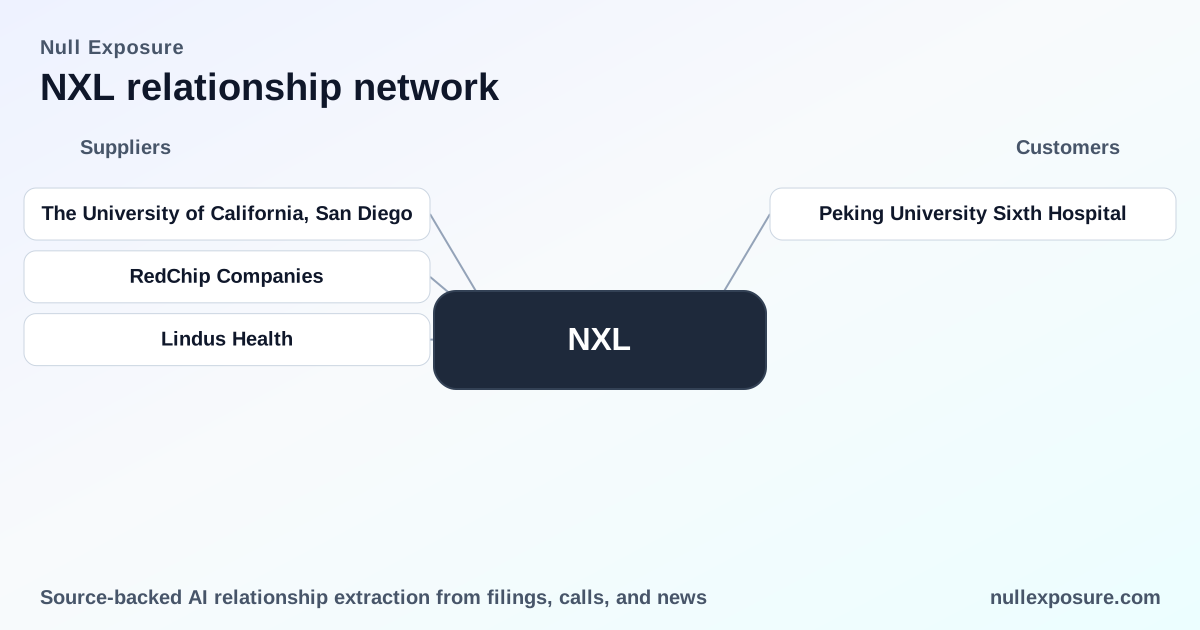
University of California, San Diego — clinical safety data partner
Nexalin references preliminary safety data provided by UC San Diego that supports the use of its 15 milliamp waveform technology, a clinical validation point the company is relying on for regulatory narrative. This is disclosed in Nexalin’s FY2024 filings and referenced in the company’s Form 10‑K (FY2024).
Source: Nexalin FY2024 Form 10‑K filing (company disclosure).
RedChip Companies — investor relations and media partner
Nexalin is a client of RedChip Companies, which has hosted the company’s investor webinars and produced interview airings on the RedChip “Small Stocks, Big Money” show, increasing visibility to retail and institutional investors. Multiple press releases in late 2025 and early 2026 document RedChip’s role in arranging Nexalin media appearances and investor events.
Source: GlobeNewswire investor event release (Dec 2025) and multiple press releases distributed March 2026 via regional outlets noting RedChip client status.
Lindus Health — contract research / CRO for pivotal trial execution
Nexalin has engaged Lindus Health as a full‑service clinical research organization to oversee execution of the 150‑patient pivotal HALO‑Clarity insomnia trial, including protocol finalization, recruitment, regulatory preparation and data oversight—an operationally critical relationship for the company’s planned de‑novo FDA submission.
Source: Nexalin press release via GlobeNewswire (Feb 24, 2026) and trading commentary (Feb 2026).
What the supplier constraints tell you about the operating model
Nexalin’s disclosed supplier constraints illuminate a mixed manufacturing footprint and a dependency profile that shapes contracting posture and execution risk.
-
Geographic footprint is bifurcated: The company cites suppliers and manufacturers in China and also maintains quality assurance and manufacturing agreements in the U.S. (Apical Instruments in Redwood City and Velentium in Fort Hood County, Texas). This dual footprint creates cost and sourcing leverage but also exposes the company to cross‑border supply disruption should policy or geopolitical conditions change. The presence of U.S.‑based quality agreements signals an effort to mitigate import risk and regulatory scrutiny.
-
Manufacturer role is critical and concentrated: Nexalin identifies manufacturers as primary supply partners. Given the company’s early commercial scale, manufacturing relationships are both critical and relatively immature, implying supplier concentration risk while product volumes remain low. Contracts appear operationally important rather than commoditized today.
-
Service providers for governance and cybersecurity are in use: The company relies on a mix of in‑house and third‑party cybersecurity vendors to monitor IT and comply with governance requirements; this is a mature administrative control but not a substitute for robust operational scale when clinical activity increases.
These constraints translate to a supplier posture that is proactively hedged (U.S. QA partners) but still materially exposed to overseas manufacturing dynamics and the execution risk of newly contracted CROs.
Investment implications: upside drivers and concentrated risks
Nexalin’s path to value is straightforward: successful pivotal trials, an approvable de‑novo submission, and scalable manufacturing. The current supplier and partner map highlights both the enablers and the bottlenecks.
-
Upside drivers:
- Regulatory progress via the HALO‑Clarity trial managed by Lindus Health is the single most direct path to a de‑novo clearance and addressable market expansion.
- Clinical validation from academic centers such as UCSD underpins safety claims that investors value when assessing regulatory risk and adoption potential.
- Active investor relations and media programs through RedChip can accelerate market awareness and support capital raises if needed.
-
Concentrated risks:
- Manufacturing concentration across China and small U.S. contractors creates operational risk if volumes rise and supplier capacity or compliance gaps emerge.
- Early commercial scale and negative operating margins mean the company remains dependent on financing events and partner performance to fund trials and commercialization.
Key risk factors to track moving forward:
- CRO trial milestones (enrollment and data quality) and any changes to the Lindus Health engagement.
- Manufacturing audits, capacity expansion plans with Apical/Velentium, and any disruption tied to China‑based suppliers.
- Visibility and timing of regulatory interactions and the de‑novo submission timeline.
How to monitor these relationships and next steps
For investors and operators conducting diligence, the practical agenda is: verify CRO contracts and governance, confirm manufacturing quality systems and backup suppliers, and watch investor communications programs for changes in capital strategy. For ongoing signals and consolidated supplier intelligence, visit https://nullexposure.com/ to track disclosures and supplier evidence.
If you are evaluating partnership risk or considering operational engagement with Nexalin, prioritize:
- direct review of the CRO trial master file and recruitment timelines,
- supplier quality agreements with U.S. manufacturers, and
- recent clinical safety reports from UCSD and other academic collaborators.
Explore current supplier profiles and alerts at https://nullexposure.com/ to stay aligned with Nexalin’s execution progress.
Bottom line
Nexalin is a clinically focused medical device company where regulatory execution and supplier reliability directly determine investor outcomes. Lindus Health’s CRO role is critical to unlocking regulatory value; UCSD’s safety data supports the clinical narrative; and RedChip’s engagement raises market awareness. Investors should weigh the upside of a successful pivotal trial against concentrated manufacturing exposure and the company’s current financial runway. For continuous tracking of these supplier signals and relationships, return to https://nullexposure.com/.