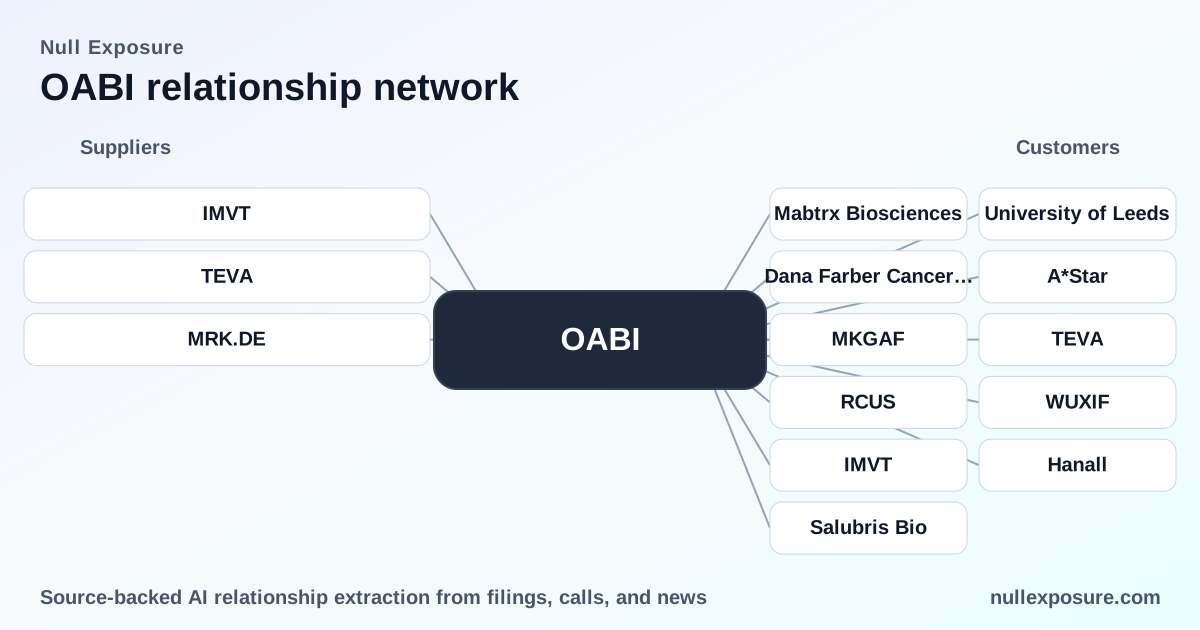
OmniAb (OABI) as a Supplier: an investor thesis on platform-driven partnerships
OmniAb commercializes a proprietary platform that discovers fully human therapeutic antibodies and monetizes primarily through collaborative research agreements, milestone payments, and downstream royalties/licensing tied to partner clinical progress. The company’s economics are partner-dependent: revenue scales with successful transitions of partnered candidates through clinical milestones, while operating leverage remains constrained by R&D-heavy cost structure and limited direct product revenues. For investors and operators evaluating supplier relationships with OmniAb, the critical question is how partner development cadence translates into predictable monetization. Learn more about supplier exposure and relationship tracking at https://nullexposure.com/.
Why partner traction is the core value driver
OmniAb’s business is not a classic product company; it is a platform service provider to biopharma customers. Revenues reflect fees for antibody discovery and license terms tied to partners’ downstream success. Financials confirm the profile: Revenue TTM of $18.7M, negative operating margin and EBITDA, and a market cap consistent with a clinical‑stage platform specialist. The company’s balance between cash burn and milestone timing makes partner clinical advancements the dominant short‑to‑medium‑term value driver.
Key model characteristics:
- Contracting posture: Deals typically follow collaborative research and license structures that deliver near‑term service revenue and back‑loaded milestone/royalty upside.
- Concentration: With modest revenue today, a small number of advancing partners can materially shift top line and valuation sensitivity.
- Criticality to customers: OmniAb’s platform is a strategic input for partners’ antibody discovery programs; partner success directly validates the platform and triggers monetization.
- Maturity: Early commercial stage—solid science and partnerships but limited proprietary marketed products; financial metrics show continued investment in R&D.
What OmniAb called out on the 2025 Q4 earnings call
OmniAb’s 2025 Q4 earnings call highlights three partner relationships that matter to investors and operators assessing supplier exposure. Each mention is a signpost for where potential milestone or royalty revenue could emerge as partners advance programs.
Immunovant — continued clinical momentum in anti‑FcRn programs
OmniAb noted that Immunovant continues to make strong progress and report clinical momentum in the anti‑FcRn space, signaling that partners using OmniAb technology are advancing clinical agendas that could generate milestone payments. This commentary comes from OmniAb’s 2025 Q4 earnings call (reported March 7, 2026).
Source: OmniAb 2025 Q4 earnings call, first reported 2026‑03‑07.
Teva — external funding to accelerate anti‑IL‑15 development (TEV‑408)
On the same call, OmniAb referenced Teva’s January announcement of a funding agreement with Royalty Pharma of up to $500 million to accelerate TEV‑408 clinical development, which underscores the financial backing behind partner programs that utilize externally sourced capital to de‑risk clinical progression. Investors should view such financing events as positive signals for the probability of partner milestone realization.
Source: OmniAb 2025 Q4 earnings call (referencing Teva’s January JPM update), first reported 2026‑03‑07.
Merck KGaA — moving M9140 toward Phase III in metastatic colorectal cancer
OmniAb reported that Merck KGaA intends to advance M9140 from Phase I directly into Phase III for metastatic colorectal cancer based on Phase I data, an aggressive development decision by a major partner that could accelerate milestone triggers and, if successful, long‑term royalty streams.
Source: OmniAb 2025 Q4 earnings call, first reported 2026‑03‑07.
How these relationships map to supplier risk and upside
Each partner mention has a distinct implication for OmniAb’s supplier profile:
- Immunovant: Clinical momentum in the anti‑FcRn class validates platform utility in immunology indications; however, class risk and trial outcomes will drive milestone realization.
- Teva: External financing of TEV‑408 reduces near‑term capital constraints for the partner’s program, increasing its chance to hit development milestones that could translate to OmniAb revenue.
- Merck KGaA: A major pharma pushing a candidate rapidly into Phase III increases both short‑term milestone probability and long‑term royalty potential, given Merck KGaA’s development resources and market reach.
Across these relationships, the upside is concentrated and event‑driven—successful trial readouts or regulatory progress by one partner can have outsized effects on OmniAb’s revenue trajectory. Conversely, clinical setbacks are material given the company’s limited revenue base and negative operating margins.
If you want a systematic way to monitor partner progress and supplier exposure across OmniAb relationships, visit https://nullexposure.com/ for structured tracking and alerts.
Operational constraints and company-level signals investors should weigh
OmniAb’s constraints are best read as company-level signals rather than being tied to any single partner (no formal constraint excerpts name a relationship). Important signals embedded in public data:
- Revenue concentration and timing risk: With TTM revenue of $18.7M and quarter‑to‑quarter variability (quarterly revenue growth YOY negative), milestone timing drives cash flows.
- Profitability and cash burn: Negative operating margin and EBITDA reflect heavy R&D investment; realization of partner milestones is necessary to shift margins materially.
- Ownership structure and governance signals: Approximately 15.2% insiders and 52.1% institutional ownership suggest a balanced mix of insider alignment and institutional scrutiny.
- Platform dependence: The company’s value is highly correlated with partner clinical decisions and the scientific validation of its OmniAb platform rather than direct product sales.
These company-level constraints frame supplier risk: OmniAb behaves as a strategically critical, but financially early‑stage, supplier whose valuation is levered to third‑party development outcomes.
Risk/reward and what operators should negotiate
For biopharma operators evaluating OmniAb as a supplier, commercial terms should reflect the event‑driven nature of value:
- Protect downside through staged payments tied to definable R&D milestones and clear IP carve‑outs.
- Negotiate favorable licensing terms if OmniAb’s platform contributes differentiated biological sequences or discovery data.
- Monitor partner financing announcements and development plans—large external financings (e.g., Teva/Royalty Pharma) materially change the commercial landscape for supplier payout timing.
Bottom line and next steps
OmniAb’s commercial trajectory is partner‑dependent: advancing partner clinical programs—especially those backed by major pharma or external financing—are the primary drivers of revenue and valuation upside. For investors, watch trial inflection points from Immunovant, Teva, and Merck KGaA closely; for operators, structure contracts to share upside while protecting against milestone timing risk.
Explore supplier risk frameworks and ongoing relationship monitoring at https://nullexposure.com/ to stay ahead of event‑driven exposures.
If you want a focused briefing on how these partner events translate to potential milestone timing and cash flow scenarios for OmniAb, visit https://nullexposure.com/ for customized analysis and alerts.