Oak Woods Acquisition Corporation Right (OAKUR): Governance Notice and Counterparty Obligations that Matter to Investors
Oak Woods Acquisition Corporation Right functions as a public SPAC instrument tied to a blank‑check sponsor vehicle; its economic value is realized through corporate combination outcomes and contractual entitlements embedded in the SPAC capital structure. Revenue for the operating vehicle is not traditional operating cash flow — it is driven by sponsor fees, consulting arrangements, and the timing and success of a business combination, while investors in the Right position are exposed to governance, liquidity, and counterparty funding dynamics rather than steady earnings.
If you are evaluating supplier or counterparty risk related to OAKUR, review the governance notice and the sponsor/consulting obligations closely. For a quick vendor-risk scan and continuous monitoring, visit https://nullexposure.com/ for tracked counterparty intelligence.
What the Nasdaq notice means for governance and investor liquidity
The most immediate public signal affecting OAKUR is a Nasdaq compliance letter. Nasdaq notified the company that it failed to meet Listing Rule 5620(a), which requires an annual shareholder meeting no later than one year after the fiscal year end. According to reporting on March 10, 2026, Nasdaq issued that notice, elevating governance oversight and reopening the potential for listing sanctions if the issue is not rapidly remedied (FinancialContent, March 10, 2026).
This governance action is material for investors in the Right for three reasons: (1) delisting risk compresses liquidity and can materially widen bid/ask spreads, (2) governance non‑compliance often signals operational or management execution gaps at the sponsor/SPAC level, and (3) regulatory focus can accelerate deadlines around a planned business combination or dissolution events. Market participants should treat the Nasdaq notice not as a standalone item but as a catalyst that increases the value of diligence on counterparties and outstanding obligations.
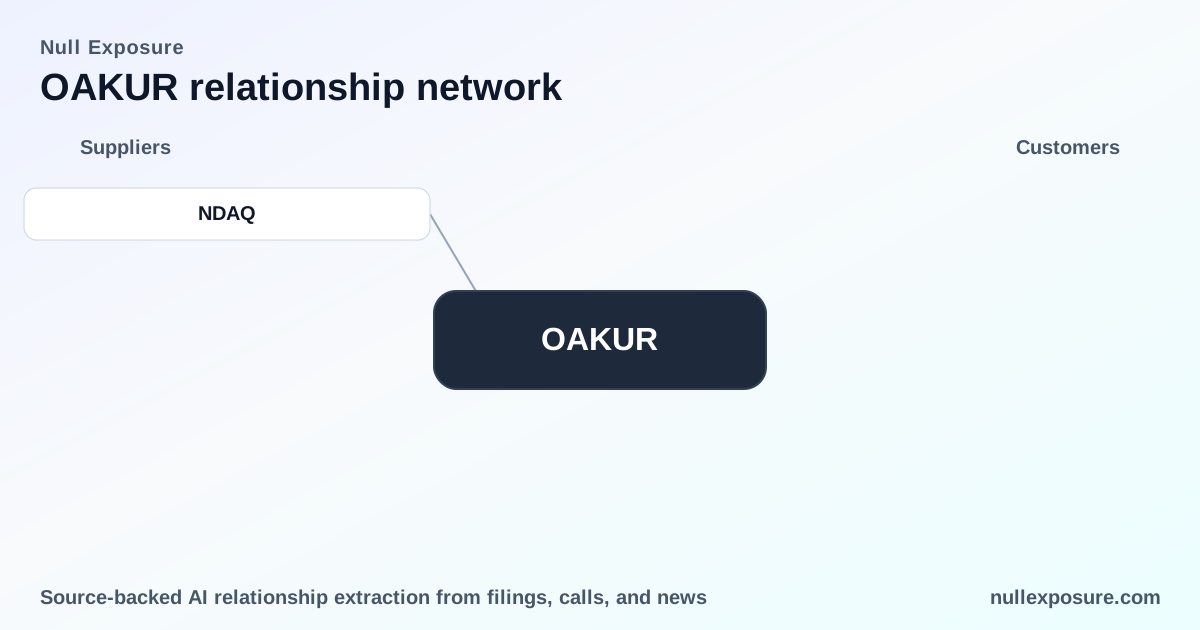
Counterparty: The Nasdaq Stock Market LLC
The Nasdaq issued a formal non‑compliance notice for failure to hold an annual meeting within the required timeframe, putting the SPAC on a path where corrective filings or actions are necessary to avoid delisting. (FinancialContent report, March 10, 2026)
Supplier relationships and contractual obligations that shape credit and execution risk
Company disclosures and agreement excerpts document recurring service arrangements and outstanding payables that materially influence the SPAC’s runway and governance posture.
-
The sponsor relationship carries a monthly G&A fee of $10,000, payable beginning March 23, 2023, representing a structural cash outflow tied to the sponsor’s role as a service provider. This contractual fee supports ongoing administration and increases fixed obligations the SPAC must fund (company filings, Dec 31, 2024).
-
A consulting arrangement with AsianLegend requires a $100,000 per month cash fee from the month services began until closing of a business combination, plus issuance of Class A Ordinary Shares upon consummation of a business combination, and was entered into under the Merger Agreement with consent from Huajin. This creates both cash burn and potential equity dilution upon deal close (Merger Agreement disclosures, 2023–2024 filings).
-
A promissory note balance of $2,245,150 remained unpaid as of December 31, 2024 and is due on demand, with the Sponsor not yet demanding repayment as of the filing date. The outstanding promissory note represents concentrated short‑term creditor exposure on the balance sheet (company filings, Dec 31, 2024).
Together these contractual terms place the company in a spend band consistent with $1M–$10M exposures for supplier/related‑party arrangements, and they are currently active obligations the SPAC must resolve before a successful combination or in a liquidation scenario.
Named counterparties and what they mean for investors
-
Sponsor: The Sponsor is contractually entitled to $10,000 per month for general and administrative services; a related promissory note of $2.245M remained outstanding at year‑end 2024, representing a near‑term claim on funds if repayment is demanded (company filings, Dec 31, 2024).
-
AsianLegend: Under the Merger Agreement, AsianLegend receives $100,000 per month in cash consulting fees and Class A Ordinary Shares upon closing, and the agreement runs through the closing of the business combination, creating both cash drain and dilution potential (Merger Agreement disclosures, 2023–2024).
-
Huajin: Named as a consenting party to the AsianLegend arrangements in the Merger Agreement text; its consent requirement reinforces that third‑party approvals were negotiated into the SPAC’s deal architecture (Merger Agreement disclosures, 2023–2024).
Operational constraints and what they reveal about the business model
The constraint signals coalesce into a clear operating posture:
-
Contracting posture: service provider heavy. The SPAC relies on a small set of paid service providers (sponsor and consultants) rather than recurring commercial revenue. These ongoing vendor fees are fixed outflows that reduce runway toward a combination.
-
Concentration: high. Material obligations and the promissory note concentrate financial risk among a few related parties; a demand for repayment or accelerated obligations would stress liquidity.
-
Criticality: significant for execution. The sponsor and AsianLegend services are operationally critical for transaction origination and G&A; stopping those services impairs the SPAC’s ability to complete a business combination.
-
Maturity: active, short‑term exposures. Outstanding promissory balances and monthly consulting accruals are active and in the $1M–$10M range, signaling immediate financial governance priorities ahead of any deal close.
These characteristics mean investors in the Right are exposed to execution risk driven by counterparty cash needs and governance compliance rather than operating performance metrics.
For continuing counterparty monitoring and a structured supplier risk view, see our coverage at https://nullexposure.com/.
Risk and opportunity checklist for operators and investors
-
Governance remediation is priority one. Resolve the Nasdaq annual‑meeting deficiency to remove delisting pressure and restore normal trading liquidity (Nasdaq notice, March 2026).
-
Quantify counterparty cash runways. The $2.245M promissory note and recurring consulting fees materially reduce optionality; investors should model outcomes where sponsor repayment is demanded or consulting agreements continue until close (company filings, Dec 31, 2024).
-
Assess dilution pathways. AsianLegend’s equity consideration upon closing creates a predictable dilution vector that affects post‑combination capital structure (Merger Agreement, 2023–2024).
-
Treat related‑party cashflows as first‑order risks. Monthly fees and accrued consulting expenses ($1.5M in 2024, $300K in 2023) are non‑discretionary outflows that compress time to close or liquidation value (company financial disclosures, Dec 31, 2024).
Final take
Oak Woods Acquisition Corporation Right sits at the intersection of governance scrutiny and concentrated supplier obligations. The Nasdaq compliance notice combined with active sponsor and consulting liabilities transforms what could be a standard SPAC rights play into a credit‑event driven investment case. Investors and operators should prioritize governance remediation, detailed counterparty cashflow modeling, and tracking of any demand for promissory repayment.
For a deeper counterparty dossier and continuous supplier risk scoring, visit https://nullexposure.com/ to subscribe to monitoring and alerts. For operational teams negotiating or managing SPAC counterparties, our intelligence can accelerate due diligence and vendor oversight—start at https://nullexposure.com/.