Oxley Bridge Acquisition (OBA): A supplier‑side read for investors
Oxley Bridge Acquisition Limited operates as a special purpose acquisition company (SPAC), raising investor capital through a units offering and listing on Nasdaq with the objective of effecting a business combination in the consumer and technology sectors. The company monetizes by selling units to the public and using the proceeds to secure and consummate a merger or acquisition that converts the blank‑check vehicle into an operating company; economic value for sponsors and public holders is realized through post‑combination equity performance and sponsor economics. For a concise supplier‑risk view and relationship map, review the company’s public notices and market data on the Null Exposure platform: https://nullexposure.com/.
Understanding OBA requires reading the SPAC playbook as a supplier relationship story: underwriters, listing venues, and custodial/trust arrangements drive launch timing, regulatory standing and investor access.
How Oxley Bridge runs its business and why suppliers matter
Oxley Bridge is a classic SPAC: it raised capital through an offering of units and listed those units on Nasdaq under an exchange ticker for public trading. The principal monetization event is the capital raise and subsequent business combination—sponsors and service providers get paid up‑front or through transaction economics, while public equity holders gain exposure to a merger target’s future value.
Operationally this creates a specific supplier profile:
- Contracting posture: Transactional and event‑driven. Key relationships—underwriters, exchange, legal and accounting firms—are engaged for a defined lifecycle (IPO/units issuance, diligence, and merger execution).
- Concentration: Service reliance is concentrated around a small set of high‑impact providers at launch; one book‑runner or a single listing venue can materially influence timing and distribution.
- Criticality: High for launch and regulatory compliance phases; once a combination is announced, new counterparties (target management, lenders) become more critical.
- Maturity: Pre‑combination SPAC with no operating revenues — the company’s public filings show zero reported revenue and traditional operating metrics, reflecting a pure acquisition vehicle profile (latest quarter reported 2025‑09‑30; market capitalization roughly $320 million).
Institutional ownership is substantial—reported above 86%—which changes the supplier dynamic: execution and communications need to satisfy sophisticated shareholders and market makers rather than retail distribution channels.
If you want a focused, sourced view of OBA’s disclosed suppliers and market plumbing, Null Exposure provides curated relationship detail: https://nullexposure.com/.
The relationships on record — two high‑impact entries
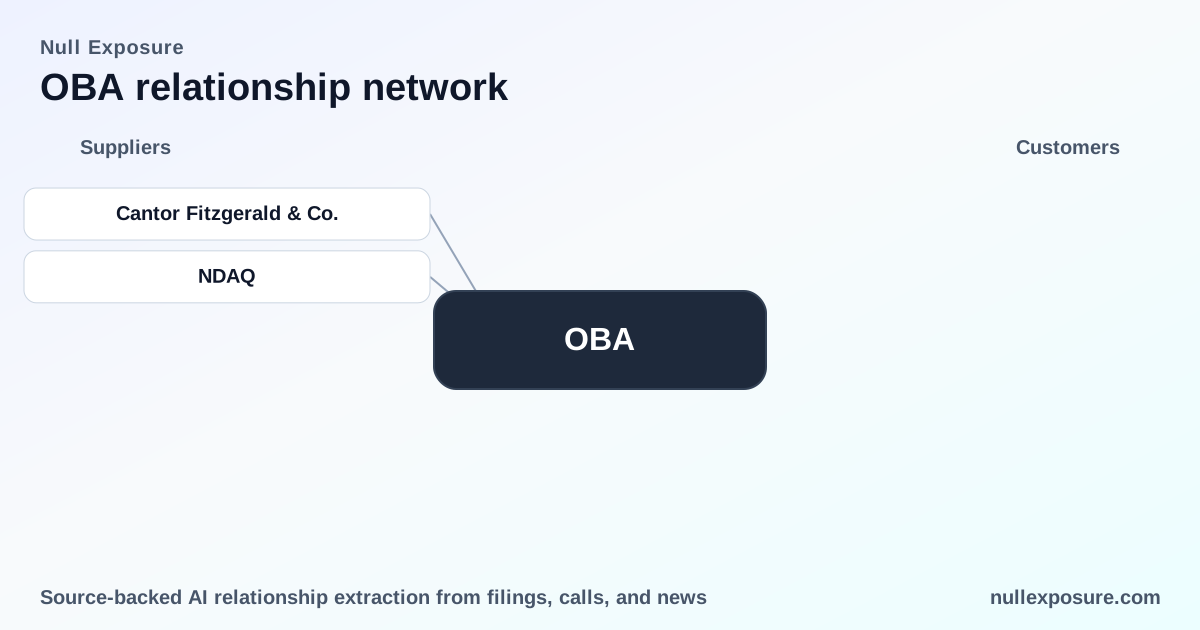
Cantor Fitzgerald & Co.
Cantor Fitzgerald & Co. served as the sole book‑running manager for the offering that launched OBA’s units to market. According to a Yahoo Finance press release dated March 10, 2026, Cantor Fitzgerald led the underwriting effort for the transaction, making it the primary distribution and capital‑raise partner for the SPAC’s formation and liquidity event.
Source: Yahoo Finance news release, March 10, 2026 (press coverage of OBA offering).
The Nasdaq Global Stock Market (Nasdaq)
OBA’s units began trading on The Nasdaq Global Stock Market on June 25, 2025 under the units ticker OBAWU, establishing the public market venue and regulatory framework for the SPAC. A Yahoo Finance report covering the transaction notes the June 25, 2025 listing and the Nasdaq venue, which dictates listing rules and ongoing compliance obligations.
Source: Yahoo Finance report on listing events, referencing the June 25, 2025 Nasdaq listing.
What the relationship list tells investors about counterparty risk
The disclosed relationships are consistent with a SPAC at launch: one lead underwriter and a single listing exchange dominate the early supplier landscape. That structure has practical implications:
- Execution dependency on a primary underwriter. With Cantor Fitzgerald identified as sole book‑runner, distribution capacity and offering pricing were routed through a single institution—this concentrates execution risk during the IPO and can affect aftermarket liquidity.
- Exchange governance dictates ongoing compliance. Nasdaq’s listing creates mandatory governance and reporting cadence that shapes timelines for a business combination and sets delisting/remediation thresholds.
- Short supplier list equals concentrated counterparty exposure. The sparse relationship map reflects the SPAC lifecycle stage—investors should expect this list to expand once a target is announced and transaction services are engaged.
For continued monitoring of OBA’s supplier map, including new adviser appointments and transaction counterparties, see full relationship tracking at https://nullexposure.com/.
Constraints and company‑level signals investors should weigh
No explicit constraints (contractual limits, embargoes or supplier‑named restrictions) were recorded in the relationship feed provided. Presenting that as a company‑level signal:
- No disclosed constraints does not imply no risk; it indicates the public record supplied here contains no contract excerpts or covenant notices that name suppliers or impose limits.
- Lifecycle concentration is the primary operational constraint. The SPAC model itself constrains strategy—capital sits in trust pending a business combination window and sponsors face a defined timeline to deploy proceeds.
- Regulatory and governance constraints are implicit. Nasdaq listing standards and securities laws shape disclosures, shareholder approvals, and transaction mechanics; these rules are operational constraints even if not itemized in the relationship feed.
- Liquidity and market structure signals matter. With a reported market capitalization near $320 million and high institutional ownership, trading dynamics and block liquidity will influence post‑combination valuation realization.
These are company‑level observations, not relationship‑specific attributions.
Investment implications — concise takeaways
- Underwriter concentration accelerates go‑to‑market but raises single‑counterparty risk. Cantor Fitzgerald’s role as sole book‑runner centralized distribution; that increases speed but reduces diversification of underwriting support.
- Nasdaq listing imposes measurable governance and execution discipline. The exchange ensures standardized compliance but also creates thresholds that, if violated, would pressure timelines and reputation.
- SPAC status equals event risk and compressed timelines. Value creation is binary and tied to a successful merger; until a target is announced, the company’s public filings show no operating revenues or operating metrics to model.
- Institutional ownership is a double‑edged sword. Sophisticated holders improve post‑deal governance but can also drive tougher approval dynamics and short windows for opportunistic trading.
If you need a structured supplier exposure report tailored to OBA’s lifecycle and potential target sectors, explore our research hub for triggered alerts and relationship timelines at https://nullexposure.com/.
Final read and action steps
Oxley Bridge is a textbook SPAC: concentrated supplier relationships at launch, Nasdaq listing governance, and a monetization model rooted in a capital raise and a future combination. For investors evaluating counterparty concentration and execution risk, the immediate focus is the underwriter and exchange governance; the full picture will evolve as advisers, lenders and target counterparties are appointed.
To maintain an active watch on OBA’s evolving supplier network and to receive alerts when new counterparties appear, visit Null Exposure and sign up: https://nullexposure.com/.