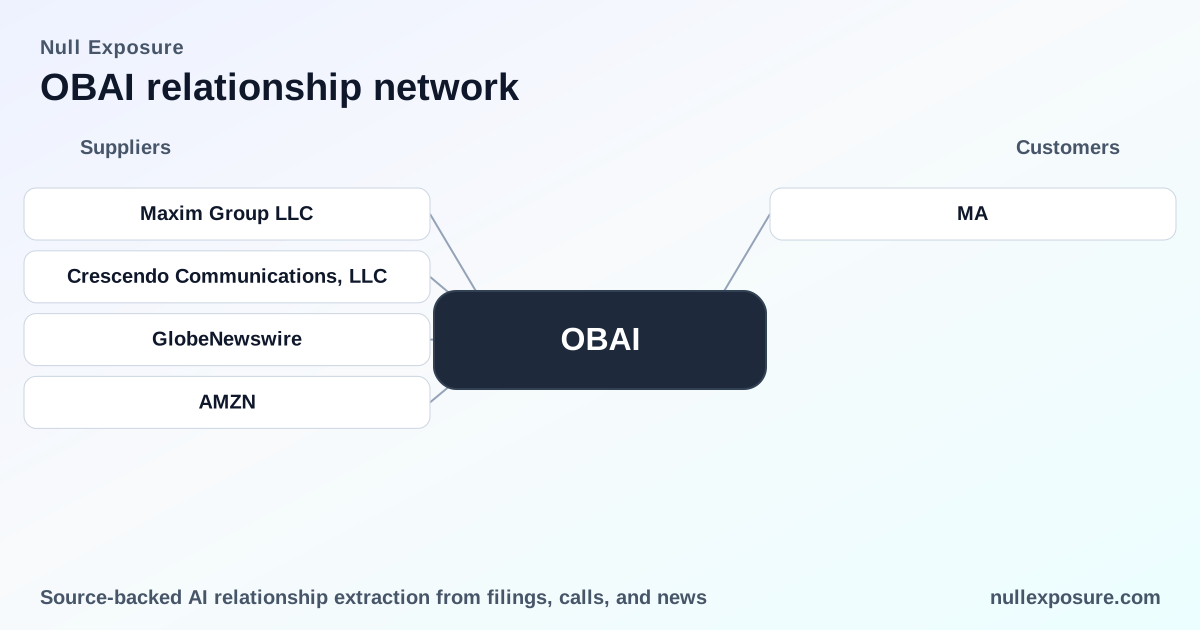
OBAI (TG-17 / Our Bond): Advisor and partner map for investors evaluating supplier risk
TG-17, Inc. (doing business as Our Bond, ticker OBAI) sells AI-driven personal-security and preventative risk platforms, monetizing through B2B and B2B2C commercial agreements, cloud-hosted deployments, and strategic integrations with payments and telecom ecosystems. Revenue derives from software deployments and partner-driven distribution rather than one-off hardware sales, while a small market capitalization and negative EBITDA position the company as an early-stage vendor with concentrated commercial exposure. For a rapid supplier-risk briefing and ongoing monitoring, visit https://nullexposure.com/.
Quick take: business model and investor thesis
Our Bond builds AI and machine-learning software for personal security and preventative risk; it monetizes by licensing solutions to fintechs and channel partners, hosting services on public cloud, and enabling integrations with payment networks and telecom operators. The company is revenue-positive at the product level (Revenue TTM ~$9.8M, Gross Profit ~$0.6M) but operating-loss negative (EBITDA approx. -$9.5M), which frames it as a growth-stage supplier that is still scaling commercial operations and absorbing go-to-market costs. Key investor considerations: concentrated partner distribution, cloud dependency, and advisor-driven capital market activity.
Who OBAI works with — concise supplier/partner map
Below are the named relationships surfaced in public reporting and filings. Each entry includes a plain-English summary and the original source reference.
-
Maxim Group LLC — Maxim was retained as financial advisor to assist TG-17 with a direct listing process; filings and press coverage list Maxim as the adviser rather than a traditional underwriter. See the Reuters/TradingView coverage of the company's application to list on Nasdaq (FY2025) and later IPO-related notices (FY2026) (https://www.tradingview.com/news/reuters.com,2025:newsml_FWN3VN2UM:0-tg-17-inc-says-applied-to-list-common-stock-on-nasdaq-global-market-under-symbol-obai/; https://www.tradingview.com/news/tradingview:86836cbd43178:0-bond-ai-enabled-personal-security-platform-files-for-nasdaq-ipo/).
-
Crescendo Communications, LLC — Crescendo is acting as the investor-relations contact for Our Bond, and press releases direct investor questions to Crescendo in 2026 communications about the company’s rebrand. See the Feb 18, 2026 GlobeNewswire announcement and related press distribution (https://www.globenewswire.com/news-release/2026/02/18/3240344/0/en/TG-17-Inc-Announces-Corporate-Name-Change-to-Our-Bond-Inc-to-Align-with-Brand-as-Company-Expands-Sales-and-Marketing-Initiatives-Globally.html; https://www.quiverquant.com/news/Our+Bond%2C+Inc.+Expands+Client+Base+with+Adoption+of+AI-Powered+Preventative+Personal+Security+Platform+in+Fintech+Sector).
-
GlobeNewswire (press distribution) — GlobeNewswire distributed a corporate press release on the name change and client adoption; a QuiverQuant post notes that an AI-generated summary accompanied the press release distribution. The GlobeNewswire release is the primary media channel for the company’s investor communications in early 2026 (https://www.globenewswire.com/news-release/2026/02/18/3240344/0/en/TG-17-Inc-Announces-Corporate-Name-Change-to-Our-Bond-Inc-to-Align-with-Brand-as-Company-Expands-Sales-and-Marketing-Initiatives-Globally.html; https://www.quiverquant.com/news/Our+Bond%2C+Inc.+Expands+Client+Base+with+Adoption+of+AI-Powered+Preventative+Personal+Security+Platform+in+Fintech+Sector).
-
AWS (Amazon Web Services, AMZN) — Public reporting around the IPO filing highlights cloud hosting and integrations on AWS, plus broader telecom and app ecosystem ties and a B2B2C relationship with Mastercard. The company lists AWS as its cloud platform partner and describes field deployments including a drone first-responder project in Coral Gables, Florida (https://www.tradingview.com/news/tradingview:86836cbd43178:0-bond-ai-enabled-personal-security-platform-files-for-nasdaq-ipo/).
What the relationship map implies for contracting posture and supplier risk
-
Contracting posture: OBAI operates as a software-as-a-service platform provider selling into B2B and B2B2C channels. Public filings and press materials emphasize financial-advisor-led capital markets engagement and partner-led distribution rather than direct retail sales. Expect standard vendor master agreements with cloud-provider addenda and channel partnership statements of work.
-
Concentration and criticality: The commercial go-to-market relies on a handful of strategic partners and channels (payments, telecom, cloud). That concentration increases supplier criticality for customers using Our Bond as an integrated security layer in fintech stacks. AWS dependency for hosting elevates cloud availability and cost as a material supplier risk.
-
Maturity and financial posture: The company is early stage operationally: Revenue TTM
$9.8M with negative EBITDA (-$9.5M) and a small market cap (~$27.4M). These metrics signal constrained financial scale, meaning counterparty creditworthiness and funding runway should be monitored relative to contract durations and SLAs. -
Commercial governance: The use of a financial adviser (Maxim) instead of traditional lead underwriters is an explicit capital-markets posture that investors should interpret as a governance choice favoring advisory-led listing mechanics rather than a full-banked offering. Investor relations activity routed through Crescendo centralizes external communications.
For ongoing supplier monitoring and deeper counterparty scoring, see our platform at https://nullexposure.com/ — we consolidate filings, partner disclosures, and operational signals in one place.
Operational and market risks derived from public signals
-
Cloud concentration risk with AWS increases the potential impact of service interruptions and pricing pressure on margins. The company’s public materials explicitly tie its platform to AWS deployments (TradingView/IPO materials).
-
Distribution concentration through payments and telecom partners creates single-point dependencies for customer acquisition and retention; a loss or repricing of those channel relationships would materially affect growth.
-
Funding and liquidity pressure given negative EBITDA, low market capitalization, and limited institutional ownership creates refinancing and execution risk if capital markets access tightens. The adviser-led listing activity is consistent with active capital markets engagement to manage that exposure.
Actionable investor checklist
- Verify the terms and durations of any channel or cloud contracts and whether they include termination penalties or minimum commitments tied to revenue recognition.
- Monitor capital-market filings and adviser disclosures from Maxim Group for changes to listing strategy or financing plans (see TradingView/Reuters coverage).
- Confirm operational SLAs with AWS and whether third-party redundancy or multi-region resilience is contracted.
For a tailored supplier-risk brief and real-time alerts on OBAI counterparties, explore our service at https://nullexposure.com/.
Bottom line
Our Bond (OBAI) is a cloud-dependent, partner-distributed AI security vendor operating with early-stage financials and advisor-driven capital-market activity. The company’s risk profile centers on partner concentration, cloud dependence, and a small balance sheet; investors and operators should prioritize contract terms, cloud SLAs, and the company’s near-term financing plan as primary risk controls. For continuous monitoring and deeper advisor-grade dossiers on these relationships, visit https://nullexposure.com/.